
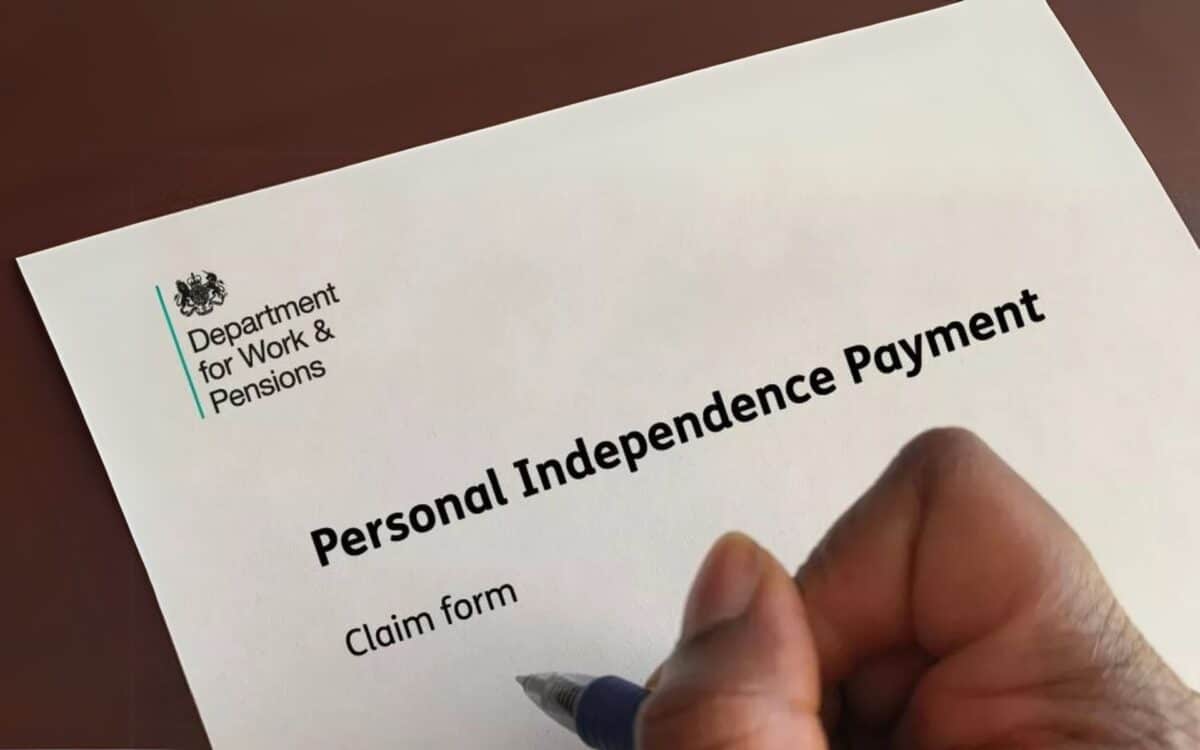
The Department for Work and Pensions (DWP) has defended extending its timeliness benchmark for new Personal Independence Payment (PIP) claims from 75 to 120 days, despite concerns that disabled people could face longer waits for financial support.
DWP Faces Questions Over Its New PIP Processing Target
The change came under scrutiny during a Work and Pensions Committee hearing, where officials were challenged over whether improved performance figures reflected faster decisions or a more generous deadline.
According to Birmingham Live, committee member Rushanara Ali questioned DWP director Neil Couling about the department’s handling of disability benefit applications.
“In 2025-26, the Department processed 82.2% of new PIP claims in a timely manner,” Ali said.
“That is up from 62.4% in 2024-25. That looks very positive and encouraging, but the downside is that you have increased the measure of timeliness in processing a new claim from 75 to 120 days.”
She challenged the justification for changing the benchmark.
“Can you talk us through why you think that shift in goalposts, where the processing of a disability benefit will take six months, is acceptable?”
“As you will appreciate, it would be pretty bad if we had to wait six months for something quite straightforward, but this is for disability benefit.”
The revised standard means the department now measures timely processing against a 120-day threshold, rather than the previous 75-day benchmark. The figures therefore reflect different performance measures.

DWP Director Admits He Personally Changed the Rules
Couling acknowledged responsibility for introducing the revised target, arguing that the previous system encouraged misleading performance results.
“You are looking at the guilty man. I made this change,” he told Ali.
“When I came in to start my job in April 2025, I looked across and there were not standards for producing timely benefit awards. The PIP one was nonsense.”
He argued that the earlier approach allowed officials to concentrate on meeting targets without addressing every outstanding application.
“Basically, I could have played that target—I know how to play targets as well as set them. I could have done 75% of the cases and left the others, and I would have hit that target and you would all be saying, ‘Well done. You’re hitting that target.’”
Couling said he instead introduced a 90% performance target across several major benefits.
“So I set a 90% target across all the major benefits in my area. Carer’s allowance, attendance allowance, DLA and child benefit all got 90% targets. That is because you cannot game a 90% target.”
He rejected the suggestion that the department had simply relaxed its standards.
“I am an old operator here, so I know how to sort these systems out. It was not about moving the goalposts; it was about having goalposts that worked.”
Why the DWP Says PIP Claims Need More Time
Couling also defended the longer processing window by pointing to the difficulties involved in arranging assessments for vulnerable applicants.
“Let me explain why that is the period of time. The process involves assessment,” he said.
“The Committee has rightly—I applaud it for this—talked about the importance of handling vulnerable people carefully, and with sensitivity and humanity, in this process.”
He added that missed appointments frequently complicate the process.
“Fifty per cent of assessments are not turned up at—people fail to attend, often for good reasons.”
According to Couling, rushing assessments previously created pressure to close applications prematurely.
“We allow lots of ‘failed to attend’ circumstances in the process, because of this vulnerability.”
He explained that much of the processing period is spent arranging assessments without forcing claimants into deadlines that could disadvantage them.
Couling said previous performance pressures had led staff to close some claims inappropriately.
“That is why we have allowed that period of time.”