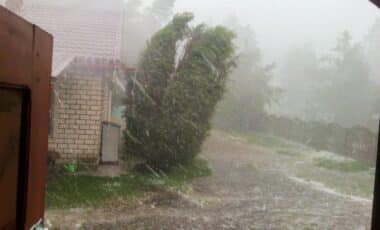
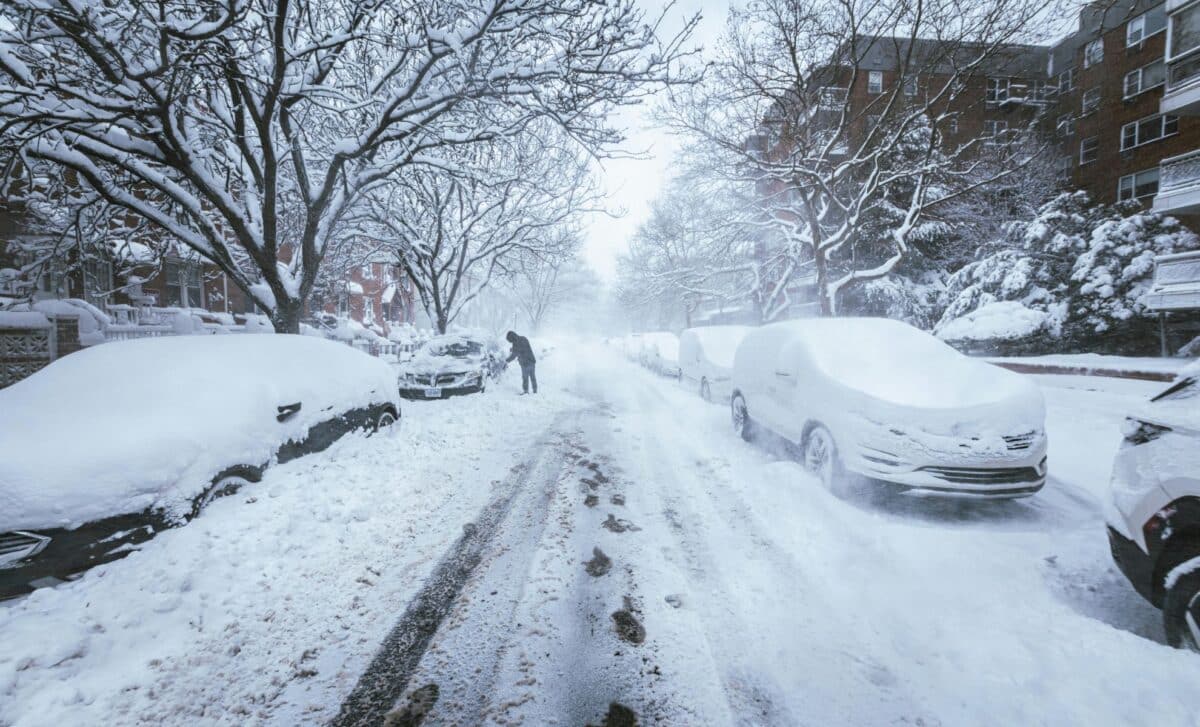
Although the disturbance could develop into a sudden stratospheric warming event, forecasters have stressed that snow and severe cold are not inevitable. The potential effects on UK weather remain uncertain, particularly because the disruption is occurring much earlier in the season than usual.
An Unusually Early Disturbance Above the Arctic
The stratospheric polar vortex is a ring of strong westerly winds that forms above the North Pole as temperatures fall during autumn. It normally maintains a relatively circular structure, but large atmospheric waves rising from the lower atmosphere can stretch, displace or even split it.
According to the Met Office, the vortex is already unusually stretched by what meteorologists call “wave two” activity. This involves two large atmospheric waves pushing into the vortex from opposite directions, with the current disturbance considerably stronger than average for this time of year.
Forecasts from the European Centre for Medium-Range Weather Forecasts (ECMWF) indicate that temperatures in the Arctic stratosphere could continue rising while the surrounding westerly winds weaken.
Several forecast simulations suggest those winds could briefly reverse during the coming week, potentially meeting the definition of a major sudden stratospheric warming (SSW). The expected reversal, though, remains relatively weak and short-lived.
The current El Niño may also be contributing to the disturbance. Unusually warm waters in the tropical Pacific can increase thunderstorm activity, releasing heat that alters atmospheric circulation and strengthens large-scale waves.
Met Office meteorologist Aidan McGivern explained that these waves can travel upwards into the stratosphere, disturbing the vortex and potentially pushing it away from the pole.
Such interactions are known as teleconnections, where atmospheric changes in one region influence conditions thousands of kilometres away.
What the Disturbance Could Mean for Britain’s Winter
A sudden stratospheric warming does not directly warm the Earth’s surface. Instead, changes high above the Arctic can sometimes influence the lower atmosphere over the following two to six weeks.
According to the Met Office’s analysis, these changes can weaken the Atlantic jet stream and encourage persistent areas of high pressure. Their location determines whether Britain experiences colder winds, settled conditions or relatively little disruption.
High pressure over the UK could produce drier weather accompanied by frost and fog. Blocking farther north may encourage easterly winds, while high pressure to the west could favour colder northerly airflow.
The winter of 2018 provides a notable example. A disrupted polar vortex contributed to atmospheric conditions associated with the “Beast from the East“, which brought widespread snow and unusually low temperatures.
Yet previous events have produced different outcomes. The Independent reported that a sudden stratospheric warming in November 2025 did not directly result in substantial cold weather across Britain.
For the nearer term, the Met Office forecast covering 9–18 November indicates that colder conditions could spread southwards across much of the UK towards the end of next week. Brief wintry showers are possible in northern areas, although the nature of the outbreak remains uncertain.
Meteorologists have therefore stopped short of predicting a major freeze. The early timing of the disturbance also means less cold air is generally available across the Northern Hemisphere than later in winter, leaving the eventual impact on Britain unresolved.