The policy comes amid growing concern over household finances and the cost of living. While wages have continued to rise, economists warn that frozen tax bands and worsening income forecasts are placing additional pressure on workers across Britain.
Frozen Income Tax Thresholds Leave Workers Paying More
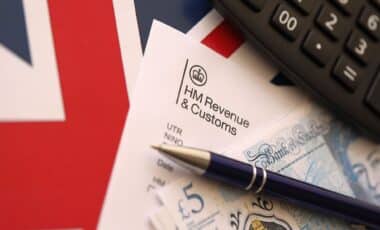
The UK’s tax-free personal allowance remains fixed at £12,570, a level that has been unchanged since 2021. Former Chancellor Rachel Reeves previously confirmed plans to maintain the freeze until 2031, extending the period without an increase to a full decade.
According to the Express.co.uk, Chancellor John Healey declined to raise income tax thresholds in his Autumn Budget 2026, despite calls for greater tax relief during the cost-of-living crisis.
A petition calling for an increase in the personal allowance attracted more than 80,000 signatures after being shared by the newspaper. Its supporters wanted the amount people could earn before paying income tax to rise.
The financial effect becomes clearer when inflation is considered. The £12,500 threshold established in 2019 would be worth approximately £16,215 in 2026 after accounting for changes in prices.
Meanwhile, wage growth currently stands at 3.9%, compared with inflation of 3.5%. Although higher salaries can help employees maintain their purchasing power, frozen thresholds mean a greater proportion of their earnings may become taxable. Workers can also move into higher income tax bands as salaries increase. The higher-rate threshold stands at £50,270, while the additional-rate threshold is £125,140.
According to the Institute for Fiscal Studies, allowing the £12,570 personal allowance to rise with inflation would bring it to £13,739. For someone earning £39,000, the current average UK salary, that difference represents £234 in additional tax by 2030 compared with inflation-linked thresholds. The same calculation assumes the worker’s salary would increase to £42,627 with inflation.
Economists Warn of Falling Household Living Standards
The continued freeze comes alongside troubling forecasts for household incomes, with economists questioning whether the Government’s Budget measures adequately address financial pressures.
According to the Resolution Foundation, a typical household’s income is expected to fall by 3%, equivalent to £1,050, between this year and 2028-29.
Ruth Curtice, the think tank’s chief executive, described the Budget as “a relatively small Budget and arguably one that did not live up to the scale of the challenges that Britain faces“.
Speaking at a Thursday briefing, she said the Chancellor had adopted “an approach to cost of living support that may be popular but is far from effective”. Greg Thwaites, the foundation’s interim chief economist, offered a similarly bleak assessment of the years ahead.
He warned that household incomes would fall cumulatively by approximately 3% by the end of the current Parliament before remaining broadly unchanged.
Thwaites also described the 2020s as a “terrible decade for living standards”, arguing that the Government needed to target its financial support more effectively. For workers facing frozen tax allowances, these forecasts underline the wider financial pressures surrounding the Government’s decision to maintain existing income tax thresholds.