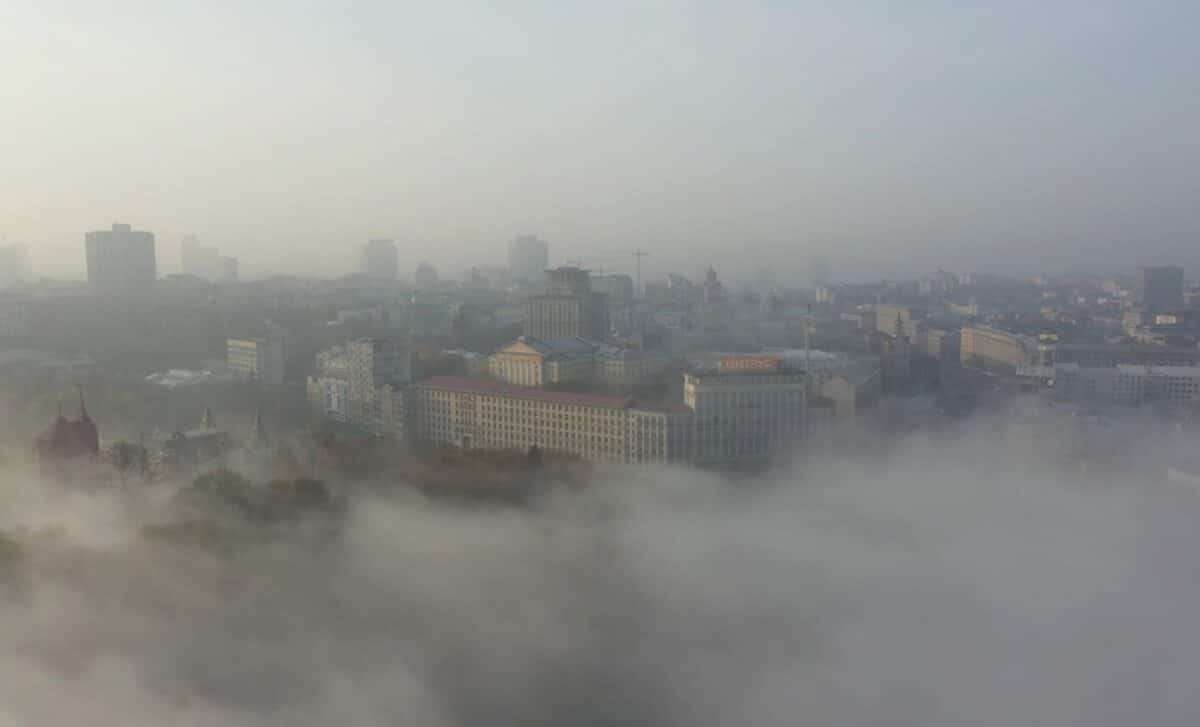
The warning follows a period of stormy weather associated with Storms Austen and Boelo. Although high pressure is bringing calmer and drier conditions to much of the UK, overnight fog has emerged as a hazard, particularly during the morning rush hour.
Dense Fog Affects Several English Regions As Visibility Drops Below 100 Metres
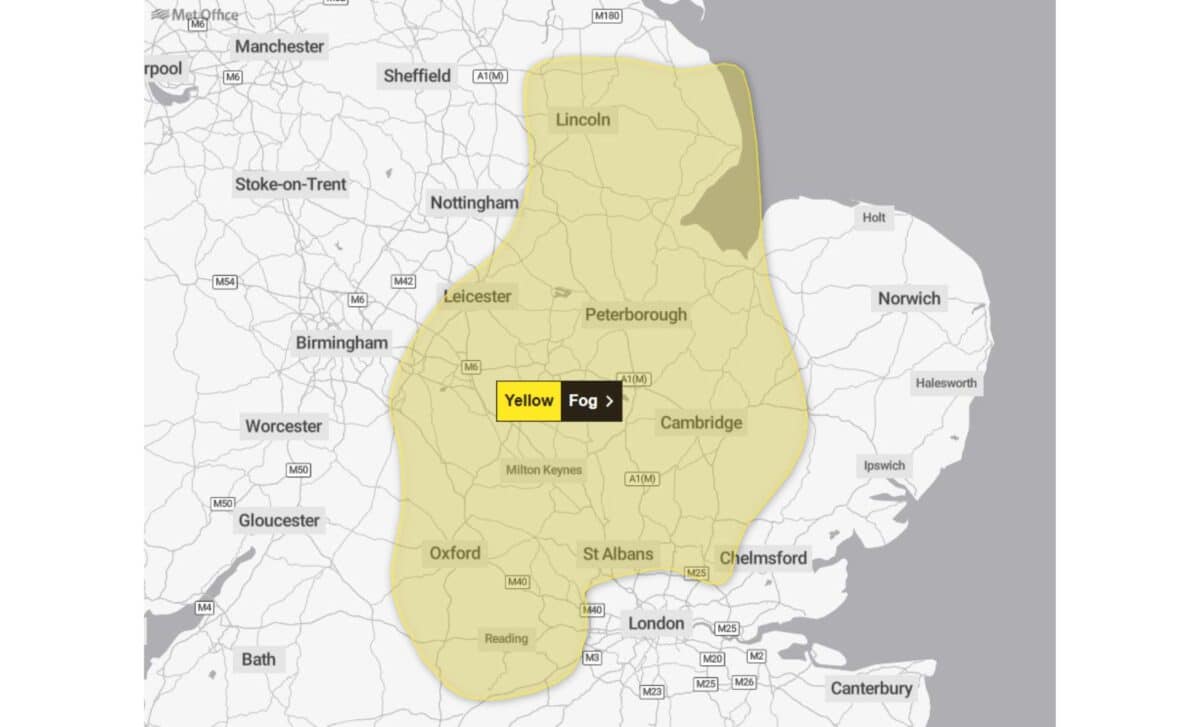
According to the Met Office, the yellow warning was issued at 04:18 UTC on Friday and remains in place until 10:00 GMT. It covers parts of the East Midlands, East of England, London and the South East, and West Midlands, with fog expected to cause disruption to road and public transport.
Affected locations include Lincolnshire, Leicestershire, Nottinghamshire, Northamptonshire, Cambridgeshire, Essex, Hertfordshire, Norfolk, Suffolk, Buckinghamshire, Oxfordshire, Surrey and Warwickshire.
The forecaster expects the most widespread and disruptive conditions during the morning rush hour. Fog should gradually thin and clear later in the morning, although some rural areas of eastern England may remain affected into the afternoon.
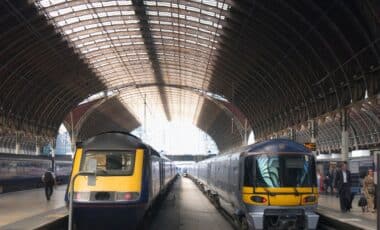
Motorists could face longer journeys, while bus and train services may experience delays. Flights could also be delayed or cancelled, prompting advice for passengers to check with their travel operators before setting off.
As BBC Weather reports, the fog follows a marked change in atmospheric conditions. High pressure has been building across the country after an unsettled spell dominated by Atlantic storms.
The calmer pattern is expected to continue into early November, bringing largely dry weather but also the possibility of further overnight mist and fog. Some areas could experience persistent low cloud, particularly where morning fog struggles to clear.
Met Office Explains Why Full-Beam Headlights Can Make Fog More Dangerous
The Met Office has specifically advised drivers against using full-beam headlights in fog because the light reflects off suspended water droplets, reducing visibility rather than improving it.
Its travelling advice describes the effect as a “white wall” and recommends driving very slowly with dipped headlights instead. Drivers should also know how to operate their fog lights and switch them off once visibility improves.
According to advice published by the Met Office in association with National Highways, fog can drift rapidly and develop unevenly, making travelling conditions difficult to anticipate.
Dense fog warnings are issued when visibility is expected to fall below 200 metres, while severe transport disruption can occur when visibility drops below 50 metres.
Drivers are advised to monitor their speed carefully because fog can create the impression of travelling in slow motion. Following another vehicle’s rear lights too closely is also discouraged, as they can provide a misleading sense of security.
Additional recommendations include maintaining a greater distance from the vehicle ahead, using the heater to demist the windscreen and opening windows at junctions when visibility is limited to listen for approaching traffic.
The Met Office advises avoiding travel where possible during particularly difficult conditions. Those who must travel should check road conditions, allow extra journey time and follow updated weather warnings.
Saturday could bring further early morning mist and fog, with some patches lifting into low cloud that may persist throughout the day. Much of the UK is expected to remain dry over the weekend.