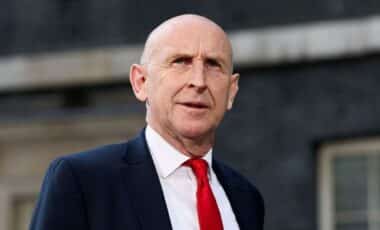

Chancellor John Healey unveiled the policy in his 2026 Budget, confirming that the tax-free threshold for eligible pensioners would increase alongside the state pension. While hundreds of thousands are expected to benefit, the arrangement has raised concerns about unequal treatment of retirees with modest additional savings.
New Pension Tax Allowance Will Protect 500,000 Retirees
The full new state pension is expected to increase by 3.9 per cent from April 2027, bringing annual payments to £13,036. That exceeds the existing personal allowance of £12,570, which determines how much income individuals can receive before paying tax.
Without government intervention, pensioners whose only income comes from the state pension would become liable for income tax on the amount exceeding that threshold.
According to City AM, Healey confirmed that the Government would introduce a new pension tax allowance matching the full new state pension, with the threshold increasing as pension payments rise throughout the current Parliament.
The Chancellor told MPs that pensioners receiving income up to the full new state pension level would not pay income tax during this Parliament.
Treasury figures reported by The i Paper indicate that approximately 500,000 pensioners will benefit from the changes. Around 290,000 will pay no income tax, while another 210,000 will receive partial relief through a tapered allowance.
Under this arrangement, pensioners earning slightly more than £13,036 annually can retain some protection. For every £3 of income above that amount, their additional pension tax allowance will decrease by £1.
The taper will apply to individuals with total annual incomes between £13,037 and £13,319. Those earning £13,319 or more will not qualify for the relief.
The measure is expected to cost the Treasury £150 million annually by 2029-30. Standard Life Centre for the Future of Retirement has estimated that pensioners relying exclusively on state payments could save £770 by 2031.

Pension Experts Warn of Unequal Treatment for Those With Savings
Although the policy protects pensioners with the lowest incomes, critics argue that its eligibility rules could create disparities between retirees receiving similar amounts of money.
Millions of pensioners with private retirement savings will remain subject to income tax. According to The i Paper, HMRC estimates that approximately 9.6 million pensioners will pay income tax in 2026-27, more than three million additional taxpayers since the personal allowance was frozen in 2021.
Former Conservative pensions minister Baroness Ros Altmann has warned that the arrangement could establish a two-tier system, leaving some retirees with relatively small private pensions outside the protection.
Tom Selby, director of public policy at AJ Bell, described the proposal as “far from an elegant fix”, arguing that the taper introduces complexity and potentially unfair outcomes.
Age UK welcomed the Government’s decision to protect lower-income pensioners but said it would examine whether the changes disadvantage particular groups.
The announcement also comes amid wider uncertainty surrounding the future of the triple lock, which guarantees annual state pension increases based on the highest of inflation, average earnings growth or 2.5 per cent.
Prime Minister Andy Burnham has pledged to retain the policy until the end of this Parliament, while proposing reforms ahead of the next general election.