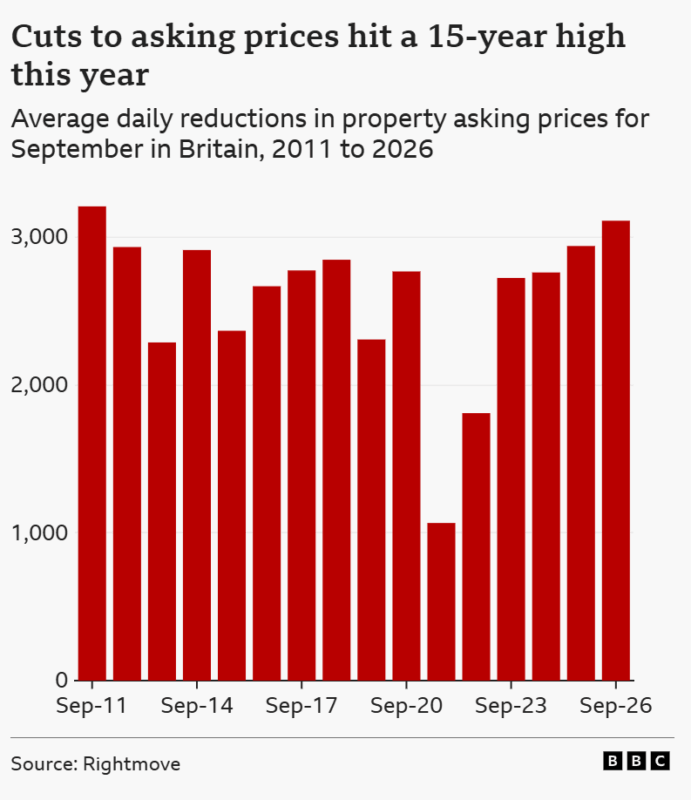
More than 3,000 homes across Britain had their asking prices reduced each day in September, marking the highest monthly total in 15 years. With more properties available and buyers increasingly selective, sellers are struggling to secure deals without lowering their expectations.
Price Cuts Reach a 15-Year High as Buyers Gain Control
According to The BBC, citing exclusive figures from property website Rightmove, approximately 34% of listed homes underwent a price reduction in September. That figure sits just below the 36% peak recorded in September 2023, suggesting that widespread discounting has become a persistent feature of Britain’s housing market.
The average reduction approached 7%, equivalent to nearly £21,000 on a typically valued property.
For sellers, the consequences extend beyond the amount they eventually receive. Rightmove found that homes requiring a price reduction took an average of 119 days to find a buyer, compared with just 39 days for properties that maintained their original asking price.
The figures illustrate how an ambitious initial valuation can leave a property lingering on the market.
Why Lower Prices Aren’t Always Attracting Buyers
Britain’s property market currently offers buyers more choice than a year ago, but that abundance has not translated into stronger sales.
Figures from Zoopla show that the number of homes available increased by 5% year over year in September, while agreed sales declined by 9%.
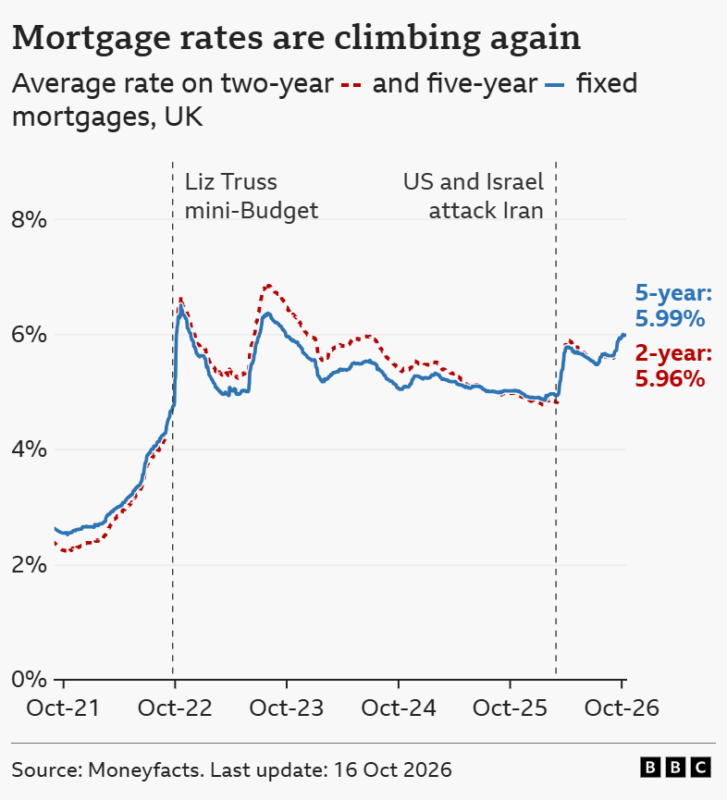
Higher mortgage rates, which have reached a three-year high, are forcing prospective buyers to scrutinize affordability and prioritize monthly payments.
The longer a property remains unsold, the more difficult attracting interest can become.
“Once a home has been on the market for a while and then has a price reduction, some buyers start asking questions, even when there is nothing wrong with the property,” said Colleen Babcock of Rightmove.
“In a market with so much choice, first impressions matter.”
September traditionally brings more asking-price reductions as homeowners attempt to complete transactions before year-end. Yet the latest figures also reveal a growing number of unsuccessful listings returning to the market.
Zoopla found that one-quarter of newly listed homes had already been advertised during the previous 12 months. Among those returning properties, six in 10 carried a lower asking price.
Credit: Rightmove/ BBC
The Pricing Mistake That Can Cost Sellers Months
Real estate professionals warn that sellers who overestimate their property’s value risk missing the period when buyer interest is strongest.
Tarah Lourens, Rightmove’s chief operating officer, explained that homeowners often attach emotional value to improvements and years spent in a property. Buyers, by contrast, compare available homes against their budgets.
Katie Griffin, of Devon-based surveyors Sawdye and Harris, warned that prolonged listings can encourage buyers to question why a property remains unsold, potentially leading to offers below an already reduced price.
The differences between regional markets are equally striking.
In Scotland, sellers must obtain an independent valuation through the Home Report system before listing their property. Zoopla research director Richard Donnell suggested that this requirement helps establish more realistic asking prices.
His figures showed that 74% of Scottish homes listed between April and June sold within three months, compared with only 30% in London.
Donnell attributed slower sales in southern England partly to higher property prices, stamp duty costs, and owners, including landlords, who face little pressure to sell.