Improving home insulation and installing heat pumps could reduce household energy bills and create considerably more jobs than developing new North Sea oilfields, according to research examining the economic benefits of competing energy investments.
The findings come as the UK government considers the future of its £15 billion warm homes plan alongside decisions on the Rosebank oilfield and Jackdaw gasfield. With ministers seeking budget savings, the research raises questions about which investments would deliver greater benefits to households, businesses and public finances.
Home Insulation Could Create 50,000 Jobs and Reduce Energy Bills
According to the climate thinktank E3G, implementing the warm homes plan in full would reduce household energy bills by £1 billion annually, with much of the benefit going to lower-income households.
The programme would improve insulation in up to five million homes while supporting the installation of heat pumps. Researchers estimate it could generate approximately 50,000 jobs across thousands of small businesses throughout Britain.
The economic benefits would extend beyond employment. E3G estimates the programme would provide a £1.6 billion annual boost to the economy and attract another £15 billion in private investment.
Delivering the scheme in full could increase UK gross domestic product by 0.08%, according to the analysis. By comparison, developing Rosebank, located west of Shetland, would support approximately 1,100 direct and indirect jobs, concentrated largely around the North Sea.
Energy company Equinor previously estimated that Rosebank and Jackdaw combined could create 3,500 jobs at peak activity. The government faces growing pressure over its energy investment priorities. Ten major trade unions have opposed approving Rosebank, while hundreds of scientists have urged ministers to reconsider the development.
Dhara Vyas, chief executive of Energy UK, has also warned that reducing support for electrification could create uncertainty for businesses already facing difficult market conditions.
Rosebank Oilfield Raises Questions Over Tax Revenues and Public Costs
The financial case for expanding North Sea production has also attracted scrutiny, particularly as existing oil and gas infrastructure approaches the end of its operational life.
According to research conducted by WWF Norway and cited by the Guardian, Rosebank’s developers could generate £1.5 billion in profits under a scenario assuming oil prices of $70 per barrel.
Under those conditions, the UK Treasury could face a net loss of £258 million because of the tax arrangements surrounding the project. At $40 per barrel, the analysis estimates company profits of £445 million, alongside a potential Treasury loss of £1.3 billion.
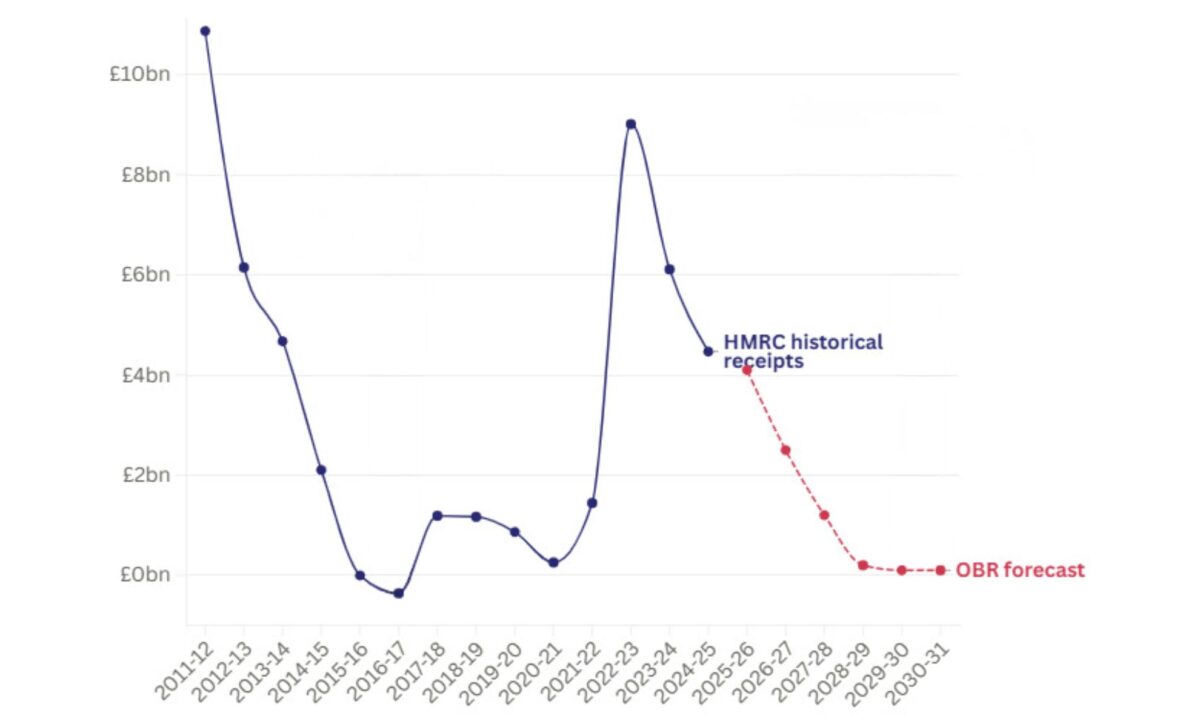
The calculations cover Rosebank’s first development phase and incorporate investment, production and decommissioning costs. Meanwhile, North Sea tax revenues are projected to fall from £4.1 billion in 2025–26 to approximately £100 million by 2030–31.
The financial implications extend to dismantling ageing infrastructure. Existing North Sea facilities are expected to cost around £43.4 billion to decommission, with taxpayers potentially contributing at least £11.7 billion through tax relief.
Adura, the joint venture between Equinor and Shell, presents a different assessment. The company says Rosebank represents £8.7 billion in private investment, with three-quarters expected to be spent in the UK. It also estimates that Rosebank and Jackdaw together could contribute £4.1 billion in additional tax revenue over the next decade.x