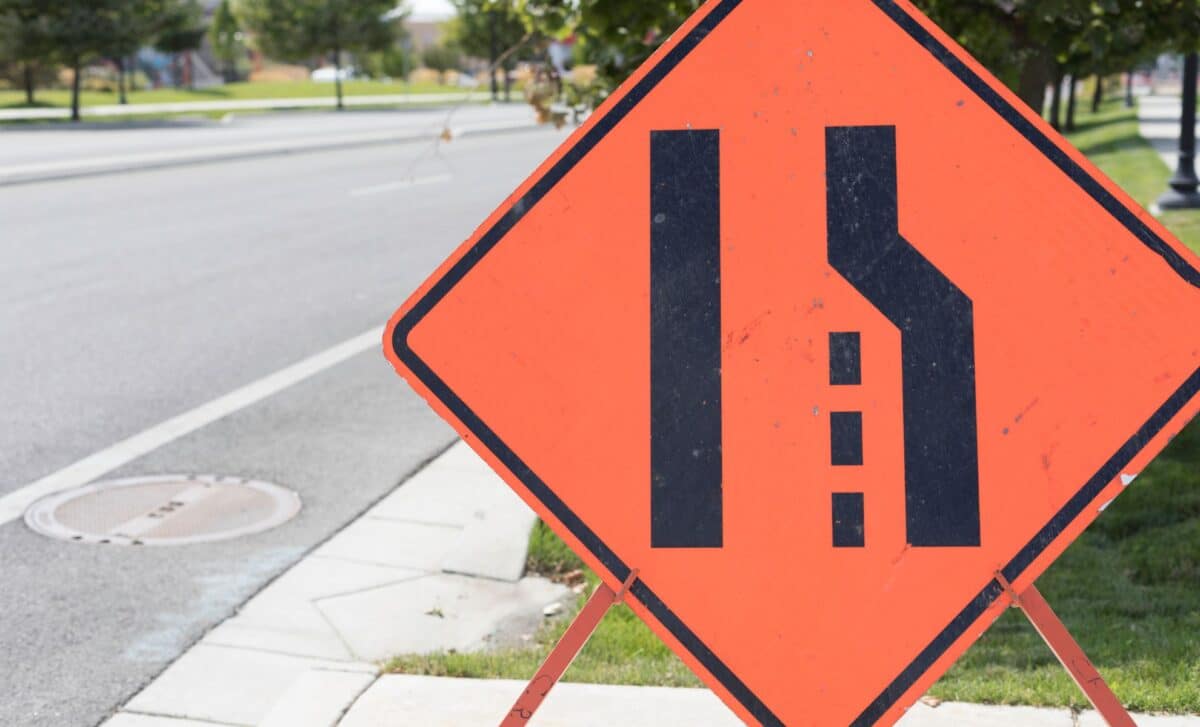
Drivers approaching a lane closure in the UK are generally advised to use both lanes until the merge point and then merge in turn, when traffic is moving very slowly and it is safe to do so. Deliberately obstructing another vehicle can lead to a fine and penalty points.
What Is Zip-Merging?
Zip-merging is the practice of using both available lanes until they narrow into one, with drivers then taking turns to join the remaining lane. The approach is recommended by the Highway Code, police forces and National Highways in suitable traffic conditions.
Avon and Somerset Police says using both lanes helps make full use of available road space. Problems can arise when drivers prevent others from merging or change lanes aggressively without proper observation or signalling.
Highway Code Sets Out the Guidance
Highway Code Rule 134 covers lane merging in congested conditions. It says drivers should follow signs and road markings and avoid unnecessary lane changes. It adds that merging in turn is recommended when vehicles are travelling at a very low speed, such as when approaching roadworks or a traffic incident, provided it is safe and appropriate.
This means drivers do not necessarily need to move into the remaining lane as soon as they see a lane closure.
Why Drivers Are Told to Use Both Lanes
Moving into one lane too early can create a long queue while leaving the other lane largely empty. The RAC says that continuing to use the available lane until the point where the road narrows can make better use of the road space.
National Highways gives similar advice, stating that keeping both lanes in use until the merge point can reduce congestion. The principle is simple: two lanes of slow-moving traffic can carry vehicles towards the restriction in parallel, before drivers merge into one lane.
When Should You Merge?
Drivers should follow the signs and markings on the road and use their judgement based on traffic conditions. Where traffic is moving at very low speed, merging in turn at the point where the lanes narrow is recommended if it is safe and appropriate.
Drivers should signal when necessary, check their surroundings and leave enough space for other vehicles. The guidance does not mean drivers should force their way into another lane or accelerate aggressively towards the merge point.
Blocking Another Driver Can Lead to a Fine
Drivers who deliberately prevent another vehicle from merging can face consequences. National Highways warns that dangerous, careless or inconsiderate driving can occur when a motorist deliberately obstructs other vehicles or carries out manoeuvres that create a collision risk.
Careless driving can result in a £100 fixed penalty and three points on a driving licence. The penalty is not for simply using the open lane until the merge point. It relates to driving behaviour that falls within an offence, such as deliberately obstructing another vehicle.
Drivers Should Avoid Road Rage
Lane closures can create frustration, particularly when one driver believes another is trying to jump a queue. The official guidance does not treat the empty lane in the same way as a conventional queue at a shop. In appropriate slow-moving conditions, using the available road space and merging in turn is recommended.
Drivers should still prioritise safety and avoid forcing their way into traffic. Anyone who witnesses potentially dangerous driving can also report suspected offences through police reporting schemes such as Operation Snap, where available.
The Key Rule for Lane Closures
When two lanes become one, drivers should follow the road signs, use the available lanes appropriately and merge in turn when traffic is moving very slowly and it is safe to do so. Using the outside lane up to the merge point is not, by itself, an offence. The situation changes when a driver deliberately blocks another vehicle or drives carelessly or dangerously.
For motorists facing a lane closure, patience and predictable driving remain the safest approach.