
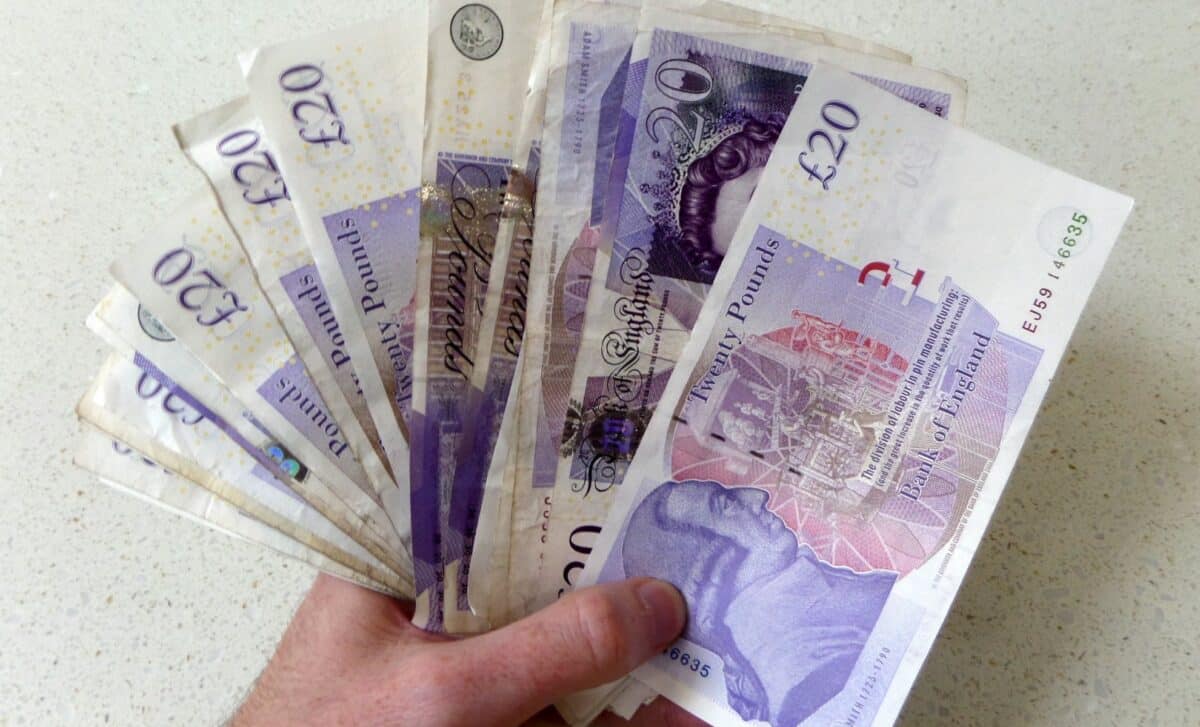
Average UK household disposable income increased in the second quarter of the year, with higher social benefit payments contributing more to the rise than wages and salaries.
Benefit Payments Rise Faster than Wages
Real household disposable income per head climbed 1% to £6,577, according to figures from the Office for National Statistics (ONS). The increase followed a 0.8% fall during the previous quarter. The increase in disposable income was driven largely by higher social benefits.
Social benefit payments rose by £5.3 billion during the quarter, compared with a £2.8 billion increase in wages and salaries. The ONS figures show that April’s annual uprating of state pensions and working-age benefits was one factor behind the rise.
The figures therefore point to a stronger household income position, although the composition of that increase was different from a rise driven mainly by employment earnings.
UK Economic Growth Revised Higher
The latest ONS figures also revised UK economic growth for the second quarter upward. GDP growth was revised from the previous estimate to 0.5%, an increase of 0.1 percentage point. The revision means the economy expanded at a faster pace during the quarter than initially reported.
The picture for the whole of 2025 was less positive. The ONS revised annual growth down to 1.2%, 0.1 percentage point below its previous estimate. Liz McKeown, director of economic statistics at the ONS, said stronger services growth in the latest quarter meant the economy was slightly larger than previously estimated, while growth across 2025 was revised lower.
Economists Expect Tougher Conditions Ahead
Economists have warned that the outlook for the remainder of the year could be more difficult, with inflation, borrowing costs and fiscal decisions all likely to shape household finances.
Thomas Pugh, chief economist at RSM UK, said the next six months could bring higher interest rates, stronger inflation and further tax increases, which he expects to weigh on economic growth.
The OECD has also revised its UK growth forecasts. Its latest projection puts UK growth at 1.1% for the current year and 1% for next year, compared with its previous 1.1% forecast for next year. The organisation expects UK inflation to average 3.1% this year before falling to 2.6% next year.
Budget Faces a Difficult Economic Backdrop
The figures come ahead of the government’s 28 October Budget, with economic growth and public finances under close scrutiny. Changes to growth forecasts and higher borrowing costs have led economists to reassess the government’s available fiscal headroom.
The Resolution Foundation has estimated that the buffer could fall to around £5 billion, which would leave the government facing choices over taxation and public spending. For households, the rise in disposable income is a positive change in the latest data, but the figures also show how much of the increase came from social benefits rather than wages.
The outlook for inflation, interest rates and taxation will continue to shape household finances over the coming months.