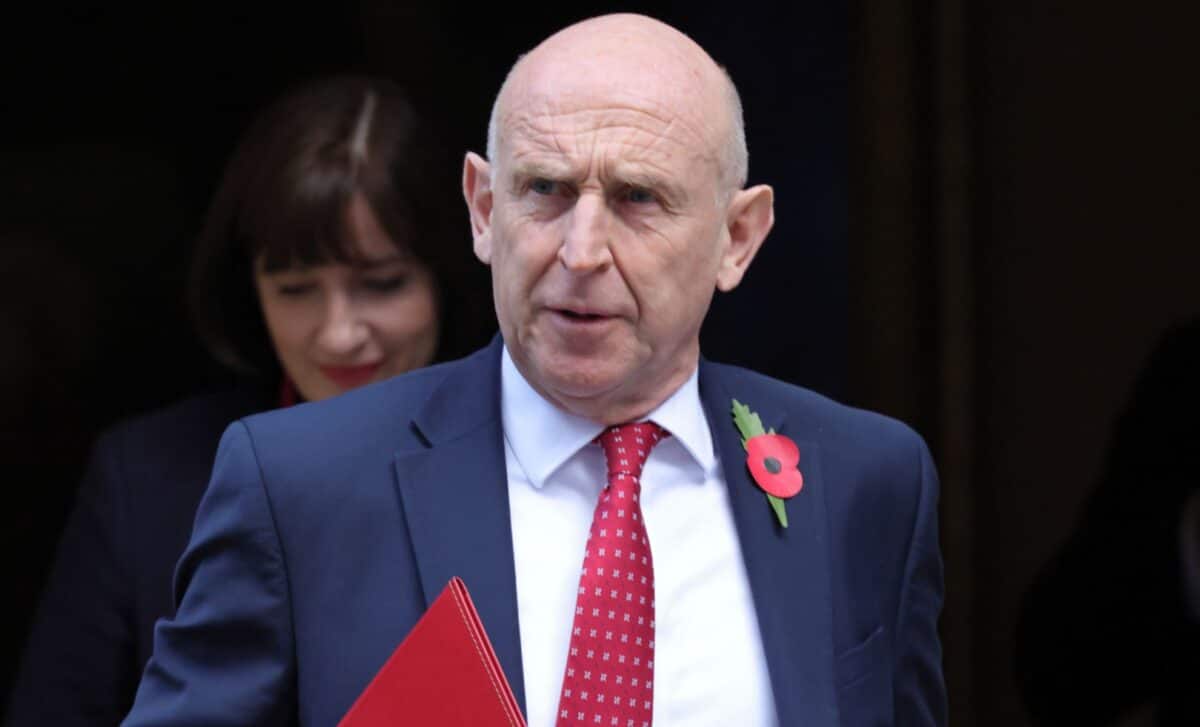
John Healey has resigned as UK defence secretary after a prolonged dispute with the government over military funding. His departure comes as ministers continue to debate how to finance a major defence investment programme intended to strengthen the armed forces over the next decade.
The resignation has intensified pressure on Prime Minister Keir Starmer ahead of a Nato summit next month, where defence spending is expected to be a central issue. It also leaves unresolved questions about how the government intends to meet its military commitments amid rising international tensions.
According to Healey’s resignation letter, the financial settlement proposed for the Defence Investment Plan (DIP) did not provide the resources he believed were necessary to address growing security challenges. He argued that the package would leave the armed forces without the level of investment required at a time of increasing threats.
The dispute centres on the long-delayed defence spending blueprint, which was expected to set out how the UK would fund military equipment, infrastructure and readiness programmes in the years ahead.
Disagreement over Defence Funding Reaches Breaking Point
Healey said the settlement presented to him this week “falls well short of what is required for defence and the country at this dangerous time”. He also stated that both the prime minister and the Treasury had failed to commit the resources needed to support the armed forces.
According to the BBC, reports suggested the government was preparing to provide an additional £13.5 billion for the Ministry of Defence over four years, while defence officials had sought funding to address a significantly larger shortfall. Healey argued that the settlement was heavily weighted towards later years despite what he described as immediate pressures on military readiness.
The government has committed to spending 3.5% of gross domestic product on defence by 2035. Healey maintained that the UK should instead reach 3% by 2030 and expressed concern that the proposed plan did not establish a timetable for achieving that objective.
In his response, Starmer defended the approach, saying the investment plan would deliver “an unprecedented increase in defence spending” while remaining fiscally sustainable. He argued that the necessary increases would require difficult decisions across government departments and rejected the use of what he called “irresponsible borrowing”. The resignation came on the same day some officials had expected the Defence Investment Plan to be published.
NATO Commitments and Military Capabilities under Scrutiny
The funding dispute has unfolded against a backdrop of wider concerns about the state of British defence capabilities. According to The Wall Street Journal, the Defence Investment Plan was designed to support a 10-year effort to modernise the armed forces following Russia’s invasion of Ukraine and amid continued pressure from the United States for European allies to increase military spending.
Questions have also been raised about the affordability of major defence programmes. According to reporting from The Guardian, projects linked to the plan include the Dreadnought submarine programme, investment in drones and Britain’s participation in the Aukus submarine partnership with Australia and the United States.
Healey warned that demands on defence had increased due to developments in the Middle East, commitments related to Ukraine and broader security obligations within Nato. He said the proposed settlement would have forced him to make decisions that reduced military readiness.
His departure has created further uncertainty ahead of the Nato summit in Turkey next month, where alliance members are expected to discuss defence spending targets and long-term security commitments. The government must now decide whether to proceed with the contested settlement or revisit the defence funding process once again.