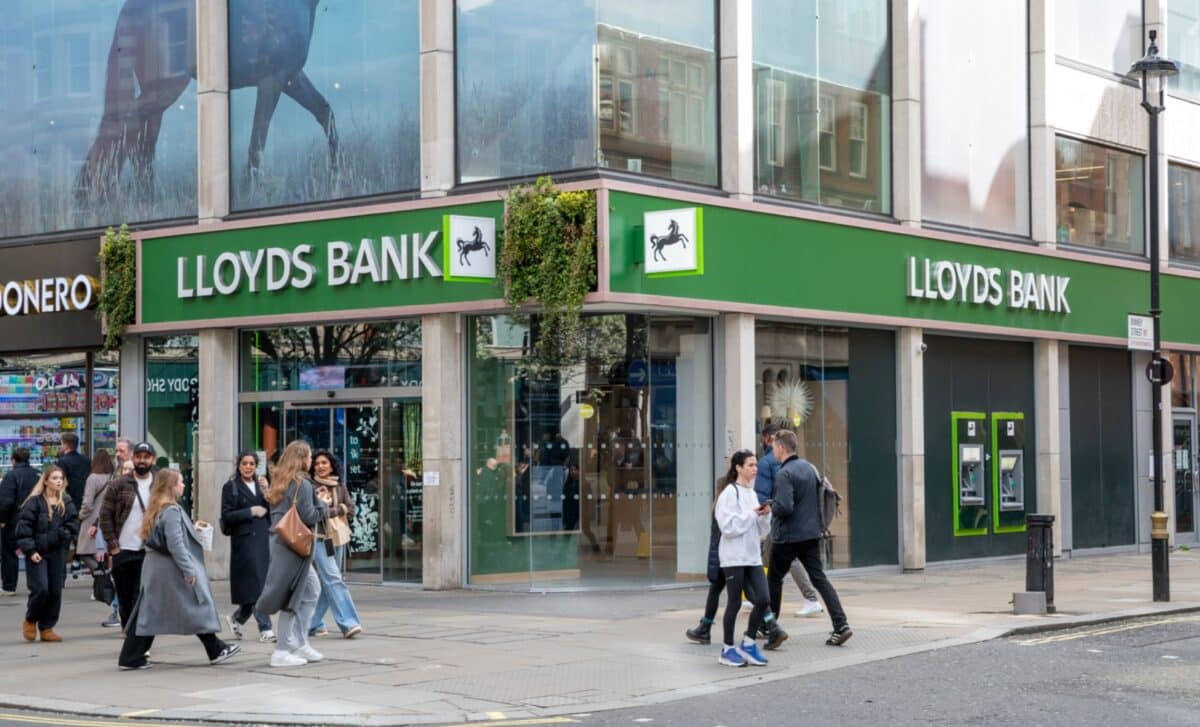
Digital banking alerts and personalised financial prompts could help British households improve their finances by thousands of pounds over the next decade, according to new research commissioned by Lloyds Banking Group. The study suggests wider use of digital banking tools may unlock around £100 billion for UK households over ten years.
The findings come as banks continue expanding app-based financial services aimed at helping customers track spending, manage debt and identify better savings or borrowing options. Lloyds said lower-income households could see the greatest gains relative to their income through budgeting support and easier access to credit tools.
The research, carried out with economic modelling by Professor John Gathergood from the University of Nottingham, examined how digital banking features such as spending alerts, budgeting notifications and product recommendations could affect household finances over time. According to Lloyds Banking Group, the projected gains amount to roughly £3,500 per household across Britain.
The report arrives during a period of economic uncertainty in the UK, with concerns over inflation, growth and energy prices continuing to affect household finances. Lloyds has also warned of a potentially weaker outlook for growth and unemployment linked to global economic pressures.
Digital Prompts Seen as a Tool for Improving Household Finances
The study focused on digital banking features designed to help customers make more informed financial decisions. These included alerts warning customers before accounts become overdrawn, prompts about switching to more suitable mortgage or credit card products, and tools that help users track regular spending and bills.
According to the research, the largest financial gains may be available to households holding excess cash that could potentially be moved into investment products. The report noted that mid-life savers and mortgage holders were among the groups likely to benefit most from these tools over the long term.
Lower-income households were also identified as major beneficiaries, largely through support with debt management and day-to-day budgeting. The modelling suggested digital banking prompts could help customers avoid unnecessary charges, better manage repayments and gain improved visibility over regular expenses.
Jas Singh, head of consumer relationships at Lloyds’ retail bank, said the effectiveness of these tools depends on relevance and timing. Speaking to the Press Association, he said financial prompts work best when they are linked to a customer’s own circumstances rather than becoming overly intrusive. “It’s a fine balance between where we see we should lean in further and where it’s extremely reactive,” Mr Singh said.

Lloyds Warns against Overly Invasive Banking Notifications
The debate around digital banking tools increasingly centres on how much involvement consumers expect from their banks. While spending insights and financial reminders have become more common across banking apps, Lloyds acknowledged that excessive monitoring could risk alienating customers.
Mr Singh told the Press Association that there are limits to the kind of notifications people may welcome from their bank. He suggested that alerts commenting on individual purchases could feel inappropriate to many customers. “I think if the banks were giving you notifications to say ‘I can see you’ve just spent on a coffee at Costa’, I’m not sure that’s the role society expects banks to play,” he said.
Instead, he argued broader spending summaries are more likely to be useful, pointing to examples such as monthly reports showing how much customers spend in specific categories.
The study also comes as banks monitor signs of financial stress among customers. Mr Singh said he had not seen a significant increase in people contacting Lloyds about job worries or broader financial difficulties, unlike during the Covid-19 pandemic or the height of the cost-of-living crisis.
He noted that some customers are seeking advice on managing bills more effectively, while others appear to be saving more money. According to Lloyds, there has not yet been a notable surge in subscription cancellations or similar signs of widespread financial strain.