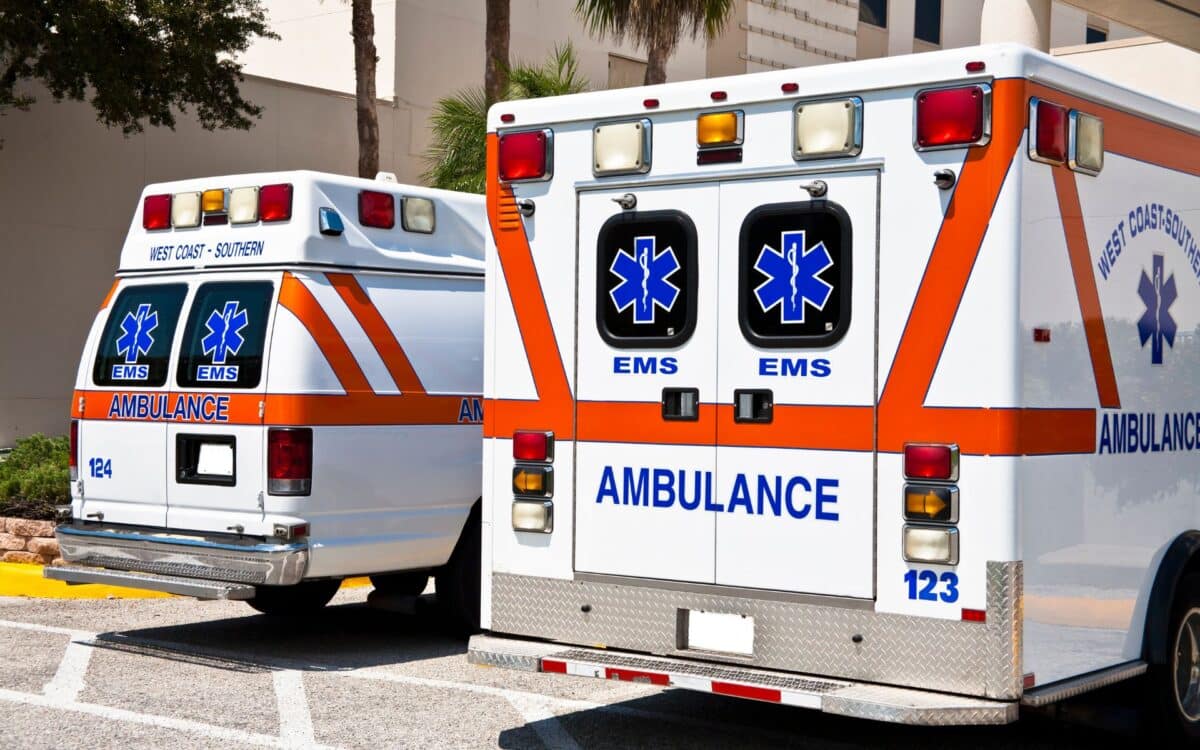
UK motorists are being reminded that making way for an ambulance must be done without breaking traffic laws, or they could be fined up to £1,000. In addition to the financial penalty, certain offences — such as running a red light — can lead to three points being added to a driver’s licence.
According to Daily Record, the warning follows incidents where motorists, attempting to assist emergency services, unintentionally committed traffic violations. Authorities stress that moving aside for an ambulance should be carried out only when safe and legal, reducing the risk of collisions while ensuring compliance with the Highway Code.
Official Guidance From Ambulance Services
A spokesperson from West Midlands Ambulance Service explained the correct approach:
If you are at the lights and can see an emergency vehicle behind you, stay where you are until the light turns green or the emergency vehicle has passed.
The spokesperson added:
Our teams are trained to safely navigate through traffic, sometimes using oncoming lanes or filter lanes.
But when it is not safe, we will maintain a safe distance, turn off sirens but keep lights on, and wait until it is safe to move.
This advice underlines that ambulance crews are trained to adapt to traffic conditions and that drivers should not feel pressured into making illegal or unsafe manoeuvres, which could result in a fine if traffic laws are broken when allowing ambulances to pass.
What the Highway Code Says
According to the Highway Code, drivers should always look and listen for ambulances, fire engines, police, doctors, or other emergency vehicles using flashing lights or sirens. It specifies that drivers should:
- Avoid stopping before the brow of a hill.
- Never climb onto the kerb.
- Avoid emergency braking that could endanger others.
The guidance stresses that making way for an ambulance should never come at the expense of pedestrian safety or other road users.
Blue Light Aware Recommendations
The Blue Light Aware website outlines scenarios where even emergency vehicles may have to wait:
Of course, there will be times when there simply is no room for an emergency service vehicle to get past, or perhaps its crew are activated by their control room to respond to an emergency while they are waiting with everyone else at the traffic lights.
On these occasions, they know that other motorists are not allowed to ‘jump’ the red light, and the emergency vehicle would ideally not activate its sirens and lights until it was safe for the vehicle in front to cross the solid white line at the junction.
It also warns:
On the (hopefully) rare occasions that a blue light vehicle, in ’emergency mode’, is sitting behind another vehicle at a red traffic light, it’s important to appreciate that it would be both very dangerous and illegal for the other vehicle to move across the solid white line.