Salad and Go has abruptly closed its remaining restaurants after filing for Chapter 11 bankruptcy. The Arizona-based drive-thru chain filed on August 4, 2026, and shut its remaining locations the next day. About 70 restaurants in Arizona and Nevada were affected.
The closures follow a retreat from Texas and Oklahoma and months of mounting financial pressure.
Salad And Go Files For Chapter 11 Before Closing Its Remaining Restaurants
Salad and Go, known for selling salads, wraps and other fresh food through a drive-thru-focused model, filed for Chapter 11 bankruptcy protection in the U.S. Bankruptcy Court for the Southern District of Texas, Houston Division, on August 4. The company then closed its remaining restaurants one day later, according to reporting cited by MassLive.com, which detailed the bankruptcy and the financial pressures described in court records. About 70 restaurants in Arizona and Nevada remained in operation immediately before the shutdown, according to Nation’s Restaurant News.
Their closure followed a much larger contraction that had already eliminated more than 70 locations in Texas and Oklahoma during the previous year. The sequence shows how rapidly the company’s restructuring efforts gave way to a complete operational shutdown. Rather than involving only a limited group of underperforming restaurants, the latest closures covered what remained of the chain’s restaurant footprint. For customers in its core Arizona market, where Salad and Go built much of its identity around quick, relatively inexpensive fresh meals, the decision meant that a familiar regional restaurant brand effectively disappeared within days of its bankruptcy filing. The court process will now address the financial obligations left behind after that retreat.
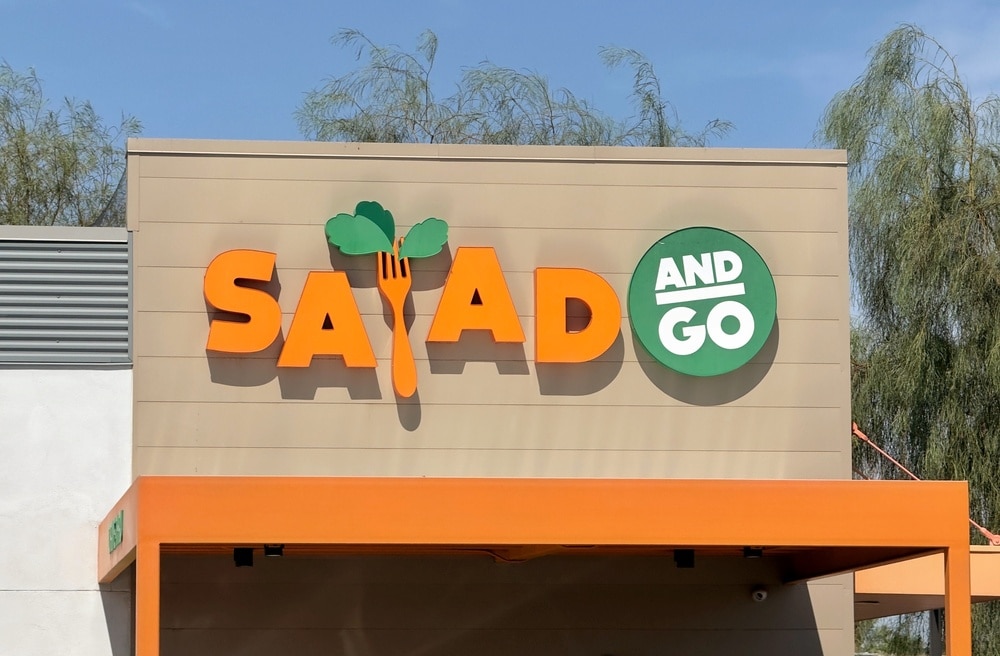
Credit: Shutterstock
Financial Pressure Intensified In The Months Before Bankruptcy
Court documents describe a company that had been under financial pressure for years before conditions deteriorated further in the months leading to its Chapter 11 filing. Salad and Go attributed its difficulties to a combination of an unsuccessful expansion into Texas and Oklahoma, softer consumer spending and the effects of a cyclosporiasis outbreak. Those challenges converged at a time when restaurant operators were already contending with consumers becoming more selective about discretionary spending.
According to the bankruptcy declaration, the impact on Salad and Go’s cash position became particularly severe during the final 90 days before the filing.
“Rising gas prices, reduced consumer spending, and the cyclospora outbreak significantly accelerated cash losses over the 90 days immediately preceding the Petition Date,” Chief Financial Officer Francis Gallagher said.
The statement places the final collapse in a broader financial context rather than attributing it to a single event. Higher fuel costs can affect both household spending decisions and restaurant operating expenses, while weaker consumer demand directly pressures transaction volumes. The outbreak introduced another disruption at a particularly difficult moment. Taken together, those pressures left the company facing faster cash losses even after it had begun reducing its geographic footprint.
The Texas And Oklahoma Expansion Became A Major Burden
The chain’s expansion beyond its established markets became one of the defining issues in its financial decline. Salad and Go had pushed into Texas and Oklahoma as part of an effort to extend a business model built around compact restaurants, drive-thru convenience and fresh food at accessible prices. Yet the expansion did not produce the stability the company needed. More than 70 restaurants across Texas and Oklahoma were closed during the year before the bankruptcy filing, effectively reversing a significant portion of the chain’s earlier growth. The consequences extended beyond individual restaurant leases and operating costs.
Court documents indicate that debt was associated with an affiliated entity connected to a now-closed Texas production facility, illustrating how the expansion required infrastructure as well as storefronts. That affiliate borrowed approximately $25.4 million through New Markets Tax Credit loans. Salad and Go’s principal operating entity itself carries no secured debt, according to the declaration, making the corporate structure behind the liabilities an important part of the bankruptcy picture. The distinction does not erase the financial challenges facing the wider business, but it helps explain how the company’s obligations were distributed among related entities as management attempted to navigate the retreat.
Investors Put In About $27 Million Months Before The Collapse
The final shutdown came despite a substantial injection of capital only months earlier. Existing equity holders contributed roughly $27 million in new capital through a recapitalization conducted between December 2025 and January 2026, according to the information disclosed in connection with the bankruptcy. That financing indicates that investors had recently committed additional resources to the company as it sought to address its financial position. Yet the subsequent acceleration in cash losses appears to have overwhelmed those efforts. By August, the company had moved from recapitalization and market retrenchment to a Chapter 11 filing and closure of its remaining restaurants.
The compressed timeline illustrates the scale of the challenge: new capital can provide liquidity and time, but it cannot by itself resolve sustained operating losses when sales, costs and other disruptions continue moving against a business. Salad and Go had already taken the significant step of abandoning large parts of its Texas and Oklahoma expansion, but the surviving Arizona and Nevada operations were ultimately not enough to prevent the broader shutdown. The case is therefore not simply a story of rapid expansion; it is also one of a company attempting to reverse that expansion while facing a worsening short-term cash position.