
The shift is especially visible in states exposed to severe weather risks, where insurance premiums have climbed as disasters become more frequent and rebuilding costs increase. According to LendingTree, homeowners in 15 states spend more each month on home insurance than on property taxes.
Insurance Costs Overtake Property Taxes in Several States
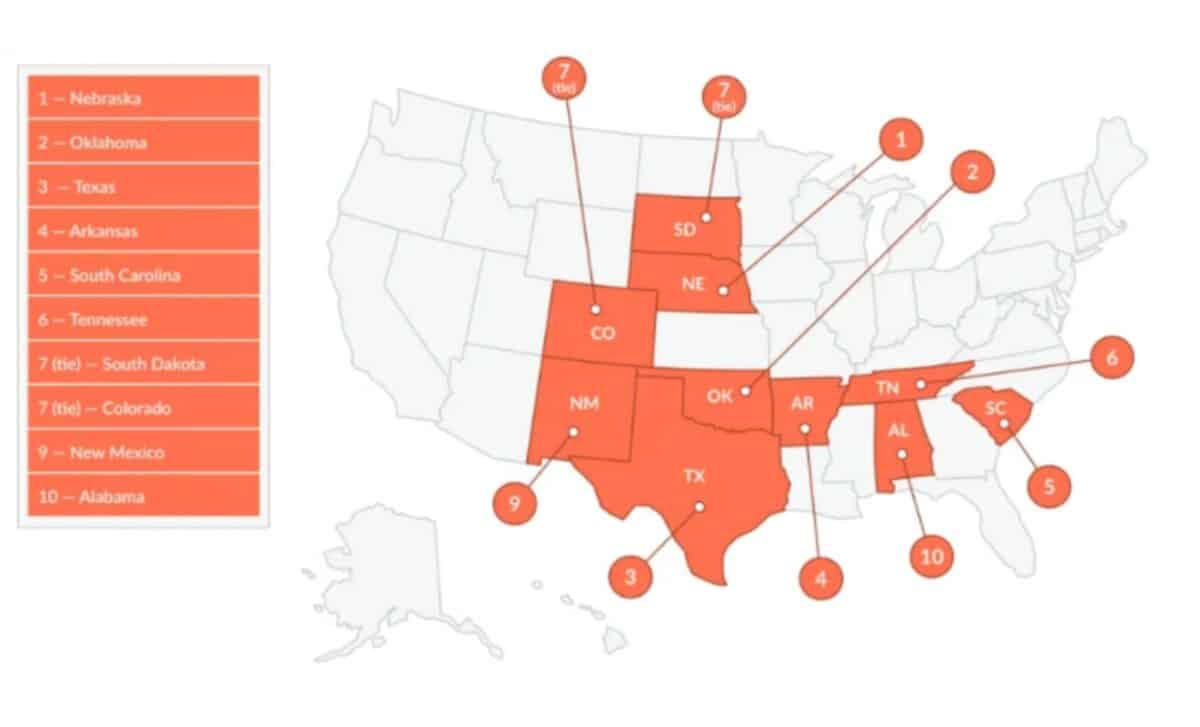
The gap is most pronounced in Tennessee and Alabama. According to LendingTree, the typical Tennessee homeowner pays an estimated $284 per month for home insurance, compared with $143 in property taxes. In Alabama, homeowners spend about $182 per month on insurance and $93 on property taxes.
Other states where insurance costs exceed property taxes include Colorado, South Carolina, Arkansas, Oklahoma, Arizona, New Mexico, Idaho, Nebraska, Mississippi, West Virginia, Kentucky, North Carolina and Louisiana. In Colorado, for example, homeowners pay an estimated $463 per month for insurance compared with $241 for property taxes, while South Carolina homeowners pay $259 for insurance and $135 for taxes.
The trend contrasts with states where property taxes remain the larger expense. New Jersey and New York have the highest estimated monthly property tax bills in the country, at $863 and $626 respectively, according to LendingTree. Their insurance costs are much lower, with estimated monthly payments of $159 in New Jersey and $168 in New York.
Nationwide, homeowners spend an estimated $200 per month on home insurance and $311 on property taxes. In Virginia and Montana, the two costs are nearly equal, with Virginia homeowners paying $234 in insurance and $276 in property taxes, while Montana homeowners pay $268 and $267 respectively.
Rising Housing Expenses Add Pressure to Affordability
Higher insurance premiums and property taxes are becoming larger parts of the broader housing affordability challenge in the United States. According to Harvard University’s Joint Center for Housing Studies, property taxes increased by more than 30 percent between 2019 and 2025, while home values rose by 54 percent since 2020.
Home insurance costs have also increased sharply. According to Insurify, premiums have risen 46 percent since 2021, driven by more frequent natural disasters and higher rebuilding costs. The insurance comparison company expects premiums to increase for the fifth consecutive year in 2026.
Many states with the highest insurance burdens face risks from hurricanes, flooding, tornadoes and wildfires. States including California and Florida have introduced reforms aimed at maintaining insurance availability and helping consumers manage rising costs, though premiums have continued to rise.
The Federal Reserve Bank of Atlanta’s Home Ownership Affordability Monitor shows that the median-income household would need to spend 66.38 percent of its income to afford the median-priced home in the United States. Households spending more than 30 percent of their income on housing are considered financially burdened.
Federal lawmakers are also examining possible responses, including a federal reinsurance backstop, funding for residential upgrades that improve disaster resistance, and a larger role for the U.S. Treasury in tracking catastrophe risks and identifying insurance coverage gaps.