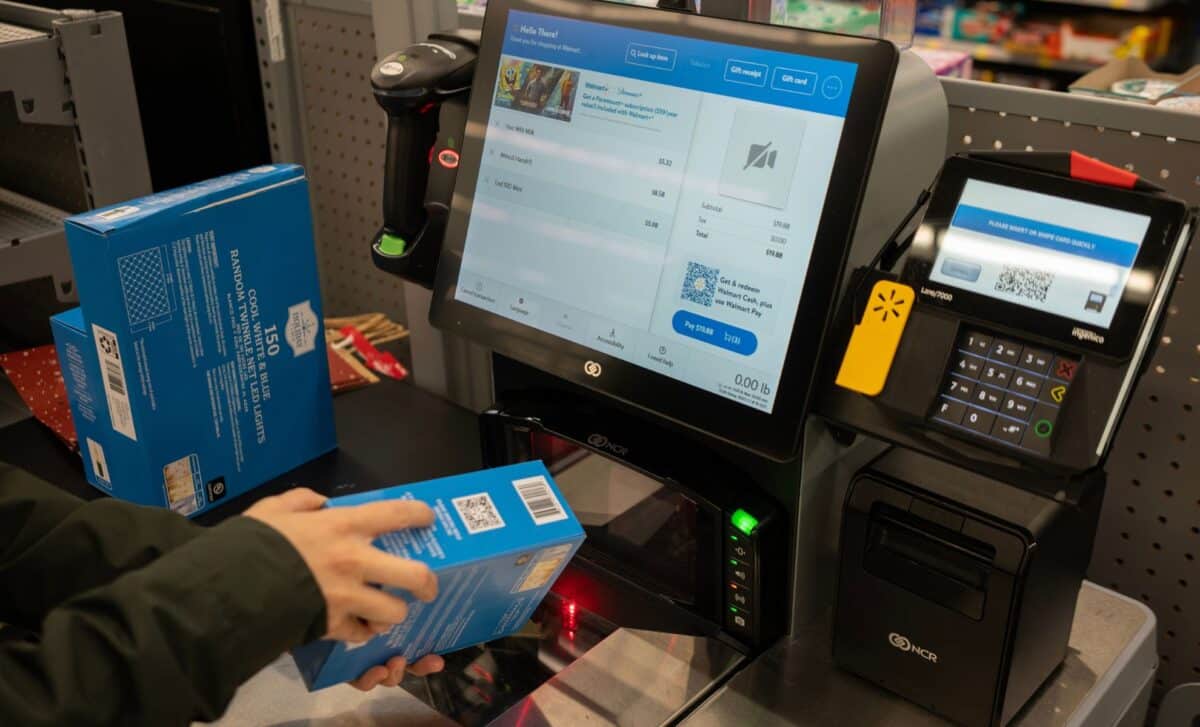
A new legislative proposal in New York could reshape the way millions of consumers experience self-checkout. The measure would require certain retailers, including Walmart, to offer customers a 10% discount when they use self-checkout kiosks, arguing that shoppers should share in the savings created by retail automation. The proposal arrives as lawmakers across the country continue debating how self-checkout technology affects workers, consumers, and store security.
Why Lawmakers Want Customers To Receive A Self-Checkout Discount
The proposal was introduced by Assemblywoman Nikki Lucas, who argues that retailers have steadily shifted part of the checkout process from employees to customers while benefiting from lower labor expenses. If approved, businesses covered by the legislation would be required to provide a 10% discount to shoppers choosing self-checkout instead of a traditional cashier lane.
The proposal reflects a growing debate over whether consumers should be compensated for performing tasks that were once handled by store employees. As self-checkout stations become a standard feature in supermarkets, big-box retailers, and warehouse stores, lawmakers are examining whether the financial benefits generated by automation should be shared more directly with customers.
According to a report from The Sun, New York is among several states considering new rules governing self-checkout operations. The discussion extends beyond convenience, touching on consumer rights, labor practices, and the changing economics of modern retail.
Assemblywoman Nikki Lucas, who proposed the legislation, said it would promote consumer fairness. According to Lucas, labor and cost savings generated by self-checkout kiosks should be passed to consumers. She said:
“Retail businesses increasingly rely on self-checkout systems to reduce staffing and operational costs by shifting responsibilities traditionally performed by employees onto consumers. Since customers are effectively completing portions of the checkout labor themselves without compensation, providing a mandatory discount helps ensure fairness, acknowledges consumer participation in store operations, and allows the public to share in the financial savings created by self-service technology.”
New York Is Also Considering Tighter Self-Checkout Rules
The proposed discount is only one part of a broader conversation taking place in New York over the future of self-checkout technology. Separate legislation has been introduced that would impose new operating requirements on retailers using self-service kiosks. One proposal would limit shoppers to 15 items or fewer when using self-checkout, aiming to reduce congestion while making transactions easier to supervise.
Another provision would require qualifying stores to maintain one employee for every three self-checkout stations, increasing staff presence in areas that have traditionally operated with minimal oversight. Supporters argue these measures could improve customer service while discouraging theft and reducing operational problems that have become increasingly common in stores relying heavily on self-checkout technology. Retailers would likely need to evaluate staffing levels, checkout layouts, and operating procedures if the proposals eventually become law.
Retailers Face Growing Debate Over Automation And Store Safety
The legislation also reflects wider concerns about the rapid expansion of automated checkout systems throughout the retail industry. Many large chains have invested heavily in self-checkout technology to improve efficiency and lower operating costs, yet critics argue the shift has created unintended consequences for both employees and shoppers. Questions surrounding retail theft, customer assistance, and workplace staffing have become central issues as more stores reduce the number of traditional cashier lanes.
Supporters of stronger regulation believe increased employee supervision could improve the shopping experience while providing additional security inside stores. Others argue that self-checkout remains a valuable convenience that allows customers to complete purchases more quickly, particularly during busy shopping periods. The debate illustrates the challenge of balancing technological innovation with consumer expectations and workforce concerns.
New York City Councilmember Amanda Farías, who proposed separate legislation addressing self-checkout operations, added:
“We’ve seen the consequences of removing workers from these spaces: increased retail theft, less oversight, fewer protections for both workers and customers, and generally decreased safety.”
What The Proposal Could Mean For Walmart Shoppers
If the legislation ultimately becomes law, shoppers at participating retailers could see a direct financial benefit each time they choose self-checkout. For major chains such as Walmart, the measure could introduce new operational costs while potentially encouraging greater use of self-service lanes by customers seeking immediate savings.
At the same time, retailers would need to adapt to any accompanying staffing or item-limit requirements approved by lawmakers. The proposal remains under consideration and has not yet been enacted, meaning no discount is currently available. Even so, the legislation highlights the growing effort by policymakers to redefine how automation should serve both businesses and consumers as self-checkout continues to transform the retail landscape.