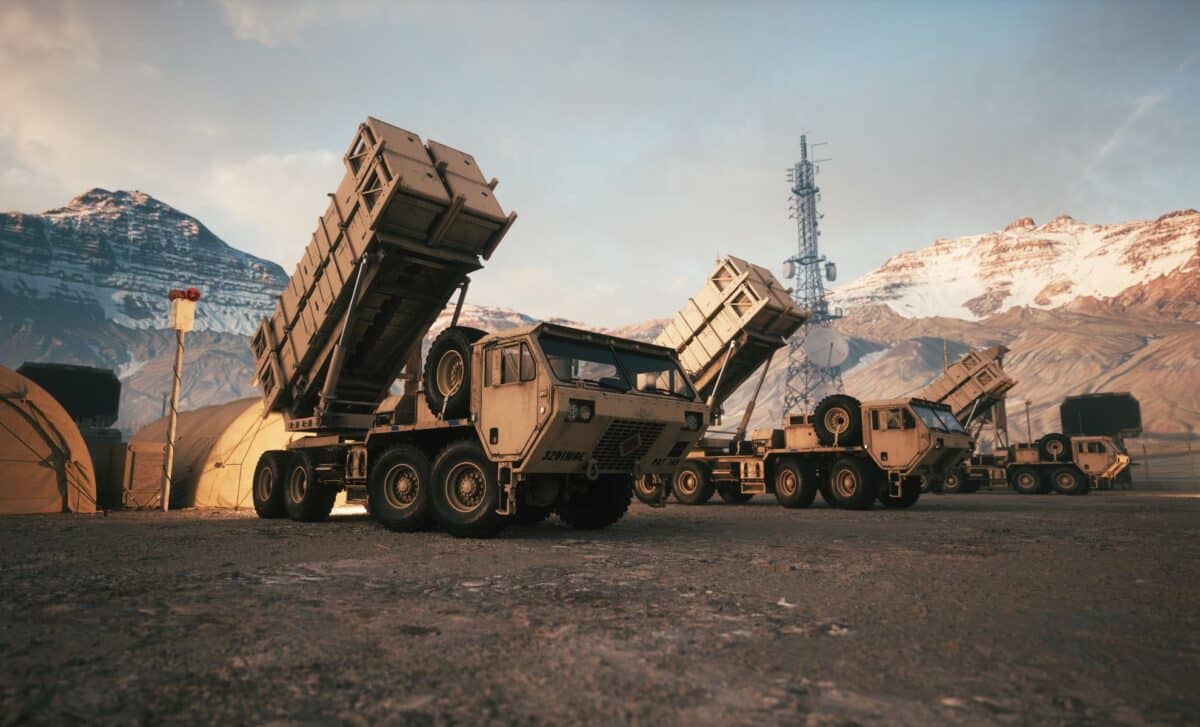
The U.S. military is seeking to reduce the cost and production time of key missile systems as concerns grow about the pace at which weapons can be replaced. New Pentagon initiatives are encouraging defense companies to develop lower-cost alternatives that can be manufactured in far greater numbers.
The effort comes as U.S. officials and lawmakers continue to examine whether the defense industrial base can sustain prolonged military operations while maintaining readiness for future conflicts. According to The Wall Street Journal, the Pentagon is increasingly turning to nontraditional contracting methods and new production approaches to address the issue.
Military Seeks Faster and Less Expensive Missile Production
Several Pentagon programs are focused on producing missiles that cost a fraction of current systems while shortening development timelines. According to The Wall Street Journal, one Army initiative known as the Low-Cost Containerized Missiles (LCCM) program aims to build thousands of missiles that can be launched from containerized systems transported by vehicles. A central requirement is that each missile cost less than $500,000.
Another Army effort is asking manufacturers to develop air-defense missiles priced below $250,000 each. That target stands in contrast to the newest Patriot interceptors produced by Lockheed Martin, which reportedly cost about $4 million per missile and require more than two years to manufacture.
The Air Force is also pursuing a separate program intended to procure tens of thousands of lower-cost missiles in the coming years. Military officials have emphasized that these projects are not intended to replace advanced missile systems currently used by U.S. forces. Instead, they are designed to expand available options and establish additional production capacity for future needs.
The broader initiative reflects longstanding concerns over delays and rising costs in major defense programs. According to defense-contracting expert Jerry McGinn of the Center for Strategic and International Studies, many high-end missiles remain “essentially handmade munitions” despite years of investment in automation. He noted that some production facilities more closely resemble specialized workshops than large-scale assembly lines.
New Contracting Approaches Aim to Bypass Traditional Delays
The Pentagon is also experimenting with contracting methods intended to accelerate development and manufacturing.
One example is CoAspire, a company competing in the Army’s low-cost missile program. Founder Doug Denneny, a former Navy officer who later worked for Boeing and MBDA’s U.S. division, said the company relies on commercially available components and 3D-printed parts to reduce costs and simplify modifications.
According to The Wall Street Journal, CoAspire’s proposed missile, called Ghost, is expected to begin flight testing this year. The company is operating under the Pentagon’s “other transaction authority,” a contracting mechanism that provides greater flexibility than traditional procurement programs.
Denneny said direct communication between developers and military customers helps reduce delays that often arise when requirements change during testing and development.
CoAspire is competing alongside Anduril Industries, Leidos Holdings, and Zone 5, a subsidiary of Norway’s Kongsberg Gruppen. The Army has set a goal of obtaining more than 10,000 missiles by 2030.
Leidos has said it plans to produce 3,000 containerized cruise missiles over the next three years by adapting an existing weapon design. Doug Jones, chief technology officer for the company’s defense segment, said many traditional munitions include numerous additional features beyond their primary mission requirements.
Defense analyst Todd Harrison of the American Enterprise Institute said the Pentagon has explored lower-cost precision-guided weapons for years. He argued that the primary challenge is overcoming the military’s tendency to closely manage development programs. As Harrison put it, the goal is to field precision-guided weapons that can be produced and used “on a massive scale,” without requiring perfection in every system.