

Oil markets have jumped sharply after Iran and Israel exchanged military strikes, threatening the fragile cease-fire in the Middle East. Investors are bracing for potential disruptions to shipping routes and global supply, while consumers may face rising fuel prices and economic uncertainty.
Oil Prices Jump Amid Middle East Escalation
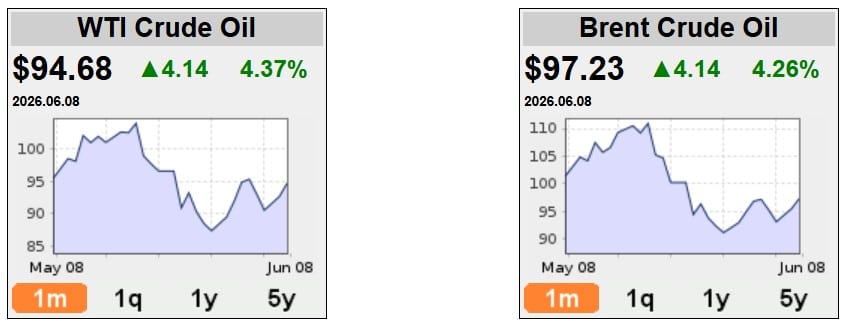
Brent crude, the global benchmark, surged nearly 5% to $98 per barrel. West Texas Intermediate rose around 5% to $95 per barrel. Analysts point to the Strait of Hormuz as a key concern, the vital waterway carrying roughly one-fifth of the world’s oil supply. Any prolonged disruption could have a major impact on global markets.
Global Financial Markets Respond
Asian and European stock markets reacted negatively to the news. South Korea’s index fell 8.3%, Japan’s Nikkei 225 dropped 3.9%, and Europe’s Stoxx 600 declined 0.6%, reports NY Times. U.S. futures indicate a modest rebound may occur, but volatility remains high as investors assess the risk of further military escalation and supply chain shocks.
Fuel Prices Remain Elevated for Consumers
In the U.S, gas prices dipped slightly to $4.16 per gallon and diesel to $5.32 per gallon, yet prices are still nearly 40% higher than pre-conflict levels. Experts warn that gasoline and diesel prices often lag crude fluctuations, meaning consumers may continue facing elevated costs at the pump over the coming weeks.
Economic and Industrial Implications
Rising oil prices could intensify inflationary pressures globally. Industries that rely on fuel, including shipping, airlines, and logistics, may see operational costs rise, potentially affecting prices for goods. Households could feel increased financial strain, particularly in countries highly dependent on imported oil.
Traders and energy analysts are watching developments closely. Any prolonged escalation could further drive up oil prices and disrupt energy markets. Governments and energy companies are preparing contingency plans to mitigate supply risks, while investors remain highly sensitive to geopolitical news in the region.
What This Means for the Future
The recent surge in oil prices underscores the strong link between geopolitics and energy markets. As the situation evolves, energy security, inflation, and market stability will remain top concerns. Consumers, businesses, and investors alike will need to monitor developments closely in the coming months to plan for potential volatility.