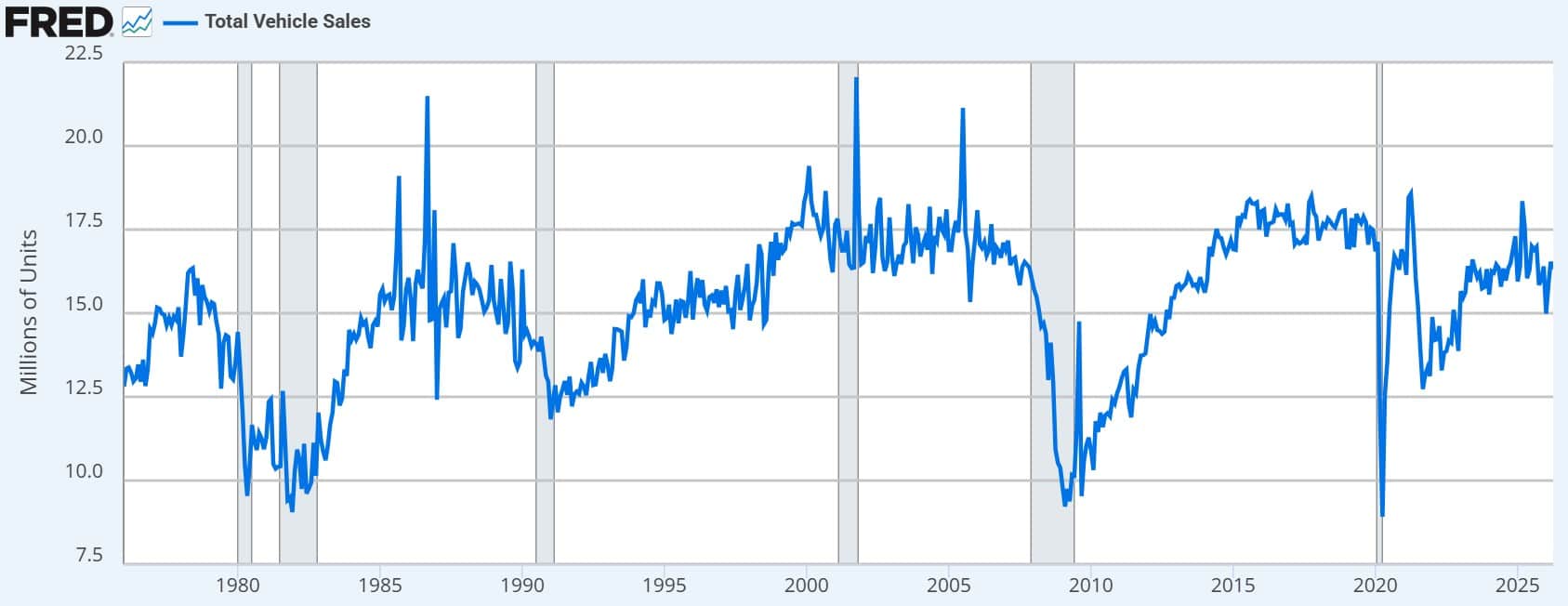
The U.S. new car market is shrinking, and the trend is becoming hard to ignore. In April, new vehicle sales fell for the eighth consecutive month, and roughly 1 million buyers have disappeared from the market since 2020. Forecasts that predicted a rebound to pre-Covid levels of seventeen million annual sales have been abandoned. Analysts now suggest sales could remain stuck near or below sixteen million for years to come.
Rising Costs Keep Buyers Away
The decline is driven largely by high interest rates, persistent inflation, rising gas prices, and tariffs. These factors have pushed monthly payments for new vehicles sharply higher, making it harder for middle-class buyers to afford a new car.
The average price of a new car in 2026 has climbed to around $50,000, far above what many consumers can comfortably pay. As a result, Americans are keeping their older cars on the road longer, delaying new purchases.
The average age of vehicles on U.S. roads is now 13 years, a historic high. Used car prices remain elevated as well, reflecting the lingering effects of pandemic-era supply disruptions and strong demand. Buyers appear increasingly willing to maintain older vehicles rather than face the cost of replacing them.
Hybrids Gain Ground While EVs Struggle
Amid the slowdown, hybrid vehicles are one of the few bright spots. Sales have increased by more than 9 percent, now accounting for over 14 percent of new vehicle purchases. Hybrids offer fuel efficiency, reliability, and lower monthly costs, which appeals to cost-conscious buyers.
Fully electric vehicles, however, are struggling. EV sales have dropped more than a third year-to-date, reducing their market share to just 5 percent. Many EV models rank among the worst-selling vehicles of 2026. Analysts say the disconnect reflects a gap between automakers’ ambitions and what drivers want. For most, practical, reliable transportation with lower fuel costs and no lifestyle compromises is the priority.
Dealerships Feeling the Pressure
Car dealerships are already feeling the impact. Lower sales mean slower inventory turnover and more pressure to offer financing incentives, discounts, or promotions. Dealerships are increasingly focused on retaining customers and appealing to buyers who value practical, cost-effective vehicles over premium or niche models.
The U.S. auto market faces a long period of adjustment. With interest rates expected to remain high and vehicle prices elevated, many consumers are likely to delay upgrades or favor hybrids over fully electric vehicles. Without significant changes to affordability or financing options, analysts warn the market may struggle to recover the millions of buyers lost since the pandemic.