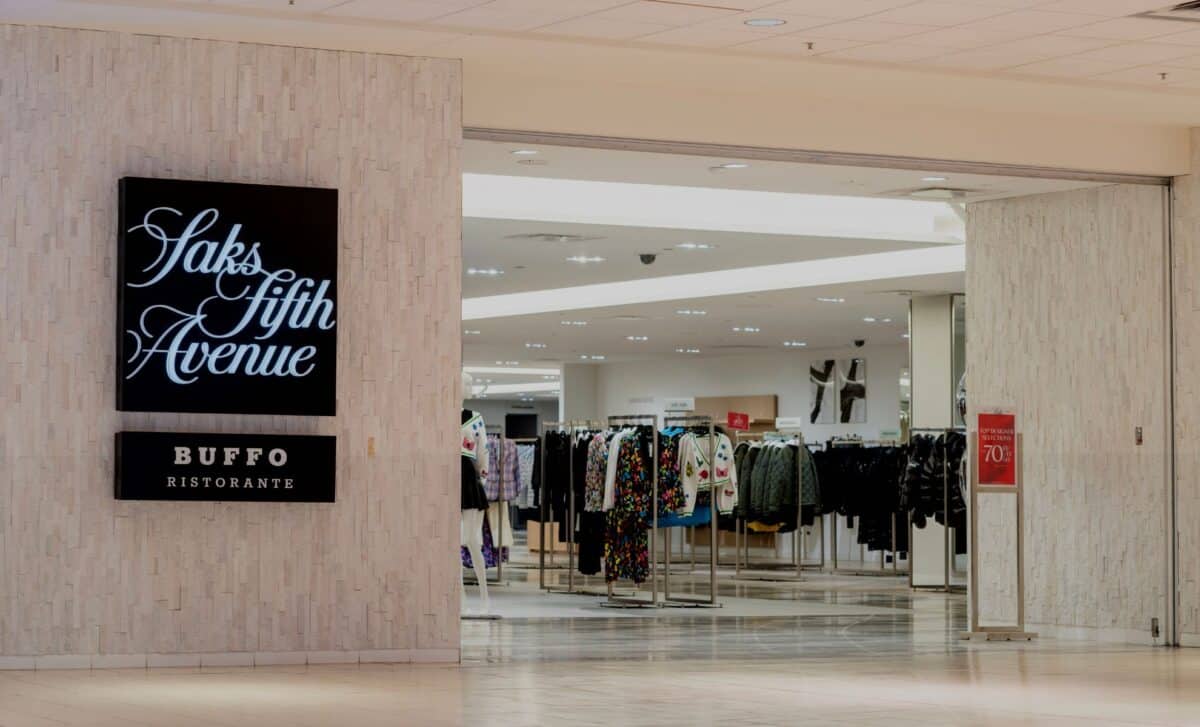
One of America’s most iconic luxury retailers, Saks Fifth Avenue, is grappling with significant financial distress that could force the company into Chapter 11 bankruptcy. The department store, founded in 1902, has struggled to manage its cash flow, leading to persistent delays in paying its suppliers. With the critical holiday season approaching, Saks is at a crossroads that could determine its future.
Despite its storied history and strong brand presence, Saks Fifth Avenue’s financial stability has been in jeopardy for some time. According to data from Creditsafe, the retailer has been consistently late in settling its debts, with “Days Beyond Terms” (DBT) hovering well above the industry norm. This prolonged pattern of delayed payments has raised concerns among vendors, with some even halting shipments due to overdue invoices. As a result, Saks is now facing a perfect storm of cash flow problems, mounting debts, and faltering supplier relationships.
Payment Delays Signal Deep Liquidity Issues
Saks’ ongoing delays in paying its suppliers have highlighted the company’s liquidity issues. The most recent data shows that its DBT has been steadily climbing, reaching as high as 41 days in early 2025, significantly above the industry average of 10-12 days. This trend indicates sustained cash flow problems, and according to Ragini Bhalla, head of brand and spokesperson for Creditsafe, “This indicates that Saks has consistently taken nearly a month or more to pay its suppliers late.”
The impact of these payment delays is far-reaching, with some suppliers halting shipments and others hesitant to offer credit. As Bhalla explains, this can weaken the company’s supply chain resilience, making it harder for Saks to maintain a steady flow of inventory. With the holiday season just around the corner, this could have devastating effects on the retailer’s ability to meet customer demand, thus jeopardizing potential sales at its most profitable time of the year.
Declining Sales and Worsening Financial Health
In addition to its cash flow issues, Saks Fifth Avenue has seen a notable decline in revenue. According to recent reports, the retailer’s Q2 revenue dropped more than 13% compared to the previous year, with net losses widening to $288 million. The company’s troubles have been compounded by its acquisition of Neiman Marcus and Bergdorf Goodman, which has yet to yield positive financial results.
Furthermore, Saks’ management has struggled to address inventory challenges, which have only worsened the brand’s financial position. While CEO Marc Metrick attributed the drop in sales to “inventory challenges” linked to system integration issues, the underlying cause remains a lack of liquidity. As analysts point out, the retailer’s reliance on vendor-run concession and marketplace models is currently propping up the business, but this is a fragile foundation.
With $275 million in overdue payments and an ever-widening financial gap, Saks Fifth Avenue is navigating a perilous path. Without significant improvements in cash flow and supplier relations, the retailer faces an uncertain future, with bankruptcy a very real possibility in the coming months.