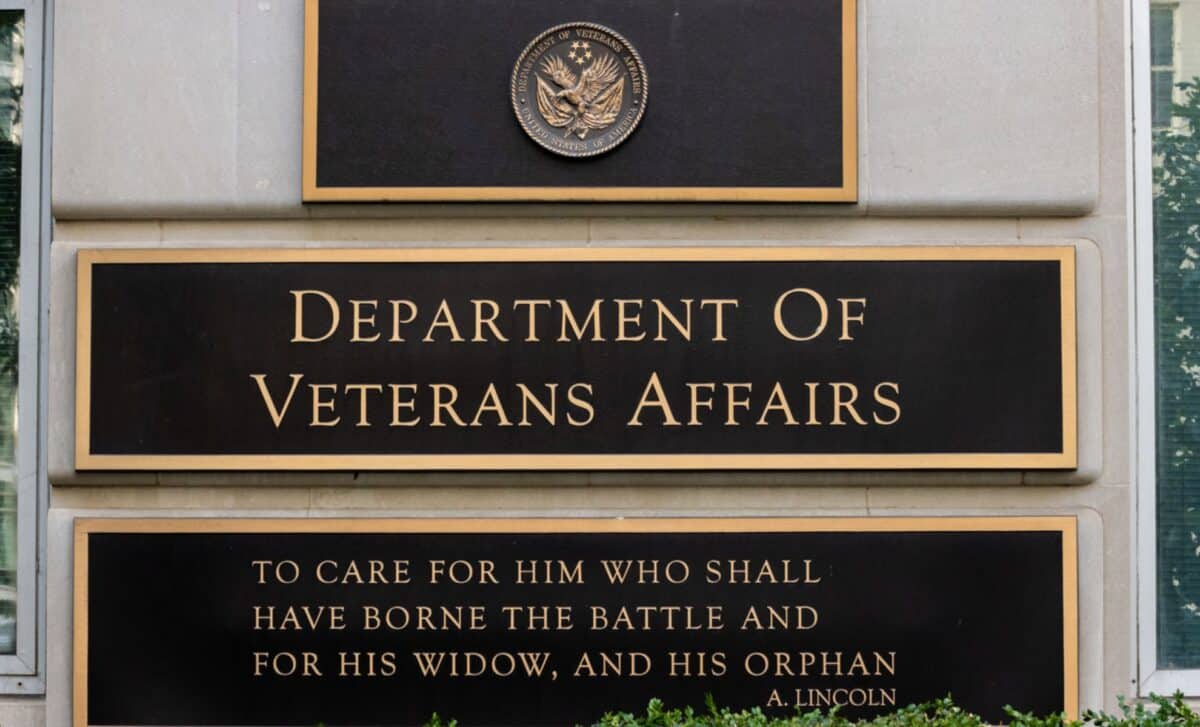
The Department of Veterans Affairs will begin automatically paying the higher of two key survivors’ benefits later this month, a regulatory shift designed to shorten processing times and deliver funds more quickly. The change, effective February 23, alters how claims for Dependency and Indemnity Compensation and Survivors Pension are handled.
The update marks a procedural adjustment within the VA’s broader effort to streamline survivors’ services. The agency finalized the rule in mid-February, describing it as a way to reduce administrative burdens while accelerating decisions for grieving families.
For years, the VA was required to process claims for DIC and Survivors Pension separately, even when one benefit clearly provided a greater payment. That structure often resulted in longer wait times, since both claims had to undergo formal review before a final determination was made. The new approach eliminates that duplication in most cases.
According to a February 13 VA press release, the department will now award whichever benefit is higher (generally DIC) without delaying payment to fully develop the lesser claim. The agency stated that this adjustment is expected to produce “faster decisions and quicker payments” for certain survivors.
Streamlined Processing and a Key Exception
Under the revised rule, the VA will compare the two benefits at the outset and move forward with the higher payment, rather than pausing to complete parallel reviews. DIC is typically the larger award and is paid to eligible surviving spouses, children, and parents of service members who died in the line of duty or veterans whose deaths resulted from service-connected conditions.
Survivors Pension, by contrast, is available to qualifying surviving spouses and unmarried dependent children of wartime veterans who meet specific income and net-worth limits set by Congress. Both benefits are tax-free monthly payments.
There is one clearly defined exception. According to the VA press release, Survivors Pension, not DIC, will be awarded if all four of the following conditions are met: the claimant is the veteran’s surviving spouse, has no dependents, resides in a nursing home, and has applied for or is receiving Medicaid. In that situation, the DIC claim will not be further developed.
The rule also outlines what happens if circumstances change. If a surviving spouse stops Medicaid-covered nursing home care, DIC may become effective from the date Medicaid coverage ends, provided a claim is filed within one year. Conversely, if a spouse receiving DIC later begins Medicaid-covered nursing home care and qualifies for Survivors Pension, the pension may take effect on the first day of the month after DIC ends, again if a claim is filed within one year.
Part of a Broader Survivors Reform Effort
The regulatory change follows a larger reform initiative launched in 2025. The VA described this effort as a “three-pronged approach” aimed at eliminating barriers and streamlining how eligible survivors and dependents apply for and receive benefits.
The initiative included moving the Office of Survivors Assistance into the Office of the VA Secretary and establishing a specialized outreach team to guide survivors through the DIC claims process. The department has also sought to identify opportunities for automation to make claims processing quicker and easier.
VA Secretary Doug Collins characterized the rule as a “commonsense change” that reduces bureaucracy at a difficult time for families. According to the VA, the goal is to ensure survivors receive the services and financial support they have earned without unnecessary procedural delays. For additional information, the department directs survivors to contact the VA benefits hotline at 800-827-1000.