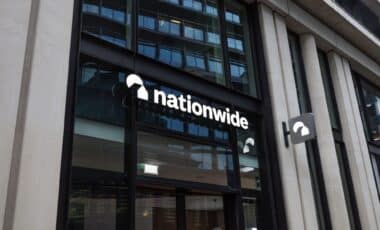
House prices in the UK saw a modest rise of 0.3% in January 2026, marking a slight recovery after a subdued end to 2025. The increase, reported by Nationwide Building Society, suggests growing confidence in the property market as mortgage rates continue to ease.
Average property values rose to £270,873 in January, according to Nationwide, reversing the 0.4% monthly dip seen in December. Though not a dramatic surge, the shift signals a market adjusting to improved affordability conditions and a more stable economic outlook.
The beginning of 2026 has brought a degree of renewed optimism to the UK housing market. After months of uncertainty surrounding potential property tax reforms and interest rate shifts, both buyers and sellers appear to be regaining their footing. Analysts suggest this modest upward movement may reflect growing stability, especially in mortgage affordability.
Mortgage Affordability Drives Market Shift
A key factor underpinning the rise in house prices is the steady improvement in mortgage affordability. According to Nationwide, monthly mortgage repayments for a standard first-time buyer property now account for around 32% of a typical net income. While slightly above the historical average of 30%, this figure is notably lower than the peak of 38% reached in 2023.
Robert Gardner, chief economist at Nationwide, attributed this to earnings growth outpacing house price inflation and a slow but consistent fall in mortgage rates. “Affordability constraints have eased over the past year,” Gardner stated, highlighting how this trend has helped to maintain buyer demand despite broader economic pressures.
First-time buyer activity has edged higher as a share of total transactions, suggesting that the easing of affordability barriers is having a tangible impact on the market. The number of mortgage approvals for home purchases remains close to pre-pandemic levels, indicating continued interest from prospective homeowners.
Improved affordability, combined with wage growth and stable lending conditions, is likely to support housing market activity in the months ahead. Experts suggest this could help sustain moderate price growth, assuming broader economic conditions remain steady.
Regional Contrasts Remain Pronounced
Despite the national increase, housing affordability remains uneven across the UK. According to Nationwide, affordability pressures are still particularly acute in southern regions of England, while areas such as Yorkshire, Scotland and the Humber continue to see mortgage repayments below their long-term averages.
In contrast, Northern Ireland has experienced a deterioration in affordability, linked to relatively strong house price growth over the past year. These regional disparities highlight the fragmented nature of the UK housing market, where local economic conditions and supply dynamics play a significant role in shaping outcomes.
The Guardian reports that buyer demand surged by 57% in the two weeks following Christmas, with newly listed properties rising by 81%, based on figures from Rightmove. This activity suggests a growing number of people are re-entering the market after holding off due to budget-related uncertainty in late 2025.
Alice Haine, a personal finance analyst at Bestinvest, noted that the combination of falling interest rates, stabilising inflation and rising real wages has improved market confidence. Yet, she cautioned that this momentum could be tested if rate cuts are slower than expected or inflation proves more persistent.
The regional variation in market performance also reflects differing levels of supply. According to the Express, increased availability of homes in some areas has helped to moderate price growth, enabling more balanced transactions and offering buyers greater choice. While the overall picture remains cautiously positive, experts agree that sellers will need to be responsive to local conditions and realistic about pricing if they hope to secure sales in the coming months.