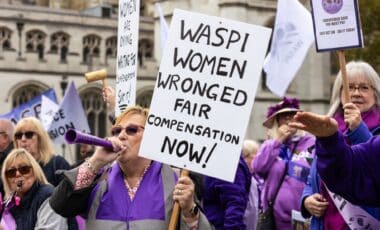
Millions of British women face almost two extra decades in work to reach the same retirement income as men, raising urgent concerns about gender and social inequality in the pension system. A new analysis reveals that state pension-age women would have to remain in employment until 86, nineteen years past retirement age, to match male private pension wealth, according to now:pensions and the Pensions Policy Institute (PPI).
Gender Pension Gap Reveals Long-Term Structural Inequalities
The UK’s pension system continues to reveal significant discrepancies between men and women, with data showing women are disproportionately disadvantaged both during their working lives and in retirement. The latest findings, reported by now:pensions, suggest that to accumulate the same level of private pension wealth as men, women would need to work an additional nineteen years beyond the standard retirement age of 67. This means some would not reach parity until the age of 86.
According to Samantha Gould, Head of PR and Campaigns at now:pensions, “For far too many in our society, a comfortable retirement remains out of reach, usually through no fault of their own.” The figures highlight how persistent income inequality and labour force participation gaps significantly affect women’s pension outcomes.
Women’s average annual incomes stand at 80 percent of the UK average, and just 67 percent of men’s. For single mothers, that figure drops to 60 percent of the national average. These figures illustrate the long-term impact of wage disparity on pension contributions, particularly in a system where private pension accumulation is closely tied to employment earnings.

Underpensioned Groups Face Steep Disadvantages
Beyond gender, the research identifies several underpensioned groups, including ethnic minorities, carers, people with disabilities, and single mothers, who experience lower-than-average pension savings. According to the Pensions Policy Institute, private pension incomes for these groups range from 18 to 64 percent below the UK average.
Lauren Wilkinson, lead researcher at the PPI, noted that “private pension incomes of underpensioned groups remain below three-quarters of average population private pension incomes, with some groups experiencing significant declines compared to the 2020 Index.” When accounting for state pensions and benefits, the gap narrows, but remains considerable.
One key issue is the limited access to the auto-enrolment system, which was introduced to increase pension participation across the workforce. Many low-income earners, especially part-time workers and those juggling multiple jobs, do not meet the earning threshold required for automatic enrolment into workplace pension schemes. As Ms Gould explained, “These groups are often locked out of the auto-enrolment system, unable to earn enough to put money aside for later.”
The ongoing cost-of-living crisis and uncertain economic conditions further complicate any efforts to close the pensions gap. Although experts acknowledge the fiscal pressures on the government, they warn against inaction. “Doing nothing is not an option,” said Gould, adding that there is an urgent need for policy reform to create fairer outcomes.
Despite the structural challenges, campaigners argue that long-term solutions, such as expanding auto-enrolment, recognising unpaid care work, and boosting low-income pension incentives, must be considered. According to Wilkinson, “it is important that the underpensioned challenge is approached with a long-term view.”
The disparity between pension outcomes reflects broader issues of inequality in income, access, and opportunity, many of which persist throughout working life and are then compounded in retirement. Addressing these gaps requires both targeted reforms and sustained political will.