

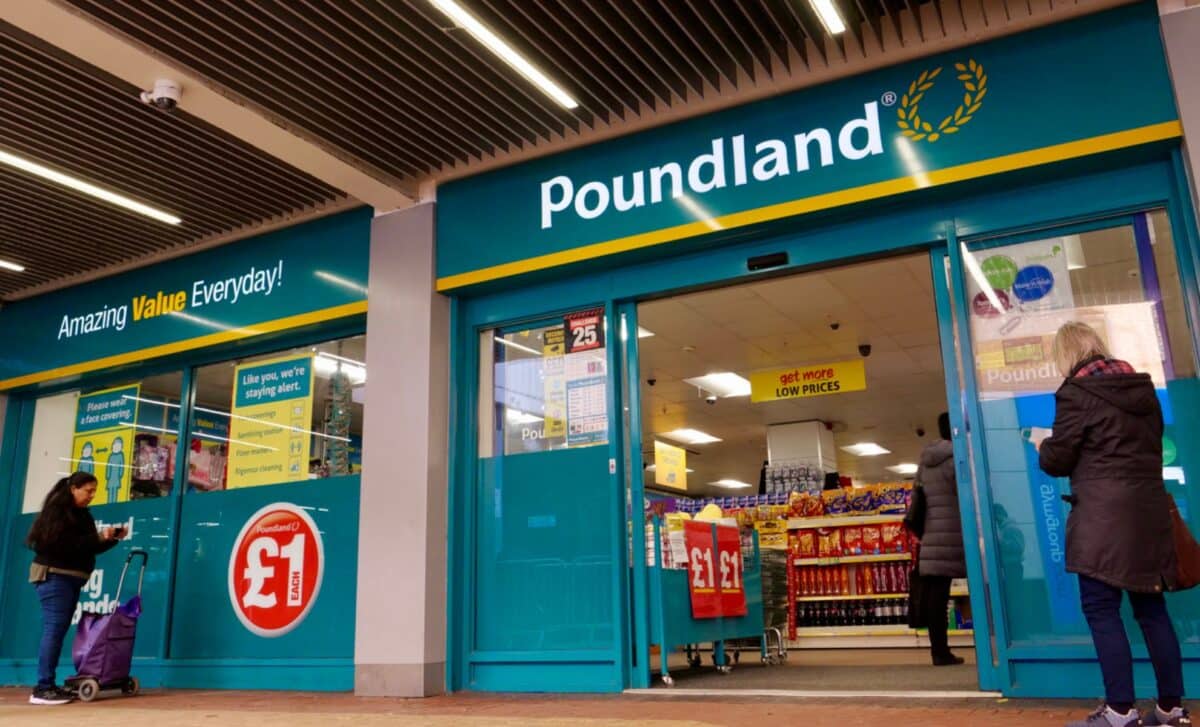
Poundland has announced that its large-scale store closures and workforce reductions are now complete, following a High Court-approved restructuring plan that significantly reshaped the business. The overhaul has seen its store count drop from 800 to 651, with staffing levels falling from 14,200 to 12,000.
The announcement marks the end of a challenging year for the retailer, which has sought to reposition itself in a competitive market by simplifying its pricing and reducing operating costs. It comes at a time when customer expectations are shifting, and economic pressures are pushing businesses in the value sector to refine their strategies.
Large-Scale Closures Concluded, Business Shifts to Stabilisation
According to Poundland, the wave of closures (almost 150 shops in total) was part of a necessary overhaul to ensure the business’s long-term sustainability. The restructuring received legal approval in August 2025 and has now been declared complete. A company statement confirmed: “Any future closures will be a consequence of standard business-as-usual lease events expected at a retailer with a large store network.”
This signals a significant turning point for the chain, which has long been a mainstay on British high streets. While the scale of the changes has been substantial, the company emphasised that it had now moved past its core restructuring phase. With 651 stores remaining, Poundland is aiming to streamline its operations while continuing to serve its national customer base.
Despite the significant reduction in its workforce, there have been no announcements of further redundancies. The focus, according to Poundland managing director Barry Williams, will now shift to long-term improvements in store quality and customer experience. “While there’s been significant progress as we refocus and re-energise the business with lower prices and a sharper offer, we know we still have much to do,” he said.
Sales Performance Signals Mixed Results amid Price Reset
The retailer’s strategy of returning to its discount roots has had an impact on sales performance. According to the company’s Christmas trading update, like-for-like underlying sales fell by 2.9% in the quarter ending 28 December. The decline was attributed to price cuts introduced during the quarter, as Poundland moved to reintroduce a simplified pricing model.
At the same time, the business recorded a 2% increase in comparable store sales by volume, suggesting that the move may be attracting more price-sensitive shoppers. This price model, tested over a five-month period at 17 stores in the West Midlands, now offers most products at £1, £2 or £3, part of what the company described at the time as a return “to its roots”.
Barry Williams noted that while cost control has played a role in stabilising operations, sustainable growth will depend on meeting customer expectations. “That’s why our focus in 2026 will be on delivering the kind of ranges and price simplicity our customers want right across the store – in clothing, homewares as well as our core grocery aisles,” he said.






Love Poundland.
Can always get what I go in for.
Excellent prices on the Latta’s. Well known brands bit dearer but hey ho I only go in for a few things at a time.
Thank you