British travellers heading to Europe now face a major change at the border. A new biometric system introduced by the European Union—designed to enhance security and replace manual passport stamps—will affect millions of UK citizens visiting countries within the Schengen zone.
Known as the Entry/Exit System (EES), the digital checks involve fingerprinting, facial imaging and passport scans, marking a new phase in post-Brexit border controls. The phased rollout, launched on 12 October 2025, is expected to reshape how non-EU nationals, including Britons, move through Europe’s external borders.
UK Travellers Face Biometric Registration at European Borders
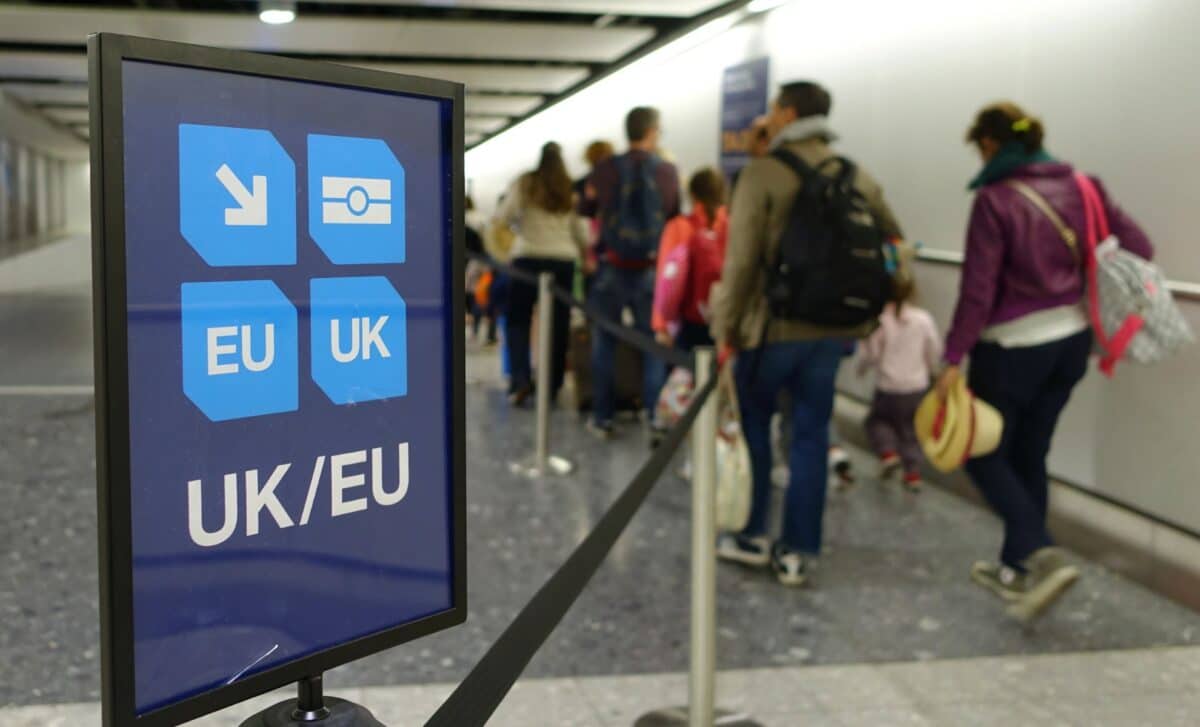
British citizens heading to Europe are now required to undergo biometric registration as part of the European Union’s new Entry/Exit System (EES), which officially launched on 12 October. This marks a major shift in how UK nationals access the Schengen zone, replacing the previous passport-stamping process with digital checks involving fingerprints and photographs.
The change applies to all non-EU travellers entering Schengen countries, including Norway, Switzerland and Iceland. Ireland and Cyprus are exempt, as they are not part of the Schengen area. The system is being phased in over a six-month period, with some ports and borders enforcing the rules sooner than others.
Border Process and Implementation Timeline Vary by Location
Under the new scheme, travellers will have their passport scanned and biometric data collected on their first trip to a participating EU country. This registration will remain valid for three years or until the passport expires, according to guidance from the UK Government. The check must be repeated once the passport changes or the three-year period ends.
According to the UK Home Office, the EES will be handled at the point of departure in the UK at juxtaposed border controls, such as St Pancras (Eurostar), Folkestone (Eurotunnel), and the Port of Dover. For air travellers, registration will be completed upon arrival in the EU.
Children under the age of 12 will not have their fingerprints recorded, though all travellers, regardless of age, will be photographed. Additional questions may be asked at the discretion of border officials, such as proof of a return ticket or sufficient funds. No fee is required for EES registration.
Despite reassurances from UK and EU authorities, concerns have been raised by industry bodies and local officials. The chief executive of Eurotunnel, Yann Leriche, stated the impact on crossing time should be “minimal,” estimating a delay of just two minutes. Yet others, like Dover District Council leader Kevin Mills, have warned of potential “gridlock on steroids” without adequate infrastructure, especially during holiday peaks.
Concerns Over Travel Disruption Despite Phased Rollout
While authorities maintain the rollout is designed to minimise disruption, experts remain cautious. The European Commission has confirmed the gradual deployment aims to give states the flexibility to prepare adequately. In practice, only some passengers are being enrolled initially, with full compliance not expected before April 2026.
According to The Guardian, the freight and travel sectors have voiced particular concern about delays for professional drivers and group travellers, urging more flexible options such as off-site registration. Two overflow sites have already been secured in Kent to manage traffic build-up if necessary.
An awareness campaign launched last month seeks to inform British travellers of the new requirements. According to ABTA, nearly half of UK travellers were still unaware of the changes just weeks before implementation.
With passport stamping soon to be phased out entirely, the EU claims EES will help enforce the 90-day stay limit and improve border security. British citizens with EU dual nationality or residency permits remain exempt from the new checks.