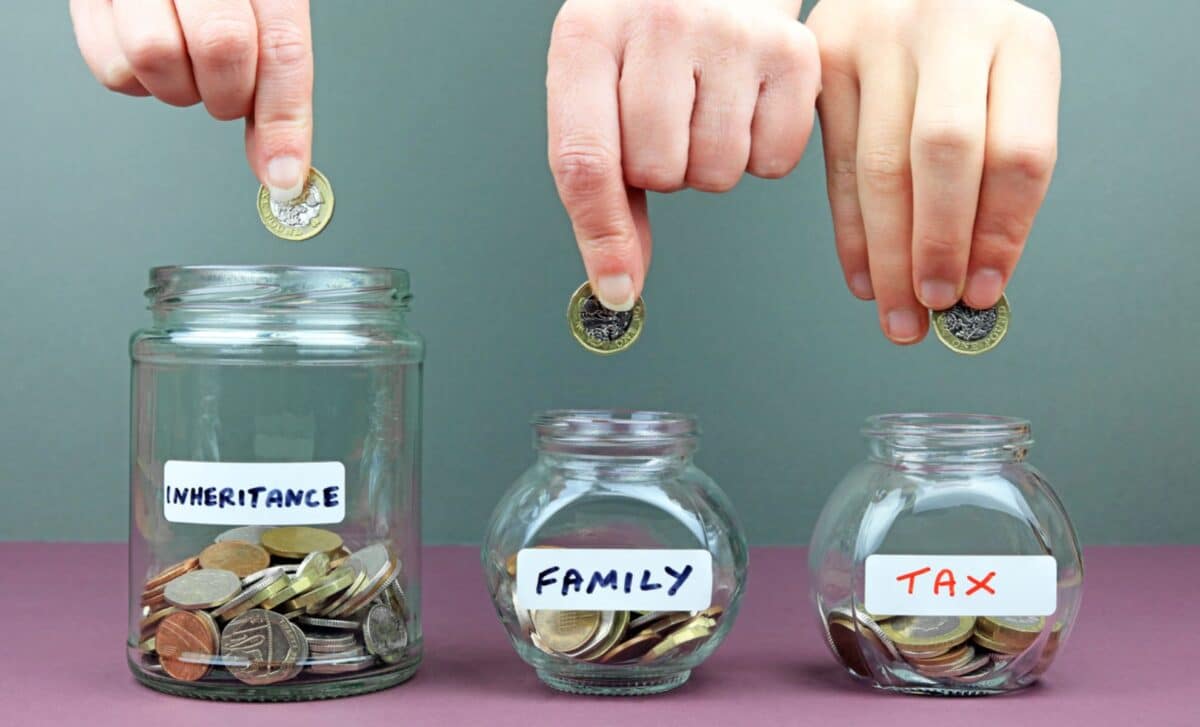
A long-standing inheritance tax rule that has remained unchanged for more than four decades is drawing renewed scrutiny as rising prices push more families into higher tax liabilities. The annual tax-free gifting allowance, fixed at £3,000 since 1981, has not kept pace with inflation, effectively reducing its real value over time.
Financial experts say the stagnant allowance illustrates how frozen thresholds can quietly increase the tax burden. As asset values and living costs rise, allowances that remain fixed gradually lose purchasing power, meaning families may pay more tax than they would under inflation-adjusted rules.
A Decades-Old Allowance Losing Value
Inheritance tax in the United Kingdom is generally charged at 40 percent on the value of an estate above certain thresholds. One of the ways individuals can reduce the taxable value of their estate is through annual gifts. Under current rules, people may give away up to £3,000 each tax year without the amount being added to the value of their estate for inheritance tax purposes.
That figure has remained unchanged since legislation introduced in 1981 increased the annual exemption from £2,000 to £3,000, during the government of Prime Minister Margaret Thatcher and Chancellor Geoffrey Howe. According to pensions expert Hannah Martin, founder of Rich Retiree, the allowance has never been adjusted since that change despite decades of inflation.
As reported by the Daily Express, if the gifting allowance had risen in line with inflation since the early 1980s it would now stand at more than £11,600. The gap between that inflation-adjusted level and the existing £3,000 threshold means families are effectively unable to transfer around £8,600 more each year without it potentially counting towards inheritance tax.
According to Martin, that difference could translate into a tax impact for estates eventually subject to the 40 percent rate. In practical terms, the additional £8,600 that could have been gifted tax-free each year would equate to about £3,440 in potential inheritance tax liability when the estate is assessed.
The annual exemption is only one of several gifting rules within the inheritance tax system. Individuals can also make unlimited small gifts of up to £250 to different people each year, provided they do not use other allowances for the same recipients. These provisions are designed to allow gradual transfers of wealth while limiting the size of estates subject to tax.
Frozen Thresholds Drawing More Estates into the Tax Net
The gifting allowance is not the only inheritance tax threshold that has remained static for years. According to Hannah Martin, the main nil-rate band, the portion of an estate that can be passed on tax-free, has been fixed at £325,000 since 2009 and is set to remain frozen until at least 2030.
Under current rules, individuals can pass on up to £325,000 tax-free, while an additional residence nil-rate band of £175,000 may apply when a home is left to direct descendants such as children or grandchildren. Married couples and civil partners may transfer unused allowances to one another, potentially doubling the available thresholds.
Even so, analysts say frozen allowances have a cumulative effect over time. According to the Daily Express, if the main £325,000 threshold had increased with inflation since 2009, it would now exceed £525,000.
Martin argues that the current framework has grown increasingly complex as multiple allowances interact with each other. She suggests a simplified structure could replace the current system, which includes the nil-rate band, the residence nil-rate band, spousal exemptions and gifting allowances.
According to Martin, a single, larger tax-free allowance per person could make the system easier to understand and administer, while reducing the need for early gifting strategies linked to the seven-year rule that currently governs many larger transfers.