

The Met Office has issued a stark warning about the future of UK heatwaves, revealing that temperatures may exceed 40°C more frequently as the climate continues to warm. This comes after a series of recent hot spells, including the hottest June on record in England and the second hottest across the UK since 1994.
According to recent findings, the probability of extreme heat is rising, with the likelihood of temperatures exceeding 40°C becoming more common. The Mirror has reported on these concerning trends, highlighting the growing threat of prolonged heatwaves that could lead to significant challenges for public health and infrastructure.
Rising Temperatures and a Growing Threat to Public Health
Recent intense heatwaves have already taken a toll, with heat-related fatalities reaching alarming levels. In 2023 alone, around 2,295 people died due to five heatwaves throughout the summer. Experts predict that this number could increase dramatically as temperatures continue to rise.
A rapid analysis has found that the UK’s intense heat spell is likely to kill almost 600 people in England and Wales. As Dr. Garyfallos Konstantinoudis from Imperial College London pointed out,
Heatwaves are silent killers – people who lose their lives in them typically have pre-existing health conditions and rarely have heat listed as a contributing cause of death.
The Increasing Likelihood of Temperatures Exceeding 40°C
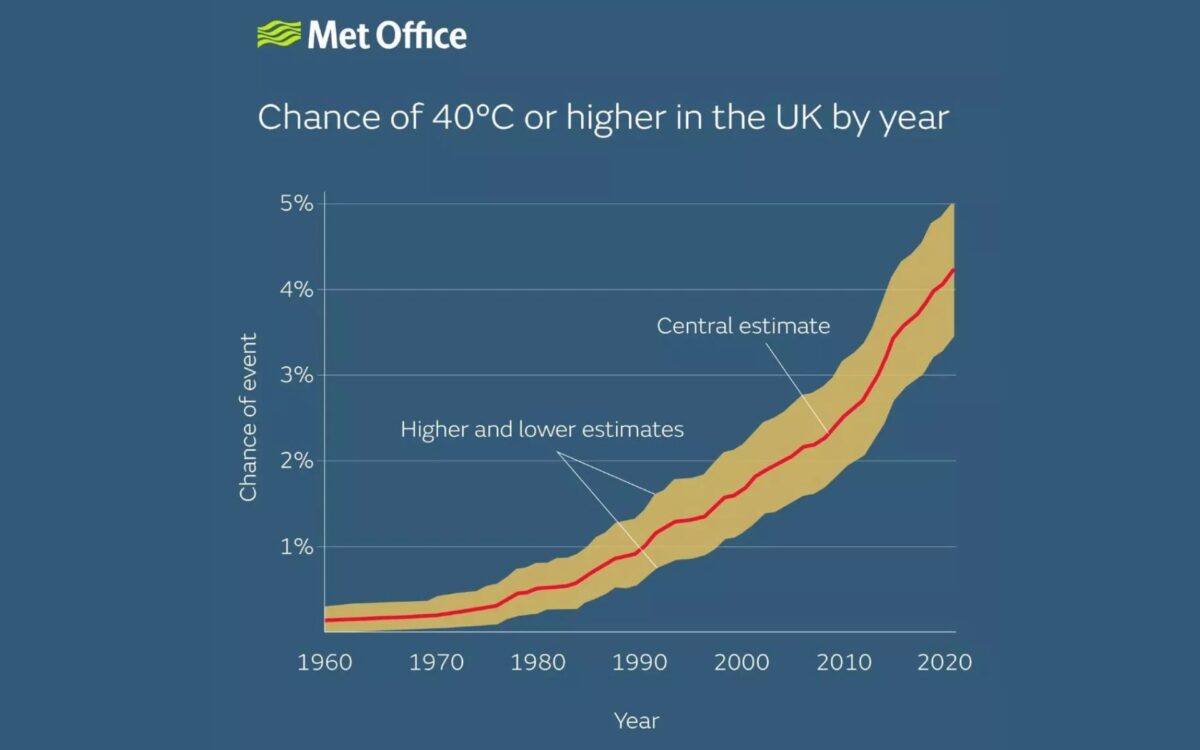
The Met Office’s latest research indicates that the chances of exceeding 40°C in the UK have significantly increased, now being over 20 times more likely than in the 1960s. Dr. Gillian Kay, Senior Scientist at the Met Office, and lead author of the study, stated,
The chance of exceeding 40°C has been rapidly increasing, and it is now over 20 times more likely than it was in the 1960s. Because our climate continues to warm, we can expect the chance to keep rising.
The study predicts a 50% chance of another 40°C day occurring in the next 12 years.
We also found that temperatures several degrees higher than we saw in July 2022 are possible in today’s climate – Dr. Kay added.
Longer and More Frequent Heatwaves Ahead
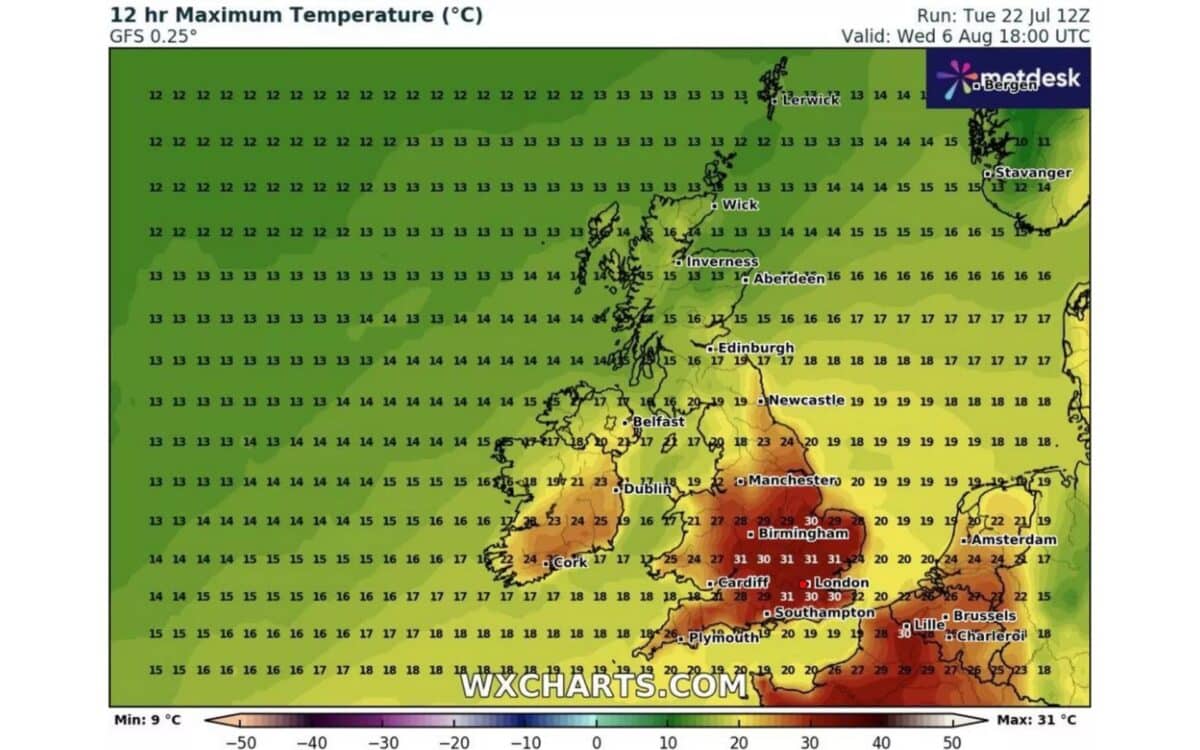
Not only are the temperatures rising, but the duration of heatwaves is also extending. The study suggests that conditions similar to the infamous 1976 heatwave, which lasted more than two weeks with temperatures exceeding 28°C, could become the norm.
According to Dr. Nick Dunstone, Met Office Science Fellow and co-author of the study,
The well-known hot summer of 1976 had more than a fortnight above 28°C, which is a key heatwave threshold in southeast England – He explained that,
Our study finds that in today’s climate, such conditions could persist for a month or more.
These findings highlight the urgent need to prepare for the growing threat of extreme heat.
Record Temperatures and Upcoming Forecasts
The temperature records continue to break: June 2023 was the hottest June ever recorded in England and the second hottest across the UK since record-keeping began in 1994. On July 1, the UK experienced its hottest day of the year, with 34.7°C recorded at St James’ Park in London.
This week’s heavy rain and thunderstorms may have quelled the heat for now, but 27°C is forecasted to return to several towns and cities across the UK this weekend.
Preparing for the Impacts of Rising Temperatures
The Met Office’s findings stress the importance of preparing for the growing threat of extreme heat. As these conditions become more common, proactive measures are essential to safeguard public health, and mitigate the environmental and infrastructural damage caused by longer, hotter heatwaves. As Dr. Dunstone warns,
These findings highlight the need to prepare and plan for the impacts of rising temperatures now, so we can better protect public health, infrastructure, and the environment from the growing threat of extreme heat.