
The Met Office is closely monitoring weather conditions that could lead to the first named storm of the season. Forecasts suggest a low-pressure system might form over the North Atlantic, bringing a significant change in weather in the coming days. This development could impact the UK, with heavy rain and strong winds expected.
While the exact details remain unclear, experts indicate that the situation may become clearer in the next few days. This information has been reported by BirminghamMail, which is tracking the latest updates.
The Storm That Might Shake Up Your Weekend
As the weather grows increasingly unpredictable, there’s a growing buzz about the potential arrival of Storm Amy this weekend. Forecasters are tracking a deepening low-pressure system forming over the North Atlantic, which could bring a significant change to the UK’s weather.
While it’s still too early to say for certain whether Storm Amy will hit with full force, there’s a good chance it will bring heavy rain, strong winds, and thunderstorms, particularly to the north of the UK.
Deputy Chief Meteorologist Tom Crabtree explained,
We are keeping an eye on a deepening area of low-pressure which will develop over the North Atlantic during the coming days and might bring impactful weather to the UK, most likely on Sunday and Monday. At present, it’s too early to say the precise impact this might have on the weather, but it’s likely to bring widespread heavy rain and strong winds, most probably to the north of the UK – He continued,
We are closely monitoring what the various computer models are suggesting and will keep people updated as our forecasts evolve over the next few days.
Although the details are still unclear, it’s certainly one to watch as the weekend approaches.
Will There Be Snow?
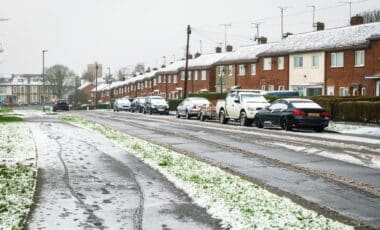
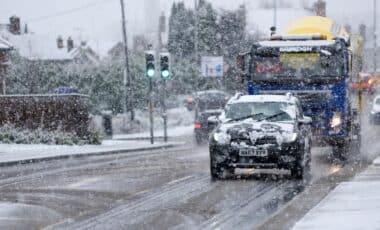
One of the biggest points of confusion surrounding this potential storm is the question of snow. While some forecasts, like those from Netweather, suggest snow could fall across parts of the UK, the Met Office doesn’t seem to be buying into that idea.
Their extended outlook doesn’t mention snow, instead focusing on the possibility of significant temperature drops and wet conditions. So, despite the chill in the air, snow isn’t expected to be a major factor in Storm Amy’s effects—at least not at this stage.
However, snow has already made an appearance in other parts of Europe, so it’s not completely out of the question. It’s just that the weather models and predictions don’t seem to be pointing in that direction for the UK. For now, it’s heavy rain and wind that should be your main concern if you’re making plans for the weekend.
The Naming System: Why Storms Get Their Names
You might be wondering how Storm Amy got its name in the first place. It turns out that naming storms is a bit more involved than just picking something catchy. The names are chosen through a joint effort between the UK Met Office, Ireland’s Met Éireann, and the Dutch meteorological service KNMI.
Each year, members of the public from these countries are invited to submit their own suggestions, and the names are then selected based on alphabetical order. Interestingly, names starting with the letters Q, U, X, Y, and Z are excluded from the list, aligning with the naming conventions used by the US National Hurricane Center.
Additionally, any names deemed offensive, difficult to pronounce, or associated with public figures are also avoided. Storms are only given names when they’re expected to cause significant damage, based on factors like wind speed, rainfall, and snow.
In fact, The Met Office has already lined up storm names for the 2025/26 season, with names like Bram (inspired by Dracula author Bram Stoker) and Wubbo (named after Wubbo Ockels, the first Dutch astronaut) among those expected to be used in the future.
This system of naming is helpful for communicating warnings effectively, making it easier for people to track the storms that might impact them.
The system serves a practical purpose, helping to clearly communicate warnings to the public. It’s much easier to keep track of and respond to warnings about “Storm Amy” than simply referring to a low-pressure system. It’s also important to note that a storm doesn’t have to be a hurricane-level event to be named—it just needs to have a certain level of intensity.