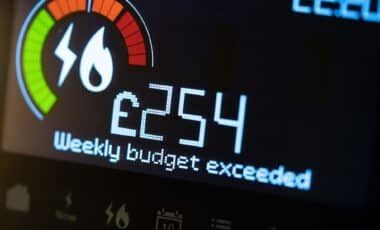
Households across the UK could see their energy bills slashed by £165 annually if the Conservative Party’s latest proposal comes into effect. Announced at the Tory Party Conference, this plan aims to tackle rising energy costs by scrapping two significant policy measures: the carbon tax and the renewable obligation subsidy.
This move is part of the Conservative Party’s broader strategy to ease financial pressure on UK households while also addressing energy pricing issues. According to the Conservatives, these reforms could benefit millions of customers across major suppliers like British Gas, EDF, EON, Ovo, and Octopus. The proposal’s promise of immediate financial relief comes amidst ongoing concerns about high energy prices, which have hit families hard in recent years.
Repealing the Carbon Tax: A Shift in Energy Pricing
One of the cornerstones of the Conservative proposal is the removal of the carbon tax, which currently accounts for a significant portion of wholesale electricity prices. The carbon tax was introduced as a measure to encourage cleaner energy production and reduce the UK’s overall carbon emissions. However, critics argue that it has led to increased electricity prices for consumers without delivering tangible environmental benefits.
According to the Conservative Party, this tax is responsible for inflating electricity prices, raising them by around a third of the wholesale price. They claim that scrapping the carbon tax would reduce the average household’s electricity bills by £75.
The Conservatives contend that the carbon tax does not effectively incentivise clean energy innovation and is instead merely an added cost to already struggling households. The party’s stance is that removing the carbon tax will alleviate some of the financial strain on families, who face higher living costs.
Abolishing Renewable Subsidies: Cutting Costs without Compromising Green Energy
Alongside the carbon tax repeal, the Conservative plan also targets the renewable obligation subsidy, a policy introduced by Labour in 2002 and expanded in 2008. This subsidy guarantees above-market payments for renewable energy producers, a practice that the Conservatives argue is overly expensive and burdensome for consumers. By scrapping these subsidies, the party claims it will cut the average household’s electricity bill by £90.
The renewable obligation subsidy, known as the ROC scheme, was initially intended to support the growth of the UK’s renewable energy sector by offering incentives to wind, solar, and other green energy providers. However, the Conservatives argue that it results in consumers paying higher prices for electricity, as producers are guaranteed rates far above the market price.
In their proposal, the Conservatives have committed to abolishing the ROC scheme through primary legislation, which they say will help drive down energy costs. They also argue that this policy shift will not hinder the UK’s green energy transition. Instead, it will allow market forces to drive innovation, making energy cheaper and more accessible for consumers, while still progressing toward decarbonisation.