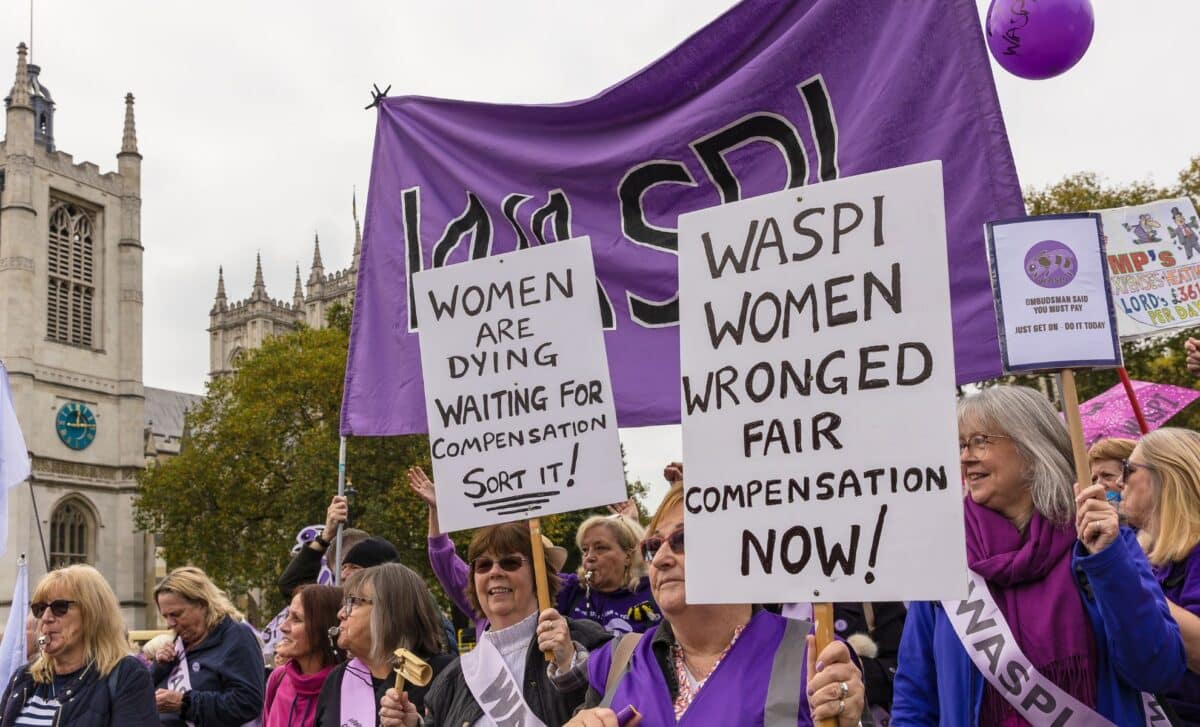
The Women Against State Pension Inequality (WASPI) campaign has gained significant momentum in recent years, pushing for compensation for women born in the 1950s who saw their state pension age rise from 60 to 65. After a series of legal investigations and parliamentary debates, the issue is set to face the scrutiny of a judicial review in December. However, the government has stood firm in its refusal to offer compensation, despite mounting pressure from MPs and campaigners.
The Legal Fight: December’s Crucial Judicial Review
A judicial review scheduled for December 2025 will examine the government’s refusal to compensate women impacted by the increase in state pension age. According to the Parliamentary and Health Service Ombudsman (PHSO), the DWP’s failure to notify affected women of the pension age change earlier amounted to “maladministration,” causing significant distress to many. The Ombudsman’s report, published in March 2024, found that earlier communication could have alleviated much of the financial hardship experienced by women caught by the changes.
In response to the Ombudsman’s findings, the government accepted that there were failings in the way the changes were communicated, but it rejected the idea of offering compensation. Ministers argued that sending letters earlier would have had little impact, claiming that most women were aware of the changes. However, the Ombudsman disagreed, suggesting that compensation ranging from £1,000 to £2,950 would be appropriate.
WASPI campaigners are preparing for a two-day showdown in court on December 9 and 10. If successful, the judicial review could force the DWP to reconsider its position, potentially leading to compensation being awarded to affected women. But while the court can challenge the government’s stance, it cannot directly order compensation, which means the political pressure on the government will only grow.
Growing Political Support for Compensation
The controversy surrounding the WASPI women has united a diverse group of MPs, with dozens calling for a change in the government’s position. A group of 100 MPs, including 52 from the Labour Party, recently expressed their support for the campaign, calling for a U-turn on the decision not to compensate women. MPs like Rebecca Long-Bailey, Labour MP for Salford, have voiced strong criticism of the government’s handling of the situation, describing it as an “injustice” that must be corrected.
The widespread frustration among MPs stems from the fact that many of the women affected by the pension age increase have already reached retirement age without the financial support they were expecting. According to WASPI, around 3.5 million women across the UK are impacted, and many have already passed away without seeing justice. The issue resonates particularly with voters in swing constituencies, with MPs acknowledging the potential electoral consequences of the government’s refusal to act.
While some political parties, including the Liberal Democrats, the Green Party, and the Scottish National Party (SNP), have openly supported the WASPI campaign, the Labour Party has faced internal divisions on the issue. Despite vocal support from some Labour MPs, party leadership has yet to take a firm stance on the matter. As the legal challenge looms, the pressure on the government to find a resolution continues to build.