
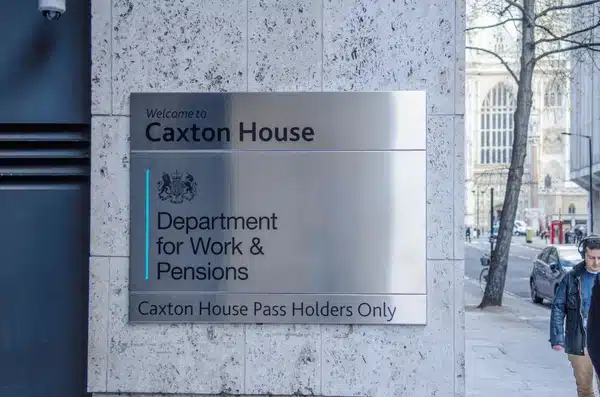
Tens of thousands of disabled people are receiving compensation payments from the Department for Work and Pensions (DWP) after legal pressure exposed critical failures during the transition from legacy benefits to Universal Credit.
The repayments follow a ruling that found the DWP had not sufficiently protected the incomes of certain claimants during the move to the new system, particularly those who lost access to the Severe Disability Premium (SDP).
According to reporting by the Manchester Evening News, the scheme is part of a broader corrective process that affects over 70,000 individuals. The DWP has acknowledged the situation but provided limited detail so far.
Legal Case Exposes Loss of Severe Disability Premiums
According to a report from The Mirror, the DWP failed to adequately protect the income of disabled people who were transferred from legacy benefits to Universal Credit before transitional protections were implemented. As a result, thousands lost their Severe Disability Premium (SDP) — a component designed to support individuals with high-level care needs.
A legal case brought forward by Leigh Day solicitors prompted the creation of a large-scale compensation scheme. These payments are meant to address income losses that occurred between the date of transfer and the introduction of new income protection regulations in February 2024.
Total Cost of Compensation Reaches £452 Million
The DWP confirmed that the total cost of the repayment program amounts to £452 million. Lawyers involved in the case estimate that individual compensation may exceed £5,000 per claimant. The department states that more than 57,000 claimants have now received their payments, while approximately 13,000 complex cases are still being assessed, with processing expected to conclude by September 2025.
Importantly, compensation is calculated retrospectively. It is based on what claimants would have received if the protective rules had been in place earlier. There are five monthly payment bands, depending on the type of legacy benefit and household composition:
- £84 for a single person with the Enhanced Disability Premium
- £120 for a couple with the Enhanced Disability Premium
- £172 for a single person with the Disability Premium
- £246 for a couple with the Disability Premium
- £177 per eligible child with a disabled child element
Up to £180 per Month Lost Before Protections Introduced
Many claimants affected by the issue reportedly lost significant amounts — in some cases up to £180 per month before 2019, according to Leigh Day. These payments were never accounted for during the Universal Credit transition due to the absence of transitional protection measures at the time.
In a statement to The Mirror, Ryan Bradshaw, a lawyer at Leigh Day, said:
While we welcome the announcement of back payments, there are questions that need to be answered. There needs to be an agreed lawful calculation method in place which can be easily checked by benefits claimants who have missed out [from] up to £180 a month before 2019.
Bradshaw also warned of troubling cases where compensation payouts inadvertently pushed claimants’ bank balances above benefit eligibility thresholds. He described these instances as “scandalous” and indicative of systemic problems in how the DWP manages benefits administration.
DWP Under Scrutiny for Transparency and Fairness
While the DWP has acknowledged the court judgment and committed to resolving all remaining cases, transparency in payment calculations remains a key concern for legal teams. Leigh Day has requested that the department publish a lawful, standardised methodology to allow claimants to verify their entitlements independently.
A DWP spokesperson responded:
We are fully committed to identifying and paying eligible claimants who have already moved to Universal Credit following a change in their circumstances. This is a complex undertaking and the majority of claimants affected by the court judgment have now been paid, and work is ongoing to pay all other eligible claimants as soon as possible.
The department has reiterated its intent to process every case on an individual basis, using available evidence.
How to Verify Eligibility and Make a Claim
To be eligible, claimants must have received Universal Credit with an SDP transitional element, or would have qualified for it had protections existed at the time. They must also have been entitled to one of the following while on legacy benefits:
- Enhanced Disability Premium
- Disability Premium
- Disabled Child Premium, or Child Tax Credit with a Disabled Child Element
Although DWP agents are actively contacting eligible individuals, those who believe they may qualify are encouraged to submit a claim directly with supporting documentation. The DWP, now under renewed legal and public scrutiny, has reiterated its obligation to resolve all valid claims thoroughly and fairly.
Legal representatives are expected to continue reviewing the case as more data emerges and individual decisions are scrutinized. The outcome of these final 13,000 cases will determine whether public confidence in the DWP’s benefit compensation process can be restored.