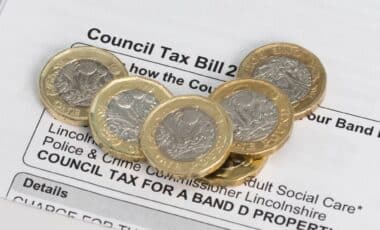
Council tax, a major source of local government funding, has long been a subject of debate, with calls for reform growing louder. The current system, based on property valuations from 1991, is often seen as outdated and unfair, particularly in areas where property prices have drastically increased. Under Labour’s proposed changes, some households could face significant tax rises, particularly in affluent areas, while others may benefit from redistribution.
A Fairer Funding Model: Redistribution of Wealth
Under the proposed reforms, one of the key elements is the redistribution of council tax revenue to areas deemed to have higher financial needs. According to The i, Labour’s “fair funding review” intends to channel funds into deprived regions in the Midlands and the North of England. This shift would mean that wealthier councils in London and the Home Counties could face cuts in funding, which would then be redirected to poorer councils.
While the aim is to address regional disparities and provide more resources for areas that have struggled with underfunded public services, some local authorities may see their council tax rates rise. For example, councils in London, such as Kensington and Chelsea, could face steep hikes to offset the shortfall in funding. The Ministry for Housing, Communities and Local Government (MHCLG) has acknowledged that some local authorities may face challenges under the new funding model, as areas with historically low council tax rates are hit hardest.
Critics of the proposals argue that the new system risks punishing well-managed councils that have kept taxes low and services efficient. Sir James Cleverly, Shadow Local Government Secretary, voiced concerns over the changes, stating that councils in wealthy areas would be forced to raise their taxes without public approval, which could lead to potentially “unlimited” tax increases. For councils already in financial difficulty, this could mean significant rises year after year.
Potential Impact on Households: Hikes and Inequalities
The proposed reforms also suggest changes to the way council tax is levied, particularly targeting high-value properties. Under one of the scenarios being considered, properties in the highest council tax bands (F, G, and H) could face increased charges. According to The Telegraph, a “mansion tax” on these higher-value homes could be implemented, with estimates indicating that such a surcharge could raise an additional £600 million in revenue.
While such changes may affect homeowners with properties worth over £1 million, experts warn that the impact could be more widespread. Stuart Hoddinott, associate director at the Institute for Government, noted the disparity in council tax charges, which can range from £961 to £2,284 for a band D property in 2025-26, depending on the local authority.
Furthermore, the revaluation of properties could lead to further disparities, as some regions may experience more significant increases in tax rates than others. As the Institute for Fiscal Studies (IFS) highlighted, properties in areas like the North East are more likely to be underrepresented in higher council tax bands, despite significant increases in property values since 1991. This means that homeowners in some areas could see large hikes without seeing a corresponding increase in property value.
While Labour’s council tax reform plans are aimed at addressing regional disparities and creating a more equitable system, there are concerns that the changes may disproportionately affect middle-class homeowners in wealthy areas. The shift in funding and the potential for annual tax increases could lead to significant financial burdens for some households, while others may benefit from the redistribution.