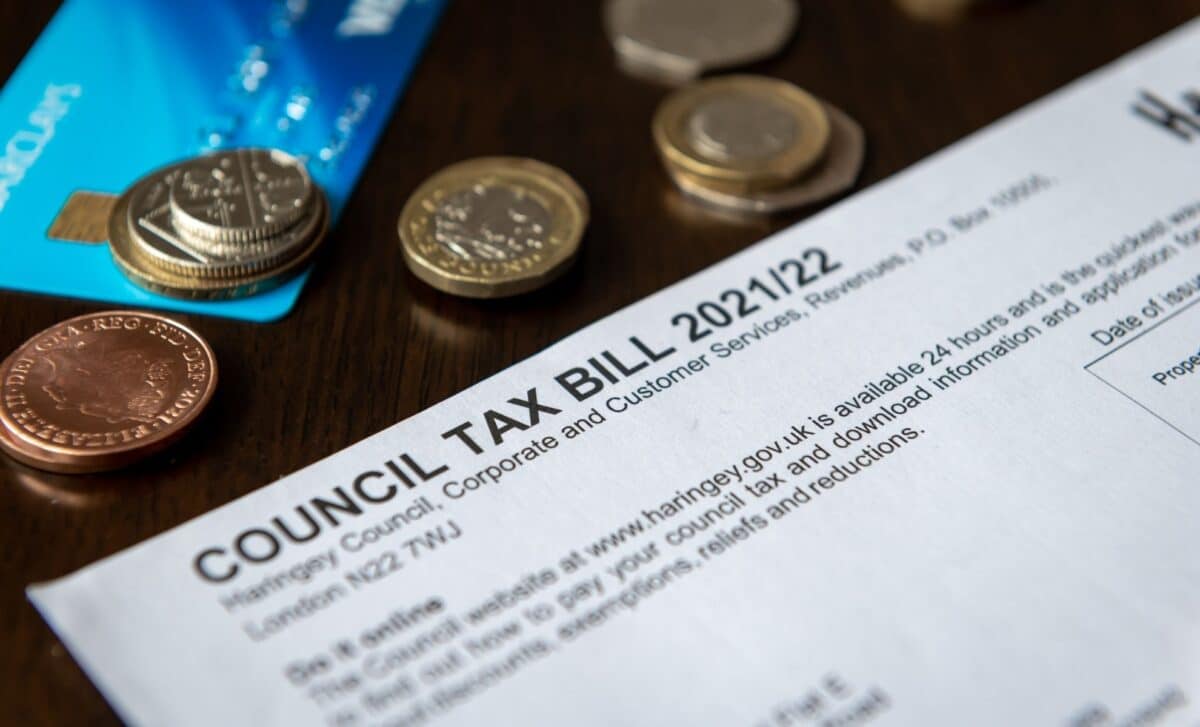
As local authorities continue to issue council tax demands across the UK, a growing number of residents are discovering that they may be eligible for partial or even full exemptions. Council tax support is not limited to those on low incomes; carers, disabled people and students are among those who can apply for relief under specific conditions.
With the cost of living continuing to strain household finances, local tax exemptions offer some relief for those who meet the eligibility rules. Yet many remain unaware of their entitlement, with eligibility often depending on local council criteria and individual circumstances. According to Express.co.uk, more than 2.5 million people in England currently receive a discount, but the total number of those eligible is likely far higher.
Carers and Disabled People May Be Entitled to Tax Discounts or Exemptions
People who provide care or live with a disability may qualify for significant reductions in their council tax bill. Individuals who act as carers for at least 35 hours a week and meet certain conditions can be disregarded for council tax purposes. This applies to carers who are not looking after a partner or a child under the age of 18. In such cases, the carer may not count as a liable adult, potentially reducing the household’s total council tax burden.
Disabled residents, or households with a disabled occupant, may be able to access relief through the Disabled Band Reduction scheme. Under this arrangement, if a property has been adapted to meet the needs of a disabled person (for instance, by including a dedicated room or facility) the home may be reclassified into a lower tax band. Where a property is already in the lowest band, a 17% discount may apply instead.
Additional reductions may also be available to those who live with someone diagnosed as severely mentally impaired. Eligibility for such discounts is determined by local authorities and typically requires confirmation from a medical professional and evidence of entitlement to certain benefits.
Full-Time Students Can Claim Complete Council Tax Exemption
One of the clearest paths to council tax exemption applies to students. Those enrolled full-time in higher education are not required to pay council tax. To qualify, the course must last at least one year and require a minimum of 21 hours of study per week.
This exemption also extends to younger students under the age of 20 who are pursuing qualifications up to A-level, provided their course runs for at least three months and involves no fewer than 12 hours of weekly study. If a student shares a property with someone who is liable for council tax, the household may still be eligible for a discount, depending on the number of non-exempt residents.
Households made up entirely of full-time students are typically exempt from paying council tax altogether. However, students who receive a bill in error must apply for the exemption through their local council. Many councils require proof of enrolment and a certificate from the educational institution in order to process the exemption.
Local council websites and the GOV.UK platform offer detailed guidance on the process for applying. Checking eligibility directly with one’s local authority remains the most reliable method for determining entitlement, given that some rules and interpretations can vary from one area to another.