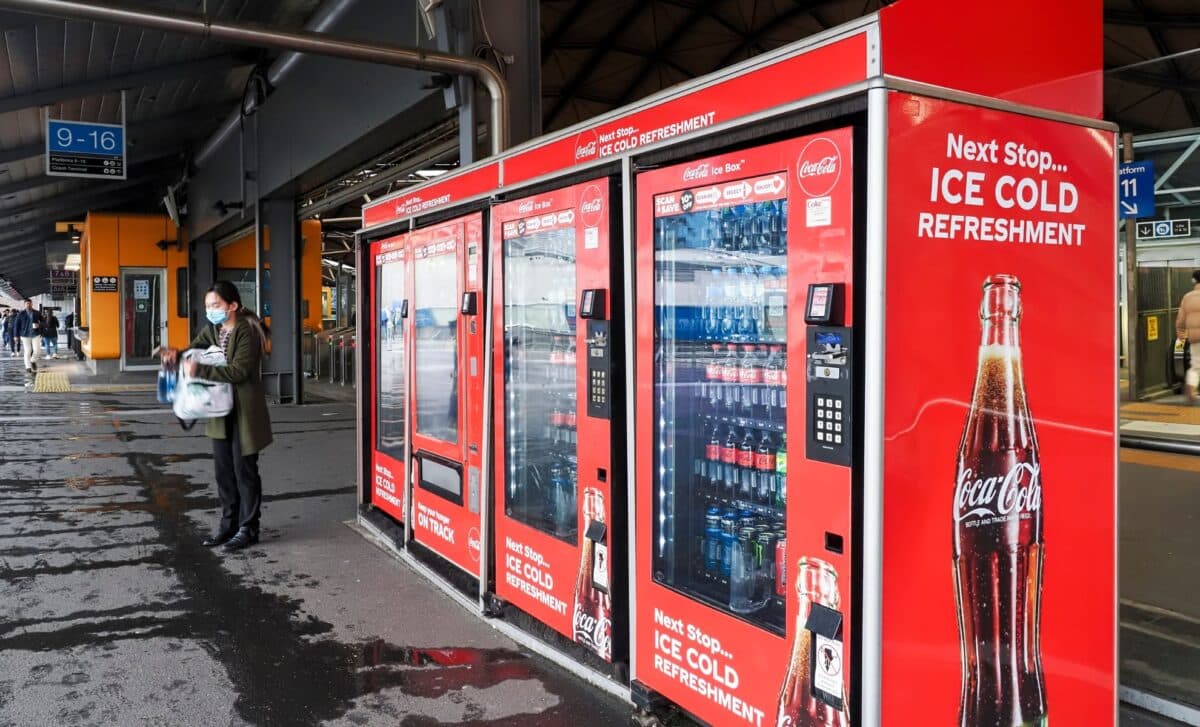
Students at three colleges near Glasgow can now earn food credits for returning used bottles and cans. The initiative, backed by Coca-Cola and Keep Scotland Beautiful, aims to test the effectiveness of reverse vending machines in real-world settings.
Deposit Return on Campus
A new recycling initiative is being rolled out across three college campuses in Scotland, where students will receive £0.20 credits for every aluminium can or plastic bottle recycled through dedicated machines.
Launched by Coca-Cola Europacific Partners in partnership with the charity Keep Scotland Beautiful, the pilot scheme is currently in place at New College Lanarkshire’s Motherwell, Coatbridge, and Cumbernauld campuses. The aim is simple: encourage sustainable behaviour among young people by offering a tangible, immediate reward.
Each 20p credit is redeemable at on-campus canteens, effectively turning waste into lunch money. According to The Manufacturer, the four-week programme will gather feedback from students to help identify practical challenges and motivators linked to the use of reverse vending machines (RVMs).
Jo Padwick of Coca-Cola Europacific Partners Great Britain said the short trial provides “honest, human insight into both the practical and behavioural barriers to adoption.” The initiative is being closely watched as Scotland prepares for the introduction of a nationwide Deposit Return Scheme (DRS), expected to come into force in the near future.
Financial Incentives and Recycling Impact
The move comes amid growing evidence that financial incentives play a key role in improving recycling rates. A 2023 study by Ball Packaging and Eunomia found that nine out of ten US states with the highest recycling rates also operated refund systems, where customers are paid back small deposits when returning containers.
In contrast, the ten states with the lowest recycling rates offered no monetary incentives, pointing to the clear link between deposit schemes and consumer behaviour.
According to Resource Recycling Magazine, a nationwide DRS in the US could prevent the loss of 447 billion beverage containers annually, generating over 33 million tonnes of reusable material valued at roughly $5.5 billion. This would also avoid an estimated 34.1 million tonnes of carbon emissions, comparable to removing 3.5 billion gallons of petrol from use.
Coca-Cola has been the subject of ongoing discussion regarding its role in plastic waste production. This pilot initiative, while limited in scope, offers a practical opportunity to evaluate the effectiveness of deposit return systems in everyday settings.
If expanded, it could contribute to broader efforts in improving recycling infrastructure and public engagement. The feedback collected from students in Lanarkshire is likely to inform how similar systems are developed and introduced across the UK.