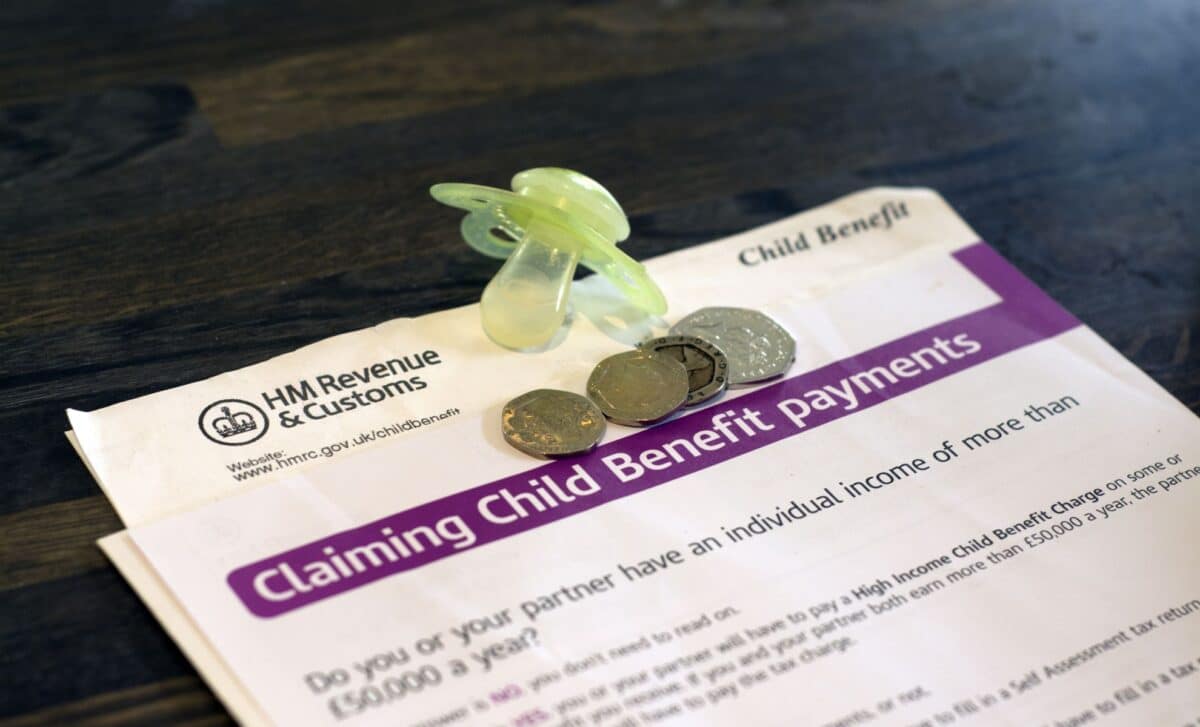
Tens of thousands more UK families are set to lose part or all of their Child Benefit entitlement by 2029 as a result of frozen tax thresholds that fail to keep pace with rising wages.
New data obtained through a Freedom of Information request has revealed that 35,000 additional families will be drawn into the High Income Child Benefit Charge (HICBC) over the next three years. The figures show a growing impact of fiscal drag, where static thresholds intersect with inflation-linked pay rises, leading to support being withdrawn despite no genuine improvement in living standards.
Rising Caseload Highlights Long-Term Impact of Fiscal Drag
According to HMRC forecasts, the number of families subject to the HICBC is projected to increase from 324,000 in 2025–26 to 359,000 in 2028–29. The majority of these will fall within the tapering range of the charge, which applies to incomes between £60,000 and £80,000. Families within this range are required to repay a portion of the Child Benefit, on a sliding scale of 1% for every £200 earned over the lower threshold.
The increase in affected households stems directly from the Government’s decision to freeze income tax thresholds until 2031. Although the income level at which the HICBC begins was raised from £50,000 to £60,000 in April 2024, the lack of indexation thereafter is expected to cause a steady rise in the number of families liable for repayments.
According to data reported by The Telegraph, 213,000 families will be in the HICBC taper zone in 2025–26, with this figure set to reach 246,000 by 2028–29. A further 111,000 families are expected to repay the full benefit each year during this period.
Tax expert Shaun Moore, speaking on behalf of wealth management firm Quilter, which submitted the FOI request, noted that, “Families may not be better off in real terms, but more and more of them will see support withdrawn as a result.”
Structural Issues and Data Gaps Raise Concerns over Fairness
The application of the HICBC has drawn criticism for how it treats household income. The tax charge is based on individual earnings, not combined household income, which means that a single parent earning £61,000 could be liable to repay some or all of the Child Benefit, while a couple each earning £59,000 would not face any charge.
This discrepancy has raised questions around the policy’s fairness and coherence. The HICBC also takes into account total taxable income before any allowances, meaning even small sources of additional income, such as interest or dividends, can tip families into the charge.
Further concerns were highlighted in the FOI response, which revealed that HMRC does not hold comprehensive data on how many taxpayers earning over £100,000 have dependent children. This gap is significant because once a parent earns over £100,000, their household loses access to both the 30 hours of funded childcare and the tax-free childcare scheme.
According to Shaun Moore, this lack of visibility means the Government is “taking a shot in the dark on a key piece of family finances”. Without precise data, it remains unclear how many families are impacted by what he called “financial cliff edges”.
The growing number of families affected by the HICBC, combined with continued threshold freezes and incomplete data on family circumstances, has prompted renewed calls for a full review of how tax and benefit policies interact. As incomes shift upwards in name only, state support appears increasingly detached from economic realities faced by working parents.