Millions of savers can now earn more interest after National Savings & Investments (NS&I) raised rates on four of its savings accounts. The new rates took effect on November 19 and apply to both existing and new customers. Some competing accounts still pay more, so savers may want to compare the available rates before deciding where to keep their cash.
NS&I Raises Rates on Four Savings Accounts
NS&I has increased rates on its Direct Saver, Income Bonds, Direct ISA and Junior ISA, with the biggest increases worth 0.25 percentage points.
The interest rates on both the Direct Saver and Income Bonds have risen from 3.75% to 4%, while the Direct ISA now offers 4.05%, up from 3.8%. The Junior ISA has also received a rate increase, moving from 3.7% to 3.9%.
Someone with £10,000 in a 4% account would earn £400 in interest over a year, assuming the rate stayed unchanged and no withdrawals were made. Existing NS&I customers do not need to take any action to receive the new rates.
Direct Saver and Income Bonds Now Pay 4%
The Direct Saver account now pays 4% and can be opened with just £1. Interest is paid annually. The Income Bonds rate has also increased to 4%. These accounts allow savers to receive interest as a monthly income and require a minimum opening balance of £500.
The accounts have variable rates, so the interest paid can change in the future.
NS&I’s Direct ISA Rate Rises to 4.05%
The Direct ISA rate has increased from 3.8% to 4.05%. The account can also be opened with £1 and has the advantage of being a tax-free savings account. The Junior ISA rate has risen from 3.7% to 3.9%.
Parents and guardians can open a Junior ISA for children under 18. The money belongs to the child and is normally locked away until they reach 18.
Some Other Savings Accounts Pay More
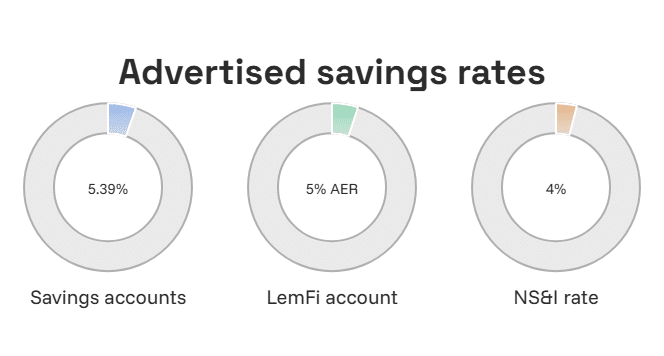
Despite NS&I’s increases, some other providers currently advertise higher rates. According to Moneyfactscompare.co.uk, some savings accounts pay as much as 5.39%. LemFi’s Instant Access Savings Account is listed at 5% AER, although this includes a 1.14 percentage point bonus that lasts six months.
At 5%, £10,000 would generate £500 in interest over a full year if the rate remained unchanged. By comparison, £10,000 held at NS&I’s new 4% rate would generate £400. The introductory bonus means the actual return from a promotional account can differ from the headline annual rate.
Fixed-Rate Accounts Can Pay More
Savers prepared to lock their money away may find higher rates through fixed-term accounts. Al Rayan Bank offers a one-year fixed-term account with an expected profit rate of 5.28%, although a minimum deposit of £10,000 is required.
Castle Trust Bank pays 5.39% AER on its two-year Fixed Rate e-Saver, with a minimum deposit of £1,000. Fixed accounts can come with restrictions. Withdrawals may not be available during the fixed period, or a penalty may apply.
Cash ISAs Can Provide Tax-Free Interest
For savers looking for a tax-free account, Trading 212 is listed as paying 4.90% AER on an easy-access Cash ISA, including a 12-month bonus. The promotional rate cited is available through Moneyfactscompare.co.uk until December 9 and may require a code.
Savers should check the terms of any promotional rate, including when the bonus ends and what rate applies afterwards.
NS&I Savings Have Full Treasury Backing
One of NS&I’s main advantages is that its savings are 100% backed by the Treasury. NS&I has more than 24 million customers, including more than 22 million Premium Bonds holders.
Its rates are variable, meaning they can rise or fall. Andrew Westhead, NS&I retail director, said: “We’re pleased to be increasing interest rates across four of our savings products today.”
He said the changes reflected wider conditions in the savings market and NS&I’s need to balance the interests of savers, taxpayers and the financial services sector.