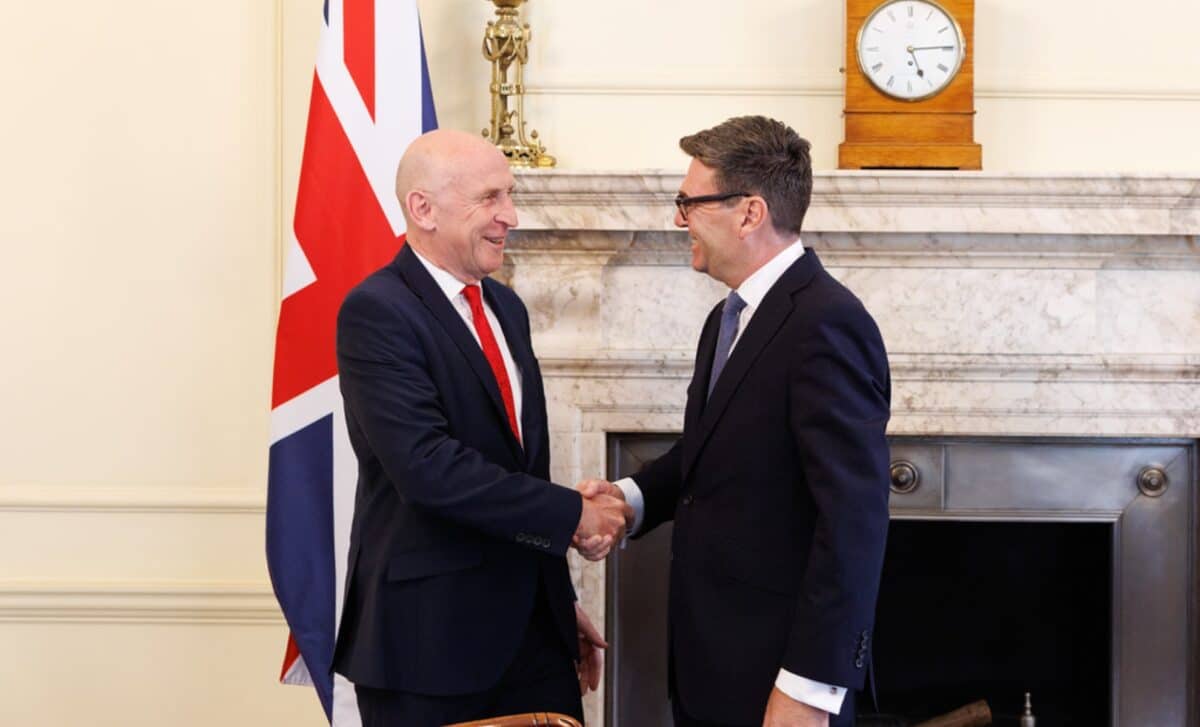
State pensioners whose only income comes from their state pension will not pay income tax, according to a commitment maintained by Prime Minister Andy Burnham and Chancellor John Healey. The decision comes as rising pension payments approach the frozen personal tax allowance, raising concerns about more retirees being brought into the tax system.
State Pension Set to Cross Tax Threshold
The current state pension stands at £12,547.60 per year, just below the personal allowance of £12,570. The gap is expected to disappear from April as pension payments rise under the triple lock system.
The triple lock increases the state pension each year by whichever is highest among inflation, average wage growth, or 2.5%. As tax thresholds have remained frozen since 2021, more people have gradually moved into taxation as their income rises, a process known as fiscal drag.
Without changes, some pensioners receiving only the state pension would technically become liable for income tax for the first time.
Government Maintains Previous Pension Tax Commitment
Burnham recently stepped back from suggestions that the personal allowance could be increased, saying decisions on taxation would be considered during the Budget.
The Treasury has confirmed that it will keep a commitment made by former Chancellor Rachel Reeves that pensioners receiving only the basic or new state pension will not pay tax through the Simple Assessment system.
Under Simple Assessment, HM Revenue and Customs (HMRC) calculates tax owed and sends a bill directly to individuals. The Treasury said it is working on a system to exclude pensioners with no other income from this process, with further details expected in the future.
Experts Warn of Possible Complexity
The Government’s decision has been welcomed by pensioners who could otherwise face small tax bills, but specialists have raised concerns about how the exemption would work in practice.
Adam Cole, retirement specialist at Quilter, said separating state pension income from other forms of income could make the tax system harder to manage and create different outcomes for people with similar overall earnings.
Charlene Young, senior pensions and savings expert at AJ Bell, highlighted that many pensioners receive small amounts from private pensions or savings. This could result in people with similar financial situations being treated differently depending on the source of their income.
Long-Term Cost and Fairness Questions Remain
The Government has not yet revealed how much the exemption will cost or how it will be applied.
Some experts have compared the measure with the previous Conservative proposal for a “triple lock plus” guarantee, which would have increased pensioners’ tax allowances alongside state pension rises. That plan was estimated to cost £2.4 billion per year.
The debate highlights the wider challenge facing policymakers as pension payments rise while tax thresholds remain frozen. The Government will need to balance support for retirees with concerns about the complexity and cost of changing the current tax system.