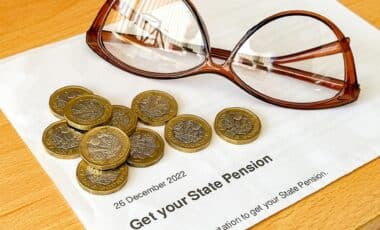
The clarification follows growing public discussion about the impact of annual state pension increases under the triple lock. While many pensioners have believed that state pension payments are exempt from tax, HMRC has reaffirmed that the pension has always been taxable, even though tax is not deducted before payments are made.
The issue has drawn renewed attention because the full new state pension is expected to approach the current personal allowance, while ministers have also announced a separate exemption for pensioners whose only income comes from the state pension. Details of how that policy will operate have not yet been published.
HMRC Explains Why State Pension Recipients May See a Different Tax Code
According to HM Revenue and Customs, the state pension is taxable income, but the Department for Work and Pensions does not deduct tax directly from pension payments. Instead, HMRC adjusts an individual’s tax code so that any tax due can be collected through another source of taxable income, such as a private pension.
The clarification was issued after a customer questioned why their tax code had changed. Responding through its Customer Support account on X, HMRC said: “The State Pension is taxable, but the DWP doesn’t take tax at source, so we change your tax code to give enough of your tax free allowance to match the State Pension, leaving whatever’s left for a private pension.”
For many years, pensioners whose only income has been the state pension have not paid income tax because their total income has remained below the personal allowance. That situation has contributed to the widespread belief that the state pension itself is tax free, even though it has always been subject to income tax under existing rules, according to HMRC.
Government Has Yet to Explain How the Future Exemption Will Operate
According to the Express, Chancellor Rachel Reeves confirmed after her latest Budget that pensioners whose only income is the DWP state pension will receive a specific exemption from paying tax on those payments once the full new state pension rises above the personal allowance.
The report states that the exemption is expected to apply from April 2027, when the full new state pension is projected to exceed the current tax-free personal allowance of £12,570. At the same time, the government has not yet explained how the exemption will work in practice. The available information indicates that pensioners receiving the older basic state pension together with Additional Pension payments will not be covered by the exemption.
Rachel Vahey, head of public policy at AJ Bell, said the triple lock guarantees that the state pension rises each year by the highest of average earnings growth between May and July, September inflation, or 2.5%. She said earnings growth of 4.8% would increase the full state pension to around £12,548, placing it close to the frozen personal allowance.
Vahey also said that low-income pensioners have been promised that no tax will be due if the state pension is their only source of income once payments exceed the personal allowance. She added that it remains unclear how the policy will be implemented and noted that there are no plans to extend the exemption to pensioners who also receive income from private pensions.