Britain’s inflation rate slowed more than expected in April, falling to 2.8% from 3.3% in March, according to official figures released Wednesday. The decline offered short-term relief for households, though economists and policymakers warned that rising energy and fuel costs linked to the Iran war are expected to push inflation higher again later this year.
The figures, published by the Office for National Statistics, were helped by lower household energy bills and government measures aimed at reducing utility costs. Still, analysts say the easing is unlikely to last as fuel prices rise and broader cost pressures spread through the economy.
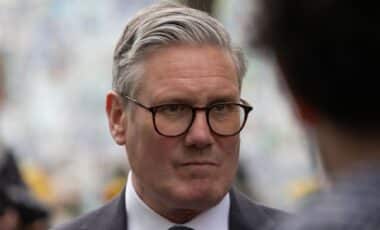
The inflation slowdown comes at a sensitive moment for Prime Minister Keir Starmer’s government, which is already facing pressure over the economy and living costs. Financial markets also adjusted expectations for future interest rate increases by the Bank of England after the data release.
Energy Measures Temporarily Ease Inflation Pressures
According to Reuters, annual consumer price inflation fell to its lowest level since March 2025 after smaller increases in household energy and regulated utility bills compared with the previous year. Government interventions introduced by Chancellor Rachel Reeves also contributed to lower energy costs during the month.
Economists surveyed by Reuters had expected inflation to slow to 3.0%, slightly above the official reading. Core inflation and services inflation also eased more than forecast, although manufacturers reported stronger-than-expected increases in their own costs.
Britain’s household energy bills are controlled through a quarterly government price cap, which fell in April despite rising global energy prices. That decline had a direct effect on the headline inflation figure.
Rachel Reeves defended the government’s approach after the data release. According to The Independent, the chancellor said decisions taken in last year’s budget had helped keep inflation lower during a period of “global instability.” Reeves also pointed to measures including a £117 reduction in energy bills and frozen rail fares.
Still, economists warned that the lower inflation figure reflects temporary conditions rather than a lasting trend. Suren Thiru, chief economist at the ICAEW, described April’s slowdown as “a final interlude before the inflation storm sparked by the Iran war hits,” according to The Independent.
Fuel Prices and Global Tensions Cloud the Outlook
The sharpest concern remains energy and fuel prices linked to the conflict involving Iran. Reuters reported that motor fuel prices rose 23% year-on-year in April, marking the largest increase since September 2022 following the earlier energy shock triggered by the war in Ukraine.
Before the conflict in the Middle East the Bank of England had expected inflation to remain close to its 2% target this spring. The central bank has since raised its inflation forecasts significantly. Under its most inflationary scenario, inflation could reach 6.2% early next year.
Several economists now expect inflation to climb back toward 4% later in 2026. Some analysts cited by The Independent warned that further escalation could push inflation closer to 5%.
At the same time, signs of weakness are appearing in the labor market. Preliminary tax office data released Tuesday showed a drop in payrolled employment and slower wage growth. Separate wage settlement figures published Wednesday also pointed to weaker pay increases.
Business surveys suggest companies are facing rising costs and are increasingly passing those increases on to consumers. The government is also reportedly discussing voluntary price caps on key food products with supermarket chains as ministers look for ways to limit pressure on household budgets in the months ahead.