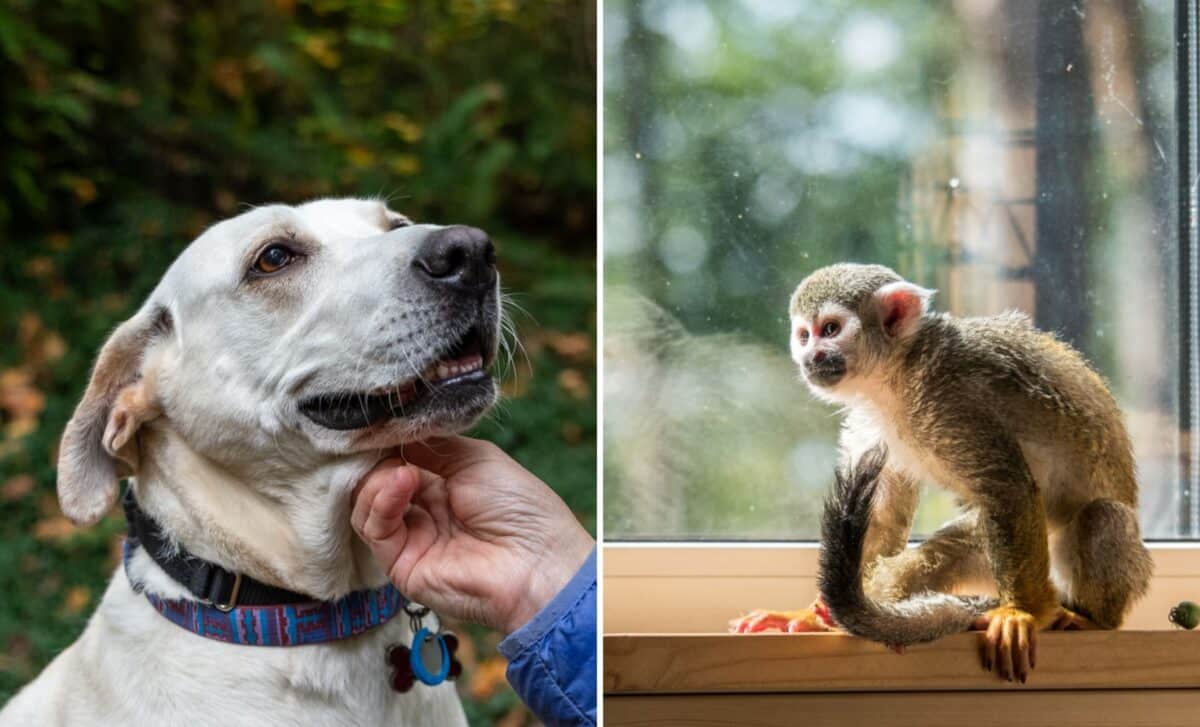
Authorities say the changes are designed to strengthen animal welfare standards and protect farm animals at a vulnerable time of year. Together, the rules reflect a broader shift toward stricter enforcement of existing animal welfare laws and clearer responsibilities for owners.
Licence Requirement Introduced for People Keeping Primates as Pets
From 6 April 2026, individuals who keep primates such as monkeys or lemurs as pets will be required to obtain a licence from their local council. The new regulation is intended to ensure that primates are kept under welfare standards comparable to those required in licensed zoos.
According to the RSPCA, an estimated 5,000 primates are currently being kept in domestic settings across the UK. Animal welfare organisations have long argued that many homes are not equipped to provide the complex environments these animals require. The licensing requirement applies to species including marmosets, lemurs, squirrel monkeys, spider monkeys and capuchin monkeys. Councils will assess applications and inspect the premises before deciding whether the conditions meet the required welfare standards.
Fees vary depending on the authority. Cannock Chase Council has set its application cost at £478.10, which includes an inspection carried out by a veterinary professional and a qualified council officer. Applicants must also cover any additional veterinary costs associated with the inspection. If the council is satisfied that the licence conditions can be met, a licence lasting three years may be granted.
According to local authority guidance reported by regional media, applicants will need to demonstrate proper veterinary care arrangements, suitable housing and enrichment, detailed record keeping and emergency procedures for the animals. Primates must also be microchipped.
Failing to obtain a licence after the regulations come into force will constitute an offence under the Animal Welfare Act 2006. Authorities say offenders could face up to six months in prison, an unlimited fine, or both. The requirement does not apply to primates kept in licensed zoos under the Zoo Licensing Act 1981 or animals used for scientific purposes under licences issued through the Animals (Scientific Procedures) Act 1986.
Tougher Penalties Introduced for Dogs Chasing Livestock
Separate legislation aimed at protecting farm animals will also take effect earlier in the spring. From 18 March 2026, dog owners whose pets chase livestock could face unlimited fines, replacing the previous maximum penalty of £1,000. The change strengthens existing laws on livestock worrying and gives police expanded powers to intervene. Officers will be able to detain dogs that are believed to pose an ongoing threat to farm animals.
The new rules arrive as the UK enters the peak lambing period, when sheep and newborn lambs are especially vulnerable. According to a survey cited by the Express, 87% of sheep farmers reported experiencing a dog attack on their flock within the past year. Experts warn that even dogs that do not physically attack animals can still cause serious harm. Chasing livestock may leave pregnant ewes severely distressed, which in some cases leads to exhaustion, miscarriage or death.
Ecologists from consultancy Arbtech have urged dog owners to remain vigilant when walking in rural areas. They recommend keeping dogs on leads near farmland and paying close attention to warning signs posted near fields. The organisation also highlighted another risk associated with irresponsible dog ownership in agricultural areas. Dog waste can carry parasites that are potentially fatal to sheep, making it important for owners to clean up after their pets when walking in the countryside.
Together, the two sets of rules illustrate a tightening regulatory approach to animal welfare and rural protection. As the implementation dates approach, councils and experts are urging owners to familiarise themselves with the new requirements to avoid penalties and ensure animals are kept safely.