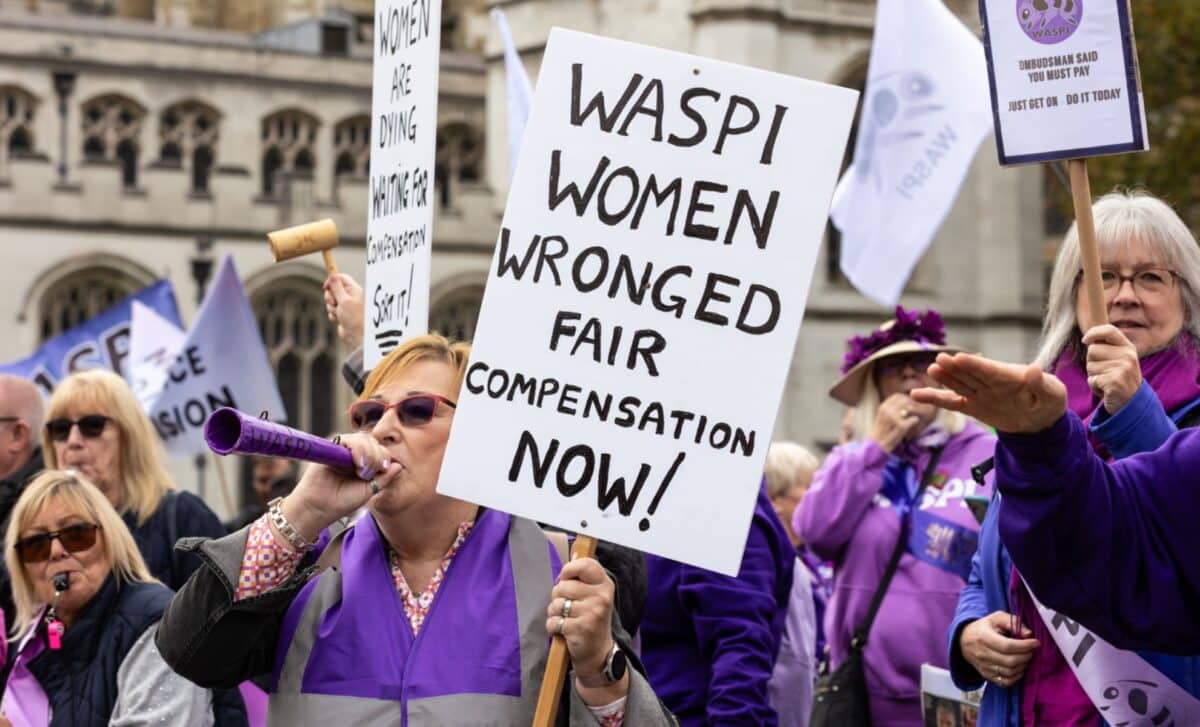
The controversy relates to women born in the 1950s who say they were not properly informed about increases to the state pension age. An Ombudsman investigation found failings in the way those changes were communicated, prompting renewed pressure on ministers to reconsider their position.
Ombudsman Findings and Government Resistance
As many as 3.6 million women are represented by the Women Against State Pension Inequality (WASPI) campaign, founded in 2015 in response to changes to the state pension age. The Parliamentary and Health Service Ombudsman (PHSO) concluded that the DWP was guilty of maladministration in its communication of those changes and suggested compensation ranging up to £2,950 for affected individuals.
According to the Ombudsman’s report, some women received little or no direct notice that their pension age had increased. The 2011 acceleration of the timetable was identified as particularly problematic, with certain women given as little as 18 months’ additional notice before their expected retirement date shifted.
Despite these findings, the Labour government has so far resisted calls to implement a compensation scheme. Ministers have argued that while there were communication shortcomings, most women were aware of the changes and had time to adjust. The government has not committed to any financial redress, a stance that has drawn criticism from campaigners and professional advisers alike.
Tax accountant Grace Hardy of Hardy Accounting said proactive written notification should have been mandatory whenever the state pension age changed for an individual. According to Hardy, the DWP “knew exactly which cohorts would be affected and had their addresses; there was no technical barrier to writing to them.” She also stated that changes of such magnitude should carry a minimum notice period, potentially set in legislation at around ten years, to allow meaningful financial planning.
Legal Pressure and Political Ramifications
The reaction from the WASPI leadership has been forceful. Speaking after Christmas, chair Angela Madden confirmed the group was taking legal advice and that “all options remain on the table.” According to Madden, the campaign stands ready to pursue action in both Parliament and the courts in an effort to secure compensation.
Madden accused ministers of showing “utter contempt” for women born in the 1950s, as well as for Parliament and the Ombudsman. She described the government’s position as a political choice that disregards the harm experienced by millions of women who had planned their retirements around previous pension age expectations.
The issue carries significant political sensitivity. The Ombudsman’s recommendations have placed pressure on the government to respond formally, and any decision on compensation would have financial implications at a national scale. Campaigners argue that the matter is not about reversing equalization of the pension age, but about the fairness of how those changes were communicated.
For now, the government maintains its stance, while legal experts and campaign representatives continue to question whether that position can be sustained. With potential court proceedings under consideration, the dispute over WASPI compensation appears set to remain a live and contentious issue in the months ahead.