A seismic shift in Britain’s labour force is on the horizon as autonomous vehicles edge closer to widespread deployment. With major players trialling self-driving cars in London, up to one million driving-related jobs may be under threat.
The introduction of autonomous vehicles (AVs) in the UK could radically reshape the employment landscape, public transport infrastructure, and even residential property markets. Major companies like Waymo and Wayve are currently testing robotaxis in the capital, laying the groundwork for a shift that extends far beyond commuting habits.
While such innovation carries the promise of convenience and efficiency, it also introduces significant social and economic challenges. Analysts, economists, and union representatives are now raising questions about the future of work and mobility in a driverless Britain.
Mass Job Displacement across Transport and Logistics
The UK currently employs around one million professional drivers, making up approximately three percent of the national workforce. According to the Office for National Statistics, 280,000 drive heavy goods vehicles (HGVs), nearly 275,000 are employed as couriers and delivery drivers, and another 100,000 operate buses and coaches. Should driverless technology replace human labour across these sectors, widespread redundancy could follow.
Uber CEO Dara Khosrowshahi, speaking at the World Economic Forum in Davos, acknowledged the likely consequences of automation. “Obviously, there will be job displacement,” he said, while also confirming that Uber is in talks to bring its own robotaxi services to London within the next year. His remarks suggest that both ride-hailing and logistics services could soon operate without human drivers.
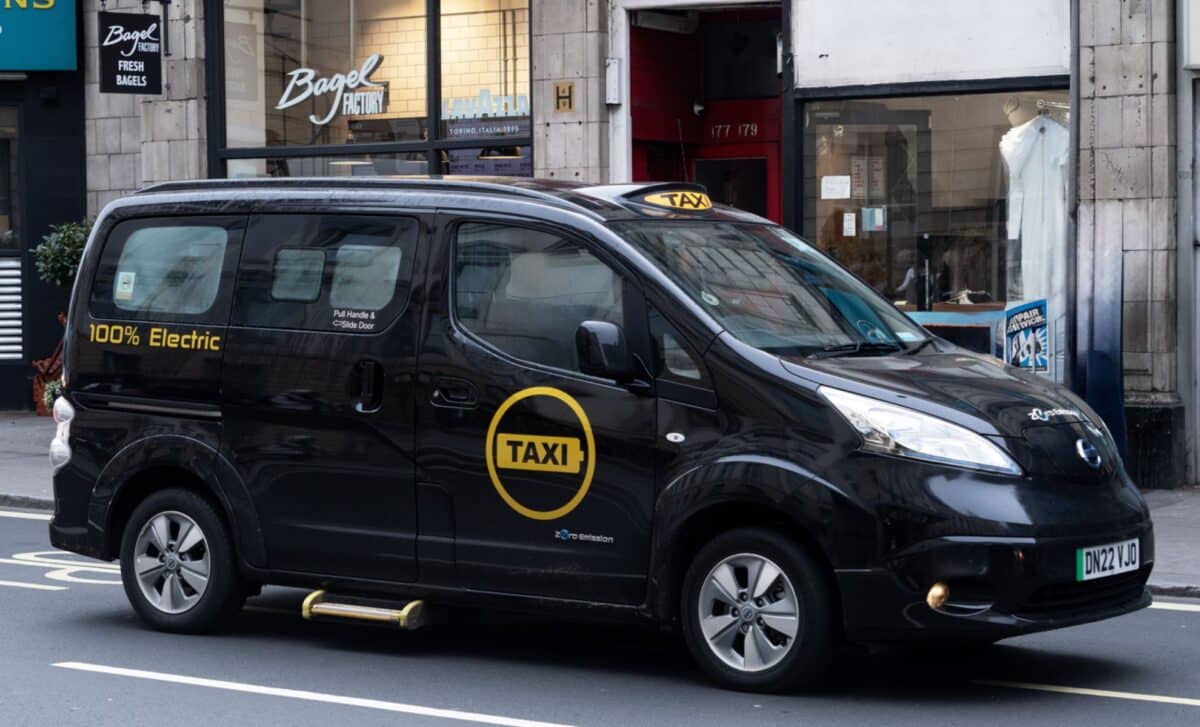
This shift is not limited to commercial transport. Driving instructors, currently numbering 29,000 across Britain, may also find their roles obsolete. The transition recalls earlier changes brought about by Uber’s own expansion. The number of licenced taxis in England and Wales has declined from a peak of 58,800 in 2017 to 45,800 today, largely due to private hire competition, according to government data.
The logistics industry, in particular, stands to be transformed. Self-driving lorries could operate without mandatory rest periods, creating a continuous delivery cycle. According to the Society of Motor Manufacturers and Traders (SMMT), the market for automated and connected HGVs could be worth £3.5 billion annually by 2040. In practice, this would mean convoys of autonomous lorries, known as “platooning”, travelling together to improve fuel efficiency and reduce labour costs.
Implications for Commuting, Housing and Urban Planning
Beyond job losses, AVs are likely to influence where people live and how cities are structured. Currently, 67 percent of British commuters travel by car, spending an average of nearly 30 minutes each way. According to Peel Hunt’s chief economist Kallum Pickering, most people would use that time not for work, but for entertainment or shopping, activities that could drive new revenues for digital services.
Changes in commuting behaviour could also affect property values. Andrew Wishart, economist at Berenberg Bank, suggested that areas previously viewed as too remote may become attractive as commuting becomes more comfortable and flexible. This would mirror pandemic-era trends, where remote work led to a boom in countryside property prices and a slump in demand for city flats.
There is also a spatial component to consider. Larissa Marioni at the National Institute of Economic and Social Research pointed out that reduced parking requirements could free up urban land. “It could free up land for housing, parks, commercial use,” she said, although she warned that keeping AVs constantly circulating rather than parked might lead to increased congestion.
While the potential efficiency gains are evident, the rollout of AVs has not been universally embraced. Steve McNamara, general secretary of the Licensed Taxi Drivers Association, questioned their commercial viability. According to McNamara, companies like Waymo are still operating at a loss in the United States and have yet to prove that robotaxis are more than “a novelty” in busy urban environments like London.