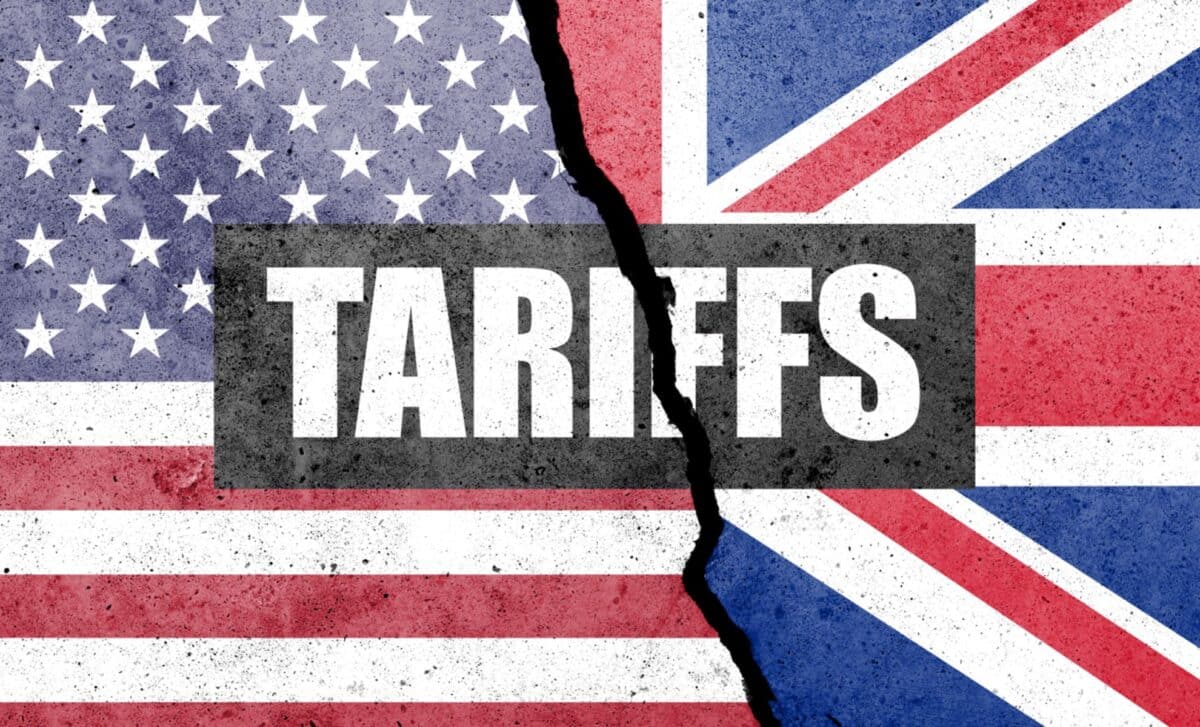
President Donald Trump has announced plans to impose new tariffs on UK exports starting in February, in response to opposition over his bid to purchase Greenland. The threat includes a 10% tax on all UK goods entering the US, potentially rising to 25% by June.
The proposed measures are part of a wider strategy targeting European allies critical of the US position on Greenland, an autonomous territory of Denmark. Mr Trump’s comments come amid rising tensions between Washington and several NATO partners, including the UK, France and Germany.
Political Tensions Trigger Trade Consequences
President Trump has linked his tariff plans directly to the UK’s stance on Greenland, which he wants to bring under US control due to its Arctic location and natural resources. Speaking earlier this week, he warned that “any and all goods” exported from the UK to the US would face a 10% tariff from 1 February, increasing to 25% from June, unless the UK shifts its position.
According to the Press Association, the UK is not alone in facing potential trade penalties. Other European nations, namely Denmark, France, Germany, Norway, Sweden, the Netherlands and Finland, are also being targeted for opposing Washington’s ambitions in Greenland.
The move has drawn criticism from UK political figures, with Labour leader Sir Keir Starmer urging calm, saying the issue should be resolved through “calm discussion between allies” and without recourse to military or economic escalation.
Existing UK-US trade arrangements were partially shielded by a 2025 economic prosperity deal agreed last year, which allowed for tariff exemptions on key UK sectors such as steel, aluminium, aerospace and automotive. However, the new measures proposed by Mr Trump appear to bypass those protections and apply across all goods categories, raising fresh concerns among exporters.
Key UK Industries at Risk under New Tariffs
UK industries with significant exposure to the US market may face immediate pressure if the tariffs take effect. According to the Press Association, the UK’s largest exports to the US include machinery, engines, turbines and vehicles. These sectors, already navigating a complex post-Brexit trade environment, could experience increased costs and reduced competitiveness.
The Scotch whisky industry, in particular, may also be severely affected. In 2024 alone, Scotland exported nearly £1 billion worth of whisky to the US, making it one of the most valuable single-product exports. A 10–25% tariff would significantly raise retail prices in the US, potentially lowering demand and harming producers.
Tariffs function as a tax on imported goods, collected by customs authorities when the products enter the importing country. In this case, US-based buyers of UK goods would pay the additional charges, which may deter them from sourcing products from the UK.
According to economists at Capital Economics, a 10% tariff could reduce the UK’s GDP by around 0.1%, while a 25% rate might result in a 0.2–0.3% reduction. Analysts at Goldman Sachs suggested the impact could be higher, estimating GDP losses of up to 0.5% in affected countries.
Beyond growth, inflation could also be affected. Deutsche Bank analysts warned that the proposed tariffs might disrupt the UK’s current disinflation process, which brought inflation down to 3.2% in November 2025. Trade disputes often lead to price increases for consumers, both in exporting and importing nations.