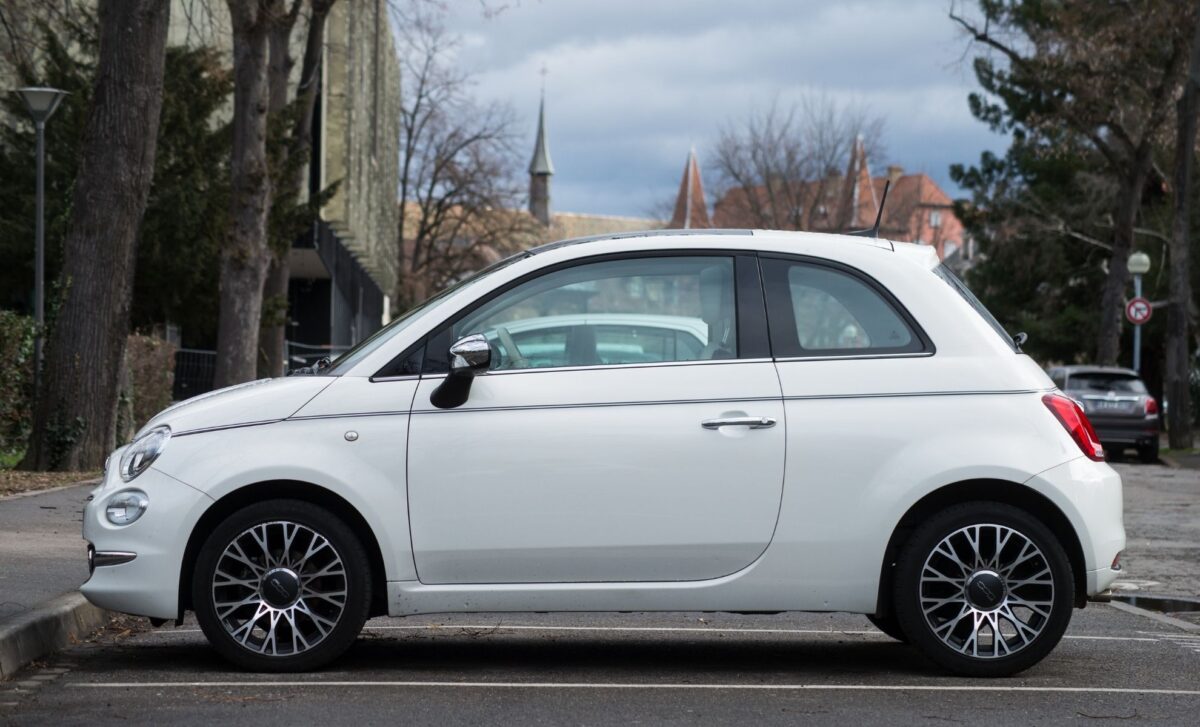
The suggestion comes as the European Union prepares to roll out further mandatory safety measures in new vehicles from July 2026. These rules include intelligent speed assistance, automated braking, and distraction warnings, all designed to reduce fatalities and serious injuries on Europe’s roads.
Fiat’s chief executive, Olivier François, has questioned the necessity of this technology for smaller, low-speed vehicles designed primarily for city use. Speaking to Autocar, he said the brand would “happily” limit the top speed of its vehicles if it meant avoiding rising production costs.
Safety Measures Set to Become Mandatory in EU Vehicles
The European Union is pressing ahead with a suite of safety regulations aimed at improving road safety outcomes over the coming decade. According to the EU General Safety Regulation, all new motor vehicles (cars, vans and trucks) will be required to include intelligent speed assistance systems and advanced driver assistance features such as lane-keeping, emergency braking, drowsiness alerts and emergency stop signals.
From July 2026, vehicles must also meet further requirements including advanced driver distraction warnings, safety glass, and longer-lasting tyre performance. The EU expects these measures to prevent over 25,000 deaths and 140,000 serious injuries by 2038, according to figures published in the official regulatory roadmap.
This tightening of rules is part of a broader strategy to bring down road casualties to near zero by the middle of the century. While many manufacturers are embracing these updates by integrating new hardware such as cameras and sensors, Fiat’s leadership believes that a one-size-fits-all approach does not account for the specific use-cases of compact city vehicles.
Fiat Questions Rising Costs and Relevance of New Tech
Fiat CEO Olivier François has openly criticised the financial burden that comes with complying with the new safety standards, particularly for affordable electric vehicles. According to Autocar, François noted that the average price of a city car has risen by around 60 per cent over the last five or six years, largely due to the addition of mandatory safety systems.
He argued that most of these technologies are designed for vehicles travelling at high speeds, often exceeding legal limits. “If you take the average legal maximum speed in Europe, it’s 118kph [73mph], so above 118kph is [often] illegal,” he said, adding: “There is something weird that I need to over-spec my cars to go above the legal speed limit.”
François suggested that for vehicles like the Fiat 500 or Panda, primarily intended for short urban trips, it would be more logical to impose a firm speed cap rather than integrate full ADAS (Advanced Driver Assistance Systems) suites. He also expressed support for the EU’s possible introduction of a new vehicle category, “M1E“, which would apply to small, affordable electric vehicles.
According to Stellantis, Fiat’s parent company, models such as the 500e and 600e are designed with city driving in mind and are marketed to younger, urban consumers who typically do not require long-range capabilities. The current Fiat 500e, for instance, offers a 199-mile range and rapid charging capabilities, with pricing starting at £20,995 following the recent E-Grant discount scheme.
While discussions around limiting top speeds in city cars are still at an early stage, François‘ comments reflect growing concerns among manufacturers over the cost-benefit balance of increasingly complex safety regulations.