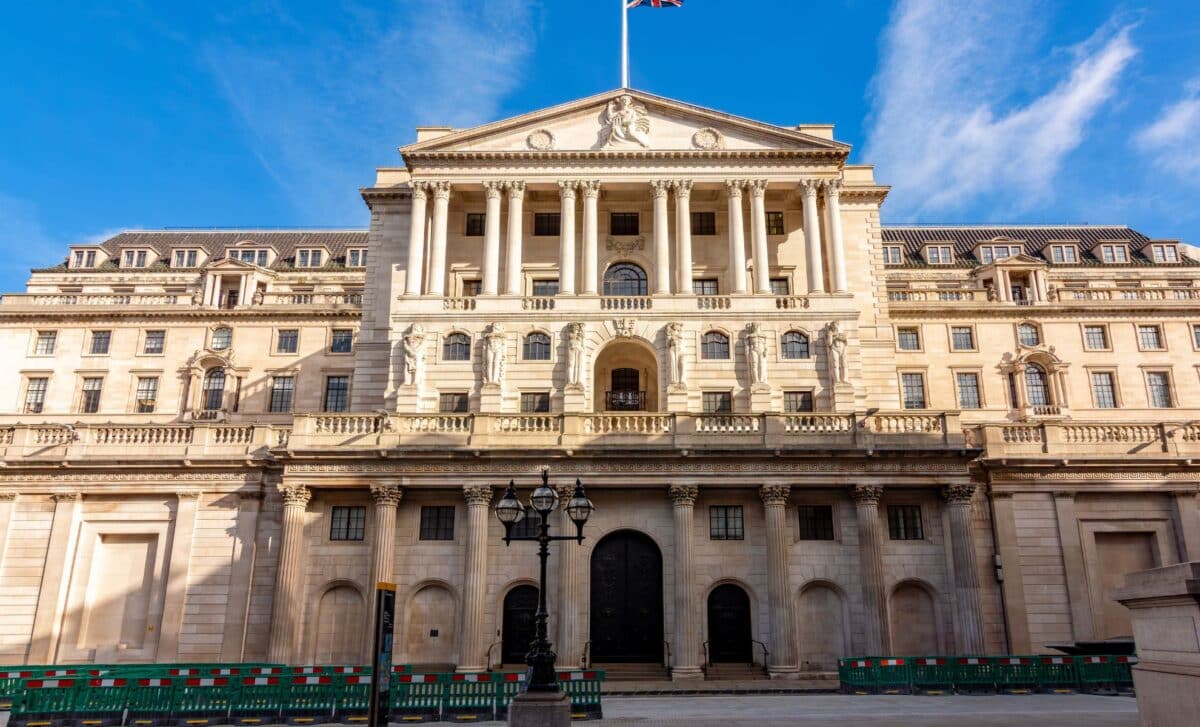
Major brokerages, including Goldman Sachs and J.P. Morgan, predict no further rate cuts by the Bank of England (BoE) in 2025, despite ongoing inflation concerns. After its recent pause, the central bank’s cautious approach raises questions about future economic policy.
BoE’s Strategic Pause Amid Persistent Inflation
The Bank of England’s decision to hold its key interest rate steady this month has sparked widespread speculation about the trajectory of future rate cuts. With inflation still elevated at 3.8% in August—the highest among major economies—the central bank finds itself walking a fine line. Having reduced rates by a quarter-point in August, the BoE’s recent hold signals a pause as it assesses the economic landscape. This decision comes as inflation proves more stubborn than anticipated, posing a significant challenge for policymakers.
While some analysts argue that a further cut could be justified if economic data worsens, the consensus among major brokerages is that rate reductions in 2025 are unlikely. Goldman Sachs, Citigroup, and J.P. Morgan are all in agreement that the next easing cycle could be pushed out to 2026, with February being a possible start date. As the BoE navigates a delicate balance of tackling inflation without derailing growth, its cautious stance suggests that any further rate cuts will be gradual and carefully timed.
Inflation and Economic Growth Concerns
The persistent nature of UK inflation remains a key obstacle for the BoE. According to analysts at Citigroup, the central bank’s data-driven approach leaves room for short-term policy changes based on economic performance. However, inflationary pressures, particularly in the wake of Brexit-related supply chain disruptions and rising energy costs, continue to test the BoE’s resolve. The latest figures suggest that inflation could stay well above the BoE’s 2% target until mid-2027.
Despite this, some market participants are still betting on potential rate cuts. Barclays, for instance, has suggested that the BoE could make a move as early as November, provided upcoming economic data shows signs of weakening. This view is underpinned by the BoE’s data-dependent stance, which remains highly responsive to inflation and growth figures. Conversely, BNP Paribas predicts that the BoE will delay any rate cuts until December, arguing that the additional time will provide greater clarity amid uncertain economic conditions.
Markets Await Clarity as Policy Uncertainty Lingers
The outlook for UK monetary policy is further complicated by global economic uncertainties and domestic challenges. While markets are pricing in a modest chance of further rate cuts this year, only 7.5 basis points are expected by year-end, according to LSEG data.
The broader picture suggests a cautious wait-and-see approach as the BoE continues to grapple with the complexities of high inflation and muted economic growth. Governor Andrew Bailey has emphasised the need for gradual and carefully considered adjustments, ensuring that the bank’s policy response remains balanced amid ongoing uncertainties.