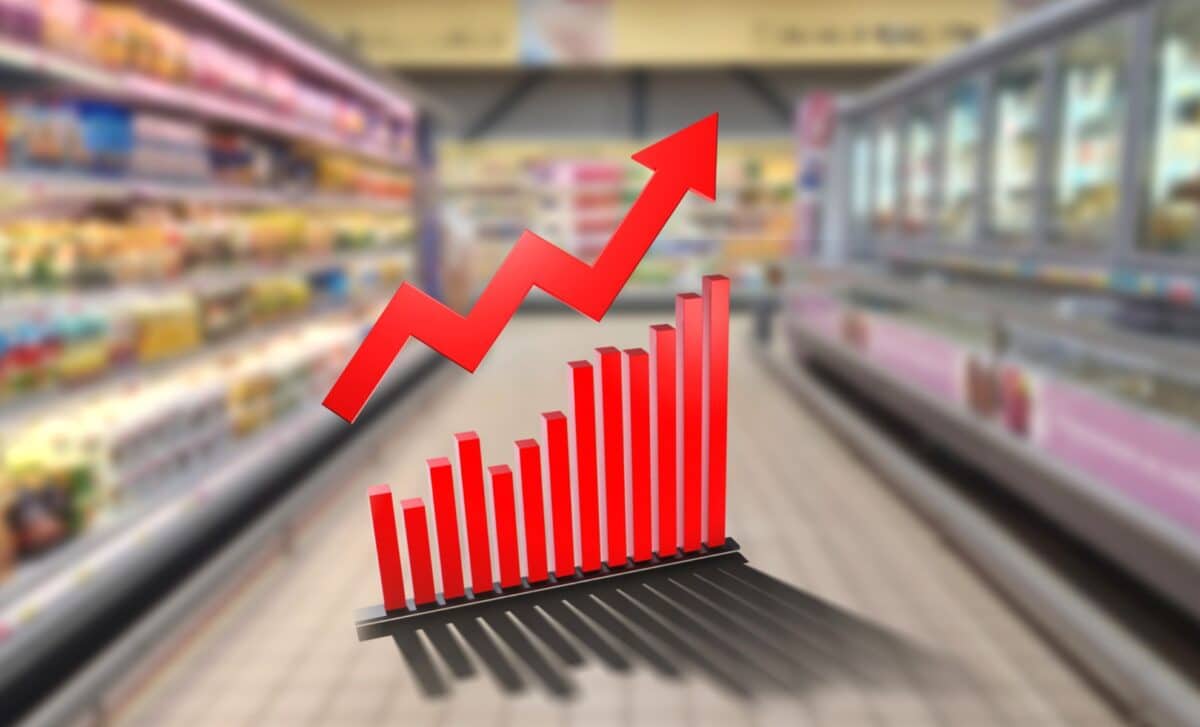
Prices in UK shops have increased at their fastest rate since February 2024, marking a setback for those hoping inflation had peaked. New figures from the British Retail Consortium (BRC) show that the cost of goods continues to rise, with food and essential household items leading the climb.
The trend places additional strain on households already navigating the cost of living crisis. Rising business costs and government-imposed levies are now being passed on to consumers at a time when economic forecasts had predicted the opposite.
Retailers under Pressure as Energy and Tax Changes Drive up Costs
The BRC’s latest Shop Price Index reveals that overall prices in British shops rose by 1.5% in January compared with the same month last year. This figure represents more than double the 0.7% increase seen in December and is the steepest annual growth since early 2024. According to the BRC, the surge is primarily due to high energy costs and the government’s recent increase to employers’ National Insurance contributions.
Helen Dickinson, Chief Executive of the BRC, said: “Any suggestion that inflation has peaked is simply not borne out by these figures.” She added that “shop price inflation jumped this month due to high business energy costs and the hike to National Insurance continuing to feed through to prices.” These remarks were echoed across multiple sources including Reuters and The Guardian.
The April 2025 Budget introduced by Chancellor Rachel Reeves increased employer NICs from 13.8% to 15%, while also lowering the contribution threshold from £9,100 to £5,000. Retailers say this measure, coupled with rising energy levies, has inflated the cost of employment by as much as 13% for part-time workers. According to the BRC, such increases are now affecting the entire supply chain, making it harder for businesses to absorb costs without passing them on.
Energy bills, already a concern due to market instability, are further inflated by non-commodity levies, adding to operating costs. The BRC called these “spiralling energy charges” a major contributor to price hikes in shops across the country.
Food Prices Climb Again, with Fresh Produce Leading the Surge
Food inflation remains at the heart of the current price pressures. According to the BRC’s data, food prices in January were 3.9% higher than a year earlier, up from 3.3% in December. This was the sharpest rise since September, with fresh food inflation reaching 4.4% and ambient food inflation rising to 3.1%.
Dickinson highlighted that categories such as meat, fish and fruit were “particularly affected, also reflecting weak supply and stronger demand”. The impact has been felt disproportionately by lower-income households, who typically spend a higher proportion of their income on groceries.
Non-food categories have also shown inflationary growth for the first time in months. Prices in sectors such as furniture, flooring, and health and beauty rose by 0.3% in January, reversing a 0.6% decline in December. The BRC-NIQ monitor suggests this shift may be partially driven by sustained energy and tax-related pressures, though discounts in some non-food categories continued in January as retailers sought to attract footfall.
The persistence of elevated food prices is likely to concern Bank of England officials, who monitor household expectations of inflation closely. Rising grocery bills remain a key factor in shaping public sentiment around inflation and could complicate future decisions on interest rates.
The outlook remains tense. While the Treasury has defended its policies as necessary for economic stability, the latest data presents a more complex picture for policymakers. Retailers, meanwhile, continue to face the dual burden of thin profit margins and growing operational costs, leaving little room for relief at the tills.