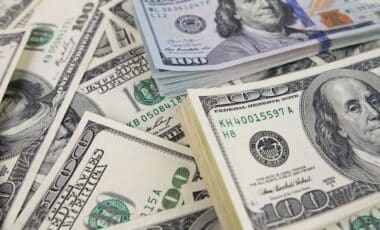
President Donald Trump has hinted at a new proposal to give Americans up to $2,000 in stimulus checks, potentially funded by the vast revenues generated through his tariff program. As part of his broader plan to address the national debt, Trump’s idea aims to share a portion of the funds with the American public, positioning it as a dividend for taxpayers. However, the initiative would require Congressional approval to become a reality.
Trump has consistently argued that his administration’s tariff policies, introduced to boost American industries, have brought in hundreds of billions of dollars in revenue. As the U.S. government continues to contend with its towering national debt, the proposal to redistribute some of these funds reflects a growing debate on how best to use tariff-generated money.
Proposed Stimulus Checks: A “Dividend” for Americans
In an interview aired last week, Trump spoke about his plans for the tariff revenue, emphasizing that paying down the national debt would be a priority. According to reports, the U.S. Treasury has already collected around $215 billion from tariffs since their introduction in April. While much of the money will go towards reducing the nation’s $37 trillion debt, Trump suggested that a portion might be returned directly to American citizens.
“We’ll pay back debt, but we also might make a distribution to the people, almost like a dividend to the people of America.” Trump said, adding that the team is considering providing Americans with stimulus checks ranging from $1,000 to $2,000. He reiterated that this distribution would depend on the results of ongoing tariff revenue generation, as well as legislative support from Congress.
This proposal echoes past stimulus strategies, particularly the economic relief measures enacted during the COVID-19 pandemic. The difference, however, lies in the source of the funding. While previous stimulus checks were largely drawn from emergency government spending, Trump’s plan would rely on funds collected from foreign tariffs.
Legal Hurdles and Congressional Approval
Though the idea has garnered attention, the proposal to provide rebates is not yet set in stone. According to experts, such a measure would require Congressional approval, which may prove challenging given the current political climate. Trump’s tariff policies have already sparked significant legal challenges, with some courts questioning their legality.
Senator Josh Hawley of Missouri has attempted to push legislation, known as the American Worker Rebate Act, which aims to distribute tariff revenues to families. However, the bill has not yet passed through Congress. For now, Trump’s proposal remains a concept, contingent on both political and legal outcomes.