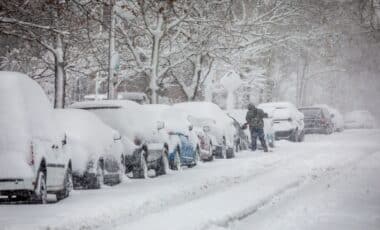

The National Weather Service (NWS) has issued a series of weather warnings as a winter storm approaches, bringing significant snowfall and freezing temperatures to parts of Alaska, Wyoming, and Colorado. According to Newsweek, the storm is expected to create challenging conditions, including gusty winds and dangerous travel hazards.
Local authorities have already begun preparations as this storm system intensifies. The NWS has advised residents in impacted areas to stay alert for updates and follow safety recommendations. The storm’s timing and intensity could affect roadways and daily activities, making early preparation essential for those in the storm’s path.
Snowfall and High Winds: Alaska Gets Hit First
In Alaska, a winter weather advisory has been issued for the eastern Alaska Range, including Trims Camp, located southeast of Fairbanks. The NWS reports that snowfall could accumulate up to 8 inches, with some areas possibly seeing up to a foot (12 inches) of snow. Gusty winds reaching speeds of 50 mph will accompany the snowfall, making for hazardous travel conditions.
Snow and gusty winds. Storm total accumulations up to around 8 inches at Isabel Pass. Winds gusting as high as 50 mph. Areas of blowing snow are possible overnight tonight – the NWS said.

This advisory is in effect until 9 a.m. AKDT, and the storm is expected to cause significant disruptions. The NWS specifically highlighted Isabel Pass, where snow accumulations of up to 8 inches are anticipated, and gusty winds will cause blowing snow, reducing visibility. Areas south of Delta Junction, including the Richardson Highway, will also experience heavy snow.
Travel could be very difficult – the NWS said.
Slow down and use caution while traveling. The latest road conditions for the state you are calling from can be obtained by calling 511.
Motorists are advised to stay cautious on the roads, as conditions could rapidly deteriorate. The NWS forecast office in Fairbanks, Alaska, also wrote on X,
Heavy snow on the Richardson Hwy south of Delta Junction will continue through tonight. Up to 8
of snow is expected, with a chance for up to a foot. Winter travel conditions exist, so allow for extra time.
As this storm progresses, Alaska’s infrastructure is expected to be impacted. With this being the first significant snowfall of the season, it will be important for travelers to allow extra time and be aware of potential delays.
Areas around Fairbanks have seen their first snow of the season, with some locations getting decent accumulations. Most roads haven’t had any snow, some has been seen along the Parks/Richardson Hwy, with highest accumulation in the AK Range. Stay safe while traveling! – the NWS office added.
Freeze Warnings: A Cold Snap for Wyoming and Colorado
Meanwhile, farther south, the NWS has issued freeze warnings for parts of Wyoming. Temperatures are expected to plummet to around 30°F (approximately -1°C), particularly in Carbon County, the Snowy Range foothills, the Shirley Basin, and the upper North Platte River Basin. This cold snap is expected to last until 10 a.m., with frost posing a serious risk to sensitive vegetation.
In Colorado, a frost advisory has been issued for the San Luis Valley, where temperatures are expected to dip between 32°F and 35°F (0°C to 1.6°C). Some areas could experience temperatures as low as 30°F (-1°C). This sharp drop in temperature poses a threat to unprotected outdoor plumbing, as well as delicate plants that haven’t yet been winterized. Local residents are being encouraged to cover their plants and take steps to prevent water pipes from freezing.
As the freeze sets in, it’s essential to stay alert and make preparations to protect outdoor plants and plumbing. Taking preventative measures now can save a lot of headaches later in the season.
Why This Matters: Preparing for the Worst
The NWS emphasizes that these weather conditions could make travel extremely dangerous. With slippery roads, high winds, and blowing snow, the risks for accidents increase, especially for those traveling through remote or mountainous areas. The NWS advises calling 511 to get the latest road conditions before heading out.
In addition to the travel hazards, this storm could have far-reaching consequences for agriculture and local economies. The frost and freeze conditions could kill crops, damage sensitive plants, and possibly harm unprotected plumbing. The NWS urges farmers and homeowners alike to take early steps to mitigate the impact of the storm:
Take steps now to protect tender plants from the cold.