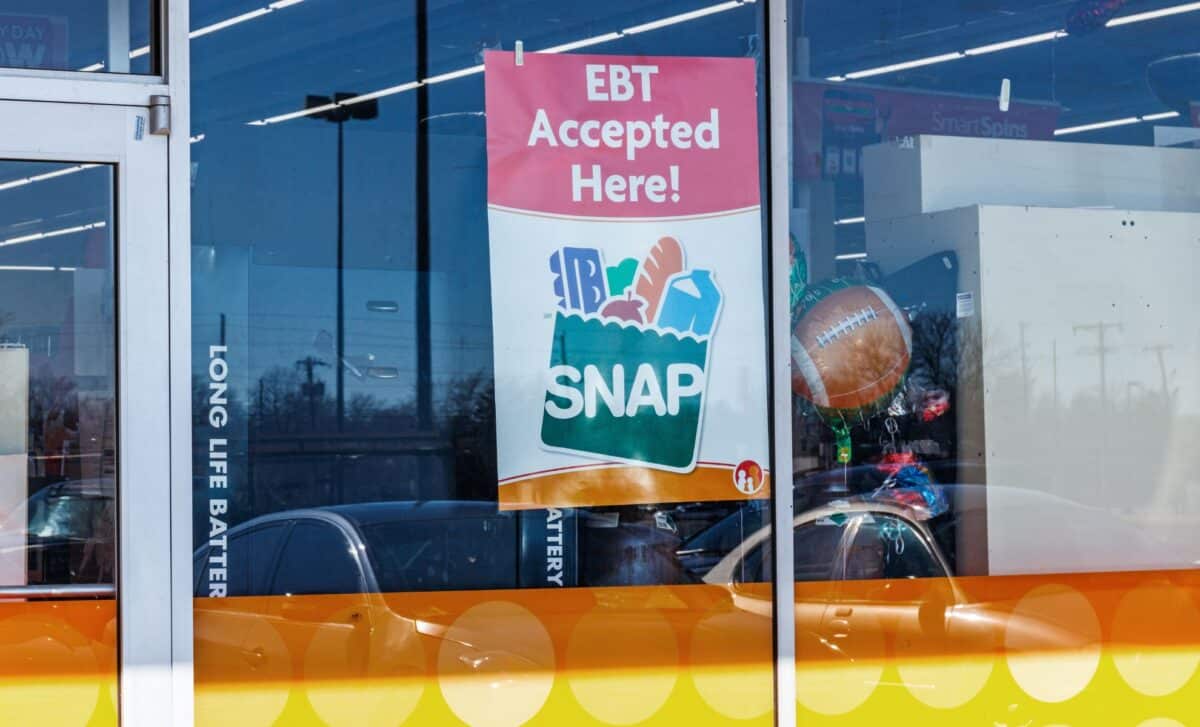
Although the U.S. Department of Agriculture (USDA) announced that most SNAP payments could resume within 24 hours, implementation varies across the country. Legal battles and administrative disruptions have slowed the process in several states, leaving many recipients uncertain about when they’ll receive essential support.
Delays and Legal Challenges Led to Partial or Paused Benefits
The shutdown, which began in late October, halted SNAP payments starting November 1, affecting around one in eight Americans, many of whom are elderly, disabled, or children. According to USA TODAY, the USDA was unable to draw from its usual contingency funds, triggering lawsuits in multiple states and an unprecedented disruption to the 60-year-old program.
Court rulings temporarily required the USDA to resume full payments. On November 6, a federal judge in Rhode Island ordered the agency to issue full November benefits. But just a day later, the Supreme Court blocked that order, after the Trump administration filed an emergency request to reverse the ruling. This sequence of legal contradictions led to a brief window during which at least 19 states and the District of Columbia issued full or partial payments, as reported by the Associated Press.
The USDA then instructed states to “undo” any benefits already distributed, a move swiftly blocked by a federal judge. Amid this uncertainty, 16 states issued only partial benefits, prioritizing speed over completeness. The legal seesaw not only delayed relief but also forced states to reprogram systems and coordinate with contractors, a process some officials say could take days, weeks, or even months, according to the USDA’s testimony in court.
Restart of Payments Depends on Individual State Systems
While the federal government has unlocked SNAP funding, actual disbursement depends on each state’s capacity to process and deliver benefits. A USDA spokesperson told CBS News that most states should begin payments within 24 hours of the government reopening, though the agency acknowledged that the timeline is not uniform.
Jessica Garon, of the American Public Human Services Association, stated to the AP that “most states will be able to issue full benefits within three days” after receiving federal clearance. Meanwhile, Crystal FitzSimons, president of the Food Research & Action Center (FRAC), warned that “people could start to receive them in a few days or even a week, depending on the state.”
According to the USDA, SNAP recipients receive an average of $188 per person per month, or roughly $6 per day, loaded onto Electronic Benefit Transfer (EBT) cards usable for food purchases. Households below 130% of the federal poverty line typically qualify for assistance.
To avoid misinformation, FitzSimons advised that recipients should “monitor their state’s family or social services websites” for the most current information. FRAC is also tracking updates on a state-by-state basis.
Despite the stopgap bill restoring funding, experts caution that the effects of the shutdown won’t vanish immediately. Wendy Weller, professor at the University at Albany, told The Independent that while the system “should pick up where it left off,” technical delays are likely. “I can foresee there being delays,” she said, adding that states need time to coordinate disbursement logistics.
As the USDA works to ensure compliance with court orders and legislative changes, families dependent on SNAP remain in limbo, waiting for a system slowed by political stalemate and bureaucratic fallout to start moving again.