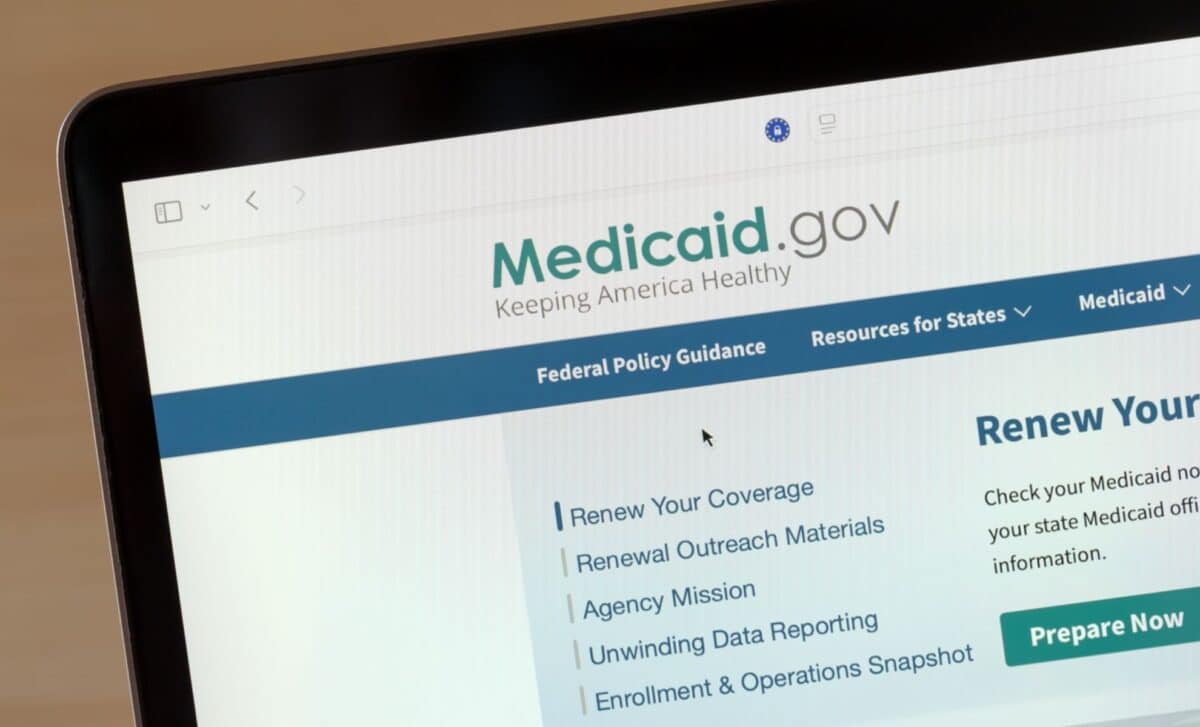
Medicaid funding reductions under a major federal policy shift are raising concerns among public health leaders about the future of addiction treatment in the United States. Early estimates suggest millions could lose coverage, placing additional pressure on already stretched care systems.
At a recent University of Pennsylvania conference, New York’s top addiction official outlined the scale of the challenge, warning that states may soon face difficult decisions about how to allocate shrinking resources. The implications extend beyond budgets, touching directly on treatment access and overdose mortality.
Funding Losses Threaten Access to Treatment Nationwide
The proposed federal changes represent one of the largest reductions in Medicaid spending in the program’s history, with cuts estimated at roughly $1 trillion over the next decade. According to reporting presented at the conference, between 10 and 12 million people could lose coverage as new administrative requirements and eligibility changes take effect.
Substance use disorder treatment programs are expected to be particularly affected because Medicaid serves as the largest payer for addiction care across all 50 states. According to the Center for American Progress, about 1.6 million people currently enrolled in these programs could lose access to services, including medication-assisted treatment, counseling, and residential care.
Chinazo Cunningham, commissioner of the New York State Office of Addiction Services and Supports, said the consequences of reduced access are likely to be severe. She stated that if people lose treatment options, an increase in overdose deaths would be difficult to avoid. Her remarks were delivered during a keynote interview conducted by journalist Dan Gorenstein at the Penn event.
Research findings presented at the conference reinforce these concerns. According to a 2025 memo from researchers at the University of Pennsylvania and Boston University, individuals cut off from Medicaid-funded addiction treatment could face a doubling of overdose death rates. These projections highlight how closely treatment availability and mortality outcomes are linked within vulnerable populations.
States Face Difficult Tradeoffs as Uncertainty Grows
State officials are already preparing for significant financial shortfalls. In New York alone, Cunningham estimated a potential $13 billion loss in Medicaid funding, noting that no state has the capacity to absorb a gap of that magnitude. According to her remarks, such deficits would force governments to make difficult decisions about which services to prioritize.
The structure of New York’s treatment system adds further complexity. State-supported providers are required to treat patients regardless of their insurance status, meaning clinics may continue delivering care even as reimbursement declines. This creates financial strain that could threaten the viability of treatment programs over time.
Compounding the challenge is a lack of clear federal guidance. Cunningham described ongoing uncertainty caused by shifting announcements and late communications from federal agencies, making long-term planning difficult for state systems trying to stabilize services.
Officials are also debating whether opioid settlement funds could help offset the losses. These funds, totaling about $50 billion distributed over 15 years, are intended for public health uses related to the opioid crisis. According to Cunningham, discussions within New York’s advisory board revealed no consensus on whether the money should be used to fill Medicaid gaps, reflecting broader uncertainty about how best to deploy limited resources.
As implementation timelines approach, with major impacts expected by early 2027, state leaders continue to weigh how to balance prevention, treatment, harm reduction, and recovery efforts. The choices made in the coming months are likely to shape the accessibility of addiction care across the country for years to come.