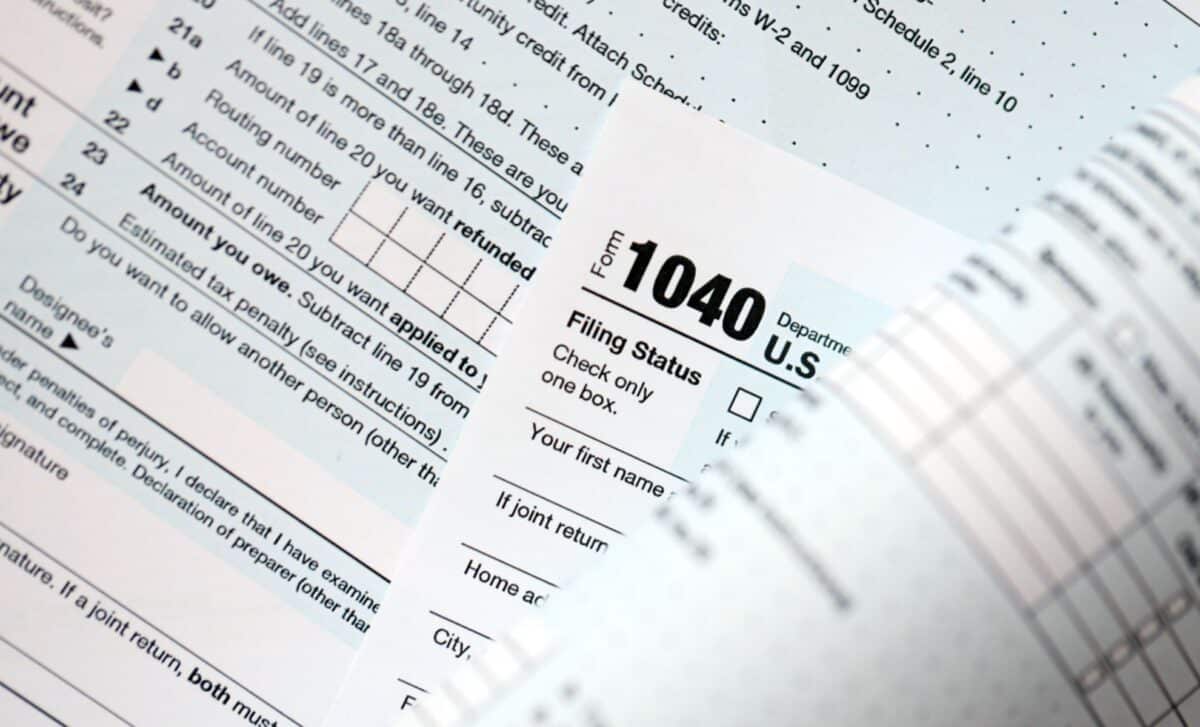
The White House announced that millions of Americans are set to receive significantly larger tax refunds this filing season. The increase comes as the Internal Revenue Service begins processing returns under a new set of rules included in last year’s Working Families Tax Cuts Act.
The updated tax provisions, passed as part of broader spending legislation, were signed into law by President Donald Trump and are retroactive to early 2025. According to administration officials, the changes are meant to boost take-home pay for workers, retirees, and families across the country.
Retroactive Tax Changes Expand Deductions and Eliminate Key Income Taxes
According to the White House, the size of tax refunds is expected to grow considerably under the new law, with average increases of $1,000 or more. These projections are supported by multiple economic analyses referenced in the administration’s public statement. The estimates suggest that this tax season could deliver tens of billions of dollars more in refunds compared to previous years.
A number of changes in the legislation have contributed to the increase. Among them is the elimination of federal taxes on tips, overtime pay, and Social Security benefits. The law also allows taxpayers to deduct interest on auto loans for U.S.-manufactured vehicles, a new provision designed to support both American consumers and the domestic auto industry.
According to Treasury Secretary Scott Bessent, these tax reforms could result in refunds ranging from $1,000 to $2,000 per household. Speaking at the World Economic Forum in Davos, Bessent described the measure as “One Big Beautiful Bill” and said it had been designed to help wage earners keep more of their income.
The Tax Foundation, a nonpartisan think tank, estimated that the average refund could reach $3,800 this year. That represents a notable increase from $3,052 in the 2024 tax year and $3,004 in 2023, according to the same source. While not as high as the administration’s most optimistic projections, these figures confirm a clear upward trend.
Economic Impact and Political Stakes Ahead of the Midterms
The boost in refunds comes at a politically sensitive moment. President Trump, now in his second term, won re-election in 2024 largely due to his economic platform, promising relief to Americans struggling with stagnant wages and high consumer prices. But public confidence in his ability to steer the economy has faltered since taking office, with inflation and housing costs remaining stubborn concerns.
With Republicans holding only a narrow majority in Congress, the upcoming midterm elections are viewed as critical. According to the White House, delivering tangible financial relief to households is a central part of the administration’s strategy to regain economic credibility and maintain control of the House and Senate.
Several banking and investment firms have echoed the administration’s positive outlook. According to projections shared by the White House, average refunds could approach $4,000 for many filers, a level not seen in recent tax seasons. Officials argue that even if part of that increase results from over-withholding, the immediate financial impact for households could be significant.
The IRS began accepting returns this week, with the filing deadline set for April 15. Extensions are available for those who apply in advance, though the agency encourages early filing to avoid delays in refund processing.